Hip vs Gable Roofs on Greensboro Homes: Cost and Upkeep Compared
RoofingBaker Home Exteriors
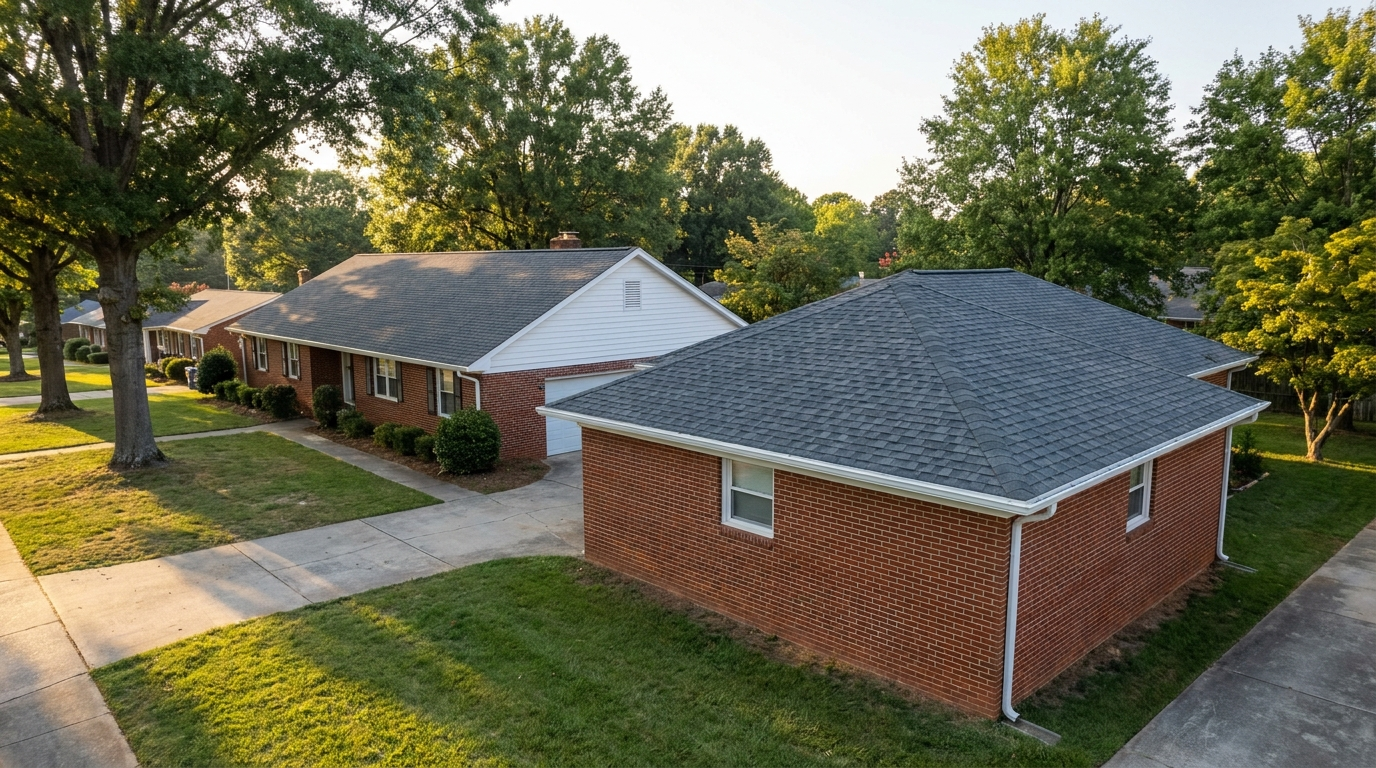
A hip roof usually costs more to replace than a gable roof over the same house, and the reason isn't size. Both shapes cover the same footprint. The hip roof has more lines to cut along and cap, plus an eave on every side, and each of those becomes material and labor on a quote. If you're pricing a roof replacement on a Greensboro home, that's the difference worth understanding, because the shape was decided when the house was built.
One commenter in a Reddit r/Roofing thread about a roof quote said replacement cost "really depends on shape, pitch, and location," and called their own hipped roof more complicated and more expensive. What that leaves out is where the extra money goes.
Most comparisons online are written for someone choosing a shape for a new build. This one is for the owner. One note on the numbers: each figure below names the source it came from, and none is our pricing.
Why Does a Hip Roof Cost More to Replace Than a Gable Roof in Greensboro?
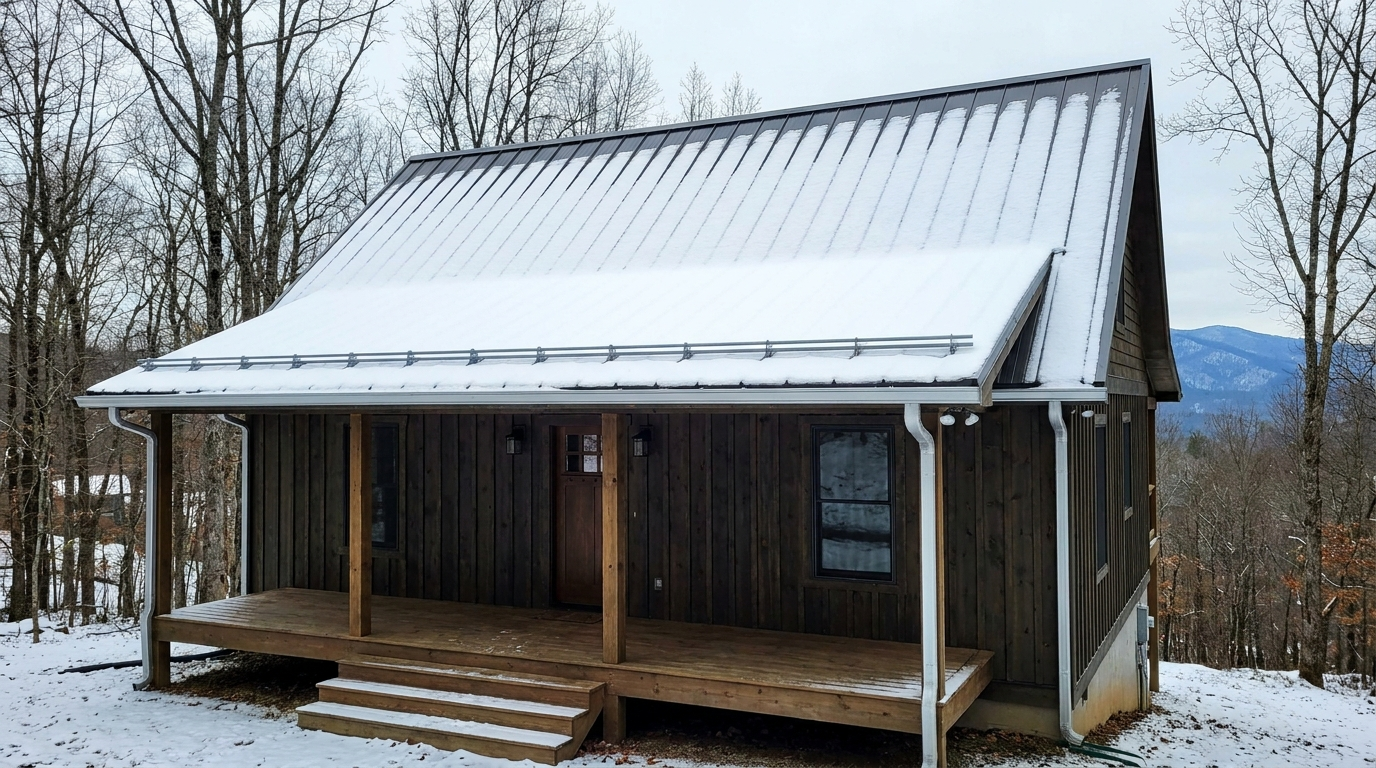
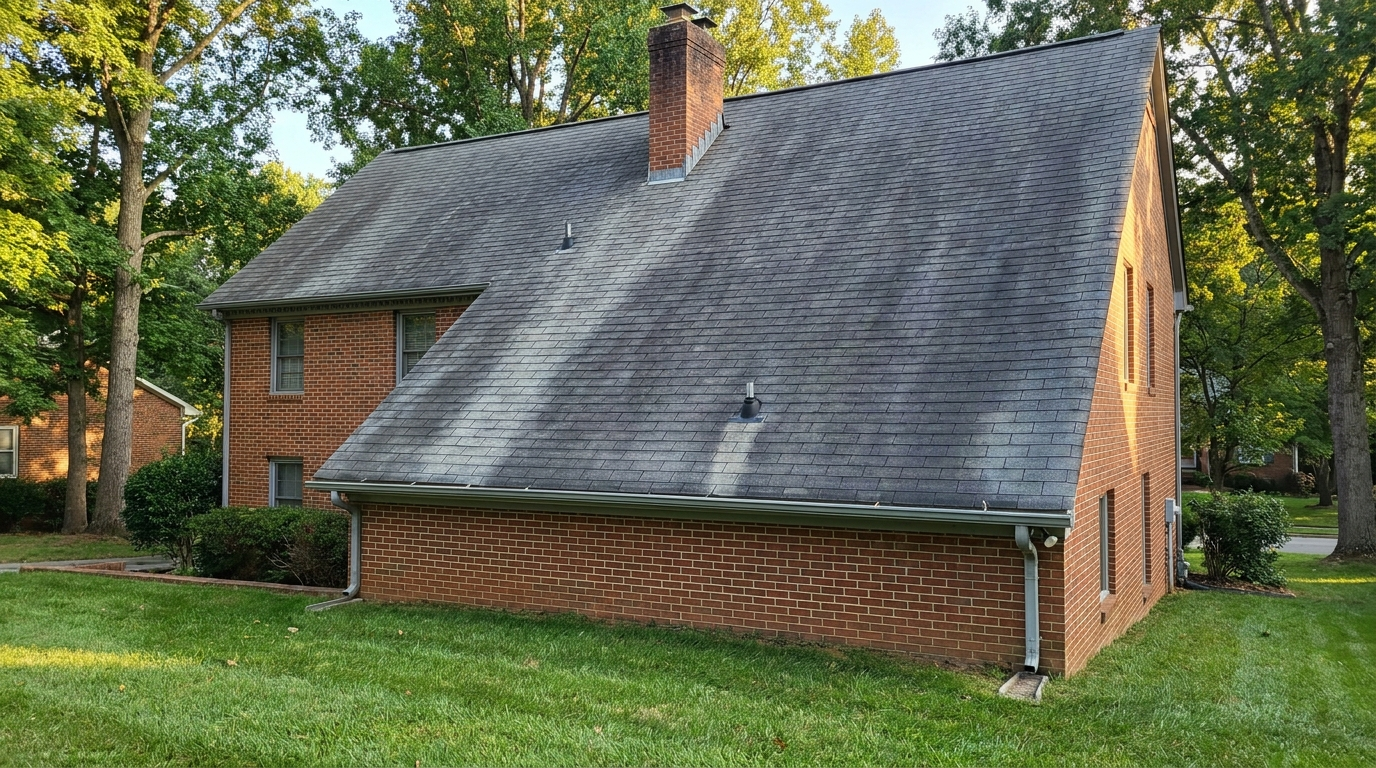
Because it has more edges and joints to finish, not because there's more roof. A gable roof has two sloping planes that meet at a ridge, with a triangular wall, the gable, closing each end. A hip roof slopes on all four sides and has no flat end. Its hips are the lines where two of those sides meet. Which one looks better is a matter of taste.
The surprise is the area. CertainTeed's Master Craftsman Shingle Applicator's Manual, which the shingle maker publishes for roofing contractors (Seventeenth Edition, 2026), measures a simple gable roof and a conventional hip roof, one whose four sides share a slope, the same way: the length and width of the roof's footprint, multiplied by a factor for the slope. Same footprint, same pitch, same area to shingle.
What changes is what gets added on top of that area. CertainTeed's list is the starter course, the hip and ridge sections, the cutting waste at rakes, hips and valleys, and waste from crew error, and its shortcut, which it labels general practice, is to add 10% to the quantity of shingles for a gable roof and 15% for a hip roof. The manual says right away that both figures will be too high for larger roofs, and its more detailed table, labeled approximate, puts a 2,000-square-foot roof at 4% for a gable and 9% for a hip. Either way, the hip roof's allowance is the larger one.
That's a premium on the same roof, not a different kind of roof. For what a whole roof runs, see the range on our roof replacement page. We won't repeat it here.
Which Hip Roof Features Push Up the Price of a Greensboro Reroof?
Two of them: the hips themselves and the longer eave. CertainTeed's manual shows both in two worked examples of similar size: two different houses, not one house roofed two ways, figured for three-tab strip shingles. Read the numbers as an illustration, not as a quote for your roof.
| CertainTeed's worked examples | Simple gable roof | Conventional hip roof |
|---|---|---|
| Footprint and slope | 38 by 28 feet, 6/12 | 44 by 22 feet, 5/12 |
| Roof area | 1,190 square feet | 1,048 square feet |
| Shingles the estimate calls for | 1,233.6 square feet | 1,148 square feet |
| Eaves, where the starter course runs | 76 feet | 132 feet |
| Ridge and hips to cap | 38 feet of ridge | 22 feet of ridge, 65 feet of hips |
The hip roof is the smaller of the two, and the gap between its area and the shingles it needs is still the wider one. Here's where that gap comes from.
The hips. Every hip is a line that the shingles on both sides are cut to, and then it's capped with its own row of cap shingles. CertainTeed's hip example has 65 feet of hips to cap on top of its 22-foot ridge. Its gable example has only a 38-foot ridge.
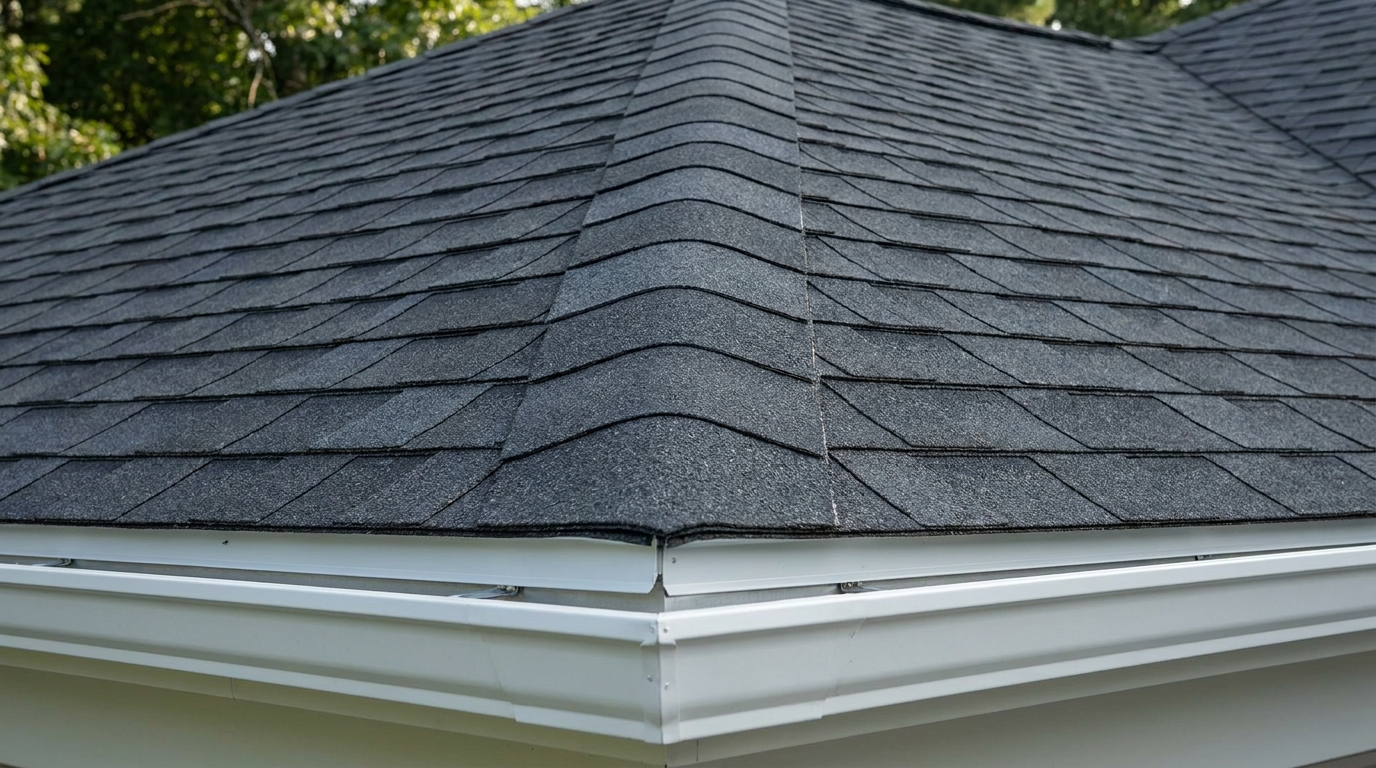
The eaves. A gable roof has an eave along two sides. A hip roof has one along all four. In the table, the starter course runs along the eaves only, which is why the hip roof needs so much more of it; where an installer also runs starter up a gable roof's rakes, that gap closes. The eave is where gutters hang, too, and that gap doesn't close.
On a quote, that difference is spread across more shingles ordered, more feet of cap and more cutting time, rather than sitting on one line. When we quote a roof, the project manager photographs what he finds on the inspection, and the quote comes back written, with options.
Is a Gable Roof’s Extra Attic Space Worth It for Greensboro Homeowners?
It's worth the most to owners who use it. The Building America Solution Center's hip-versus-gable guide, written by Pacific Northwest National Laboratory with U.S. Department of Energy funding and last updated in September 2020, lists three attic advantages for a gable roof: lots of attic storage, easier conversion into living space and easy venting. For a hip roof it lists less attic storage, because the roof slopes in on all sides.
If you store things up there, or you've thought about finishing the space, a gable's attic has real value. If your attic only holds insulation, the advantage that still reaches you is the third one, and you'll meet it when the roof is replaced.
CertainTeed's manual lists three venting options for hip roofs: ridge vents made for the diagonal hips, a short ridge vent paired with soffit vents on all four sides, or power vents near the top of the roof, each paired with intake vents at the eaves. A hip roof gives a ridge vent less ridge to work with, so on a Greensboro reroof, our advice is to ask how the attic will be vented and to have the answer written into the quote, whichever shape you own. What ridge vents do and what they cost is its own subject, and our guide to ridge vent installation costs and benefits covers it.
How Much More Gutter Does a Hip Roof Need, and What Does It Cost?
About as much more as the two extra sides of the house. A gable roof sheds its water off two eaves, and gutters go on the eaves. A hip roof has an eave on every side, so its gutters run the whole way around. In CertainTeed's two examples, that's 132 feet of eave on the hip roof against 76 on the gable.
HomeGuide, a national cost guide that tracks contractor estimates, puts seamless aluminum gutters at $6 to $12 per linear foot installed on a page last reviewed in November 2025; that's HomeGuide's figure, not our pricing. The arithmetic is simple: the extra feet of eave, times the per-foot price on your own quote, plus the added corners and downspouts that come with two more runs.
If your gutters aren't being replaced with the roof, the extra footage costs you nothing today. The per-foot price also depends on profile and material, which our comparison of half-round and K-style gutters in Greensboro walks through. When gutters are part of the project, a gutter replacement quote should show the linear feet behind the price.
Does a Hip Roof Pay for Itself Against Storms in Greensboro?
Not in a way that shows up on a quote. The Solution Center guide says that, all else being equal, hip roofs experience smaller wind pressures than gable roofs, which it lists as prone to damage from uplift and racking in high winds. But the shape was decided when the house was built. On a reroof, the extra you pay on a hip roof buys cuts, caps and eaves, and none of it is storm hardware.
Greensboro isn't hurricane coast, but it isn't out of reach of wind. The National Weather Service's Raleigh forecast office, which covers Guilford County, describes the tornado that crossed the east side of Greensboro on April 15, 2018 as an EF-2 with 135 mph winds in its account of the 2018 Greensboro tornado. So the exposure is real here, even this far inland.
How roof shape behaves in high wind, and what a gable owner can do about it, is covered in our guide to hurricane-season roofs in Charleston. Insurer credits for hip roofs are a separate question. For how they work on the coast, see our guide to wind mitigation inspections in Charleston; whether a Triad policy recognizes roof shape is a question for your carrier.
Where Do Repair Costs Show Up First on Greensboro Hip and Gable Roofs?
Each shape has a place where trouble tends to start: the hips and ridge on a hip roof, the gable ends on a gable roof.
CertainTeed's manual says a roof deck is most vulnerable to leaks at terminations such as eaves and walls, at penetrations such as pipes and chimneys, and at changes in slope such as a valley, hip or ridge. At hips and ridges the overlapping shingles break, and the cap shingles do the job that flashing does elsewhere. A hip roof has more of that line to keep tight. Fixr, a national cost guide, lists ridge capping repairs at $200 to $750 on a page updated January 21, 2026; that's a national figure, not our pricing.
A gable roof trades that for its end walls. The triangle under each gable isn't roofing. It's wall, finished like the rest of the house. The Solution Center guide lists gable ends as prone to water damage and says the gable end wall tends to weather more than a house with a hip roof does. So part of a gable roof's upkeep is wall and trim upkeep at each end.
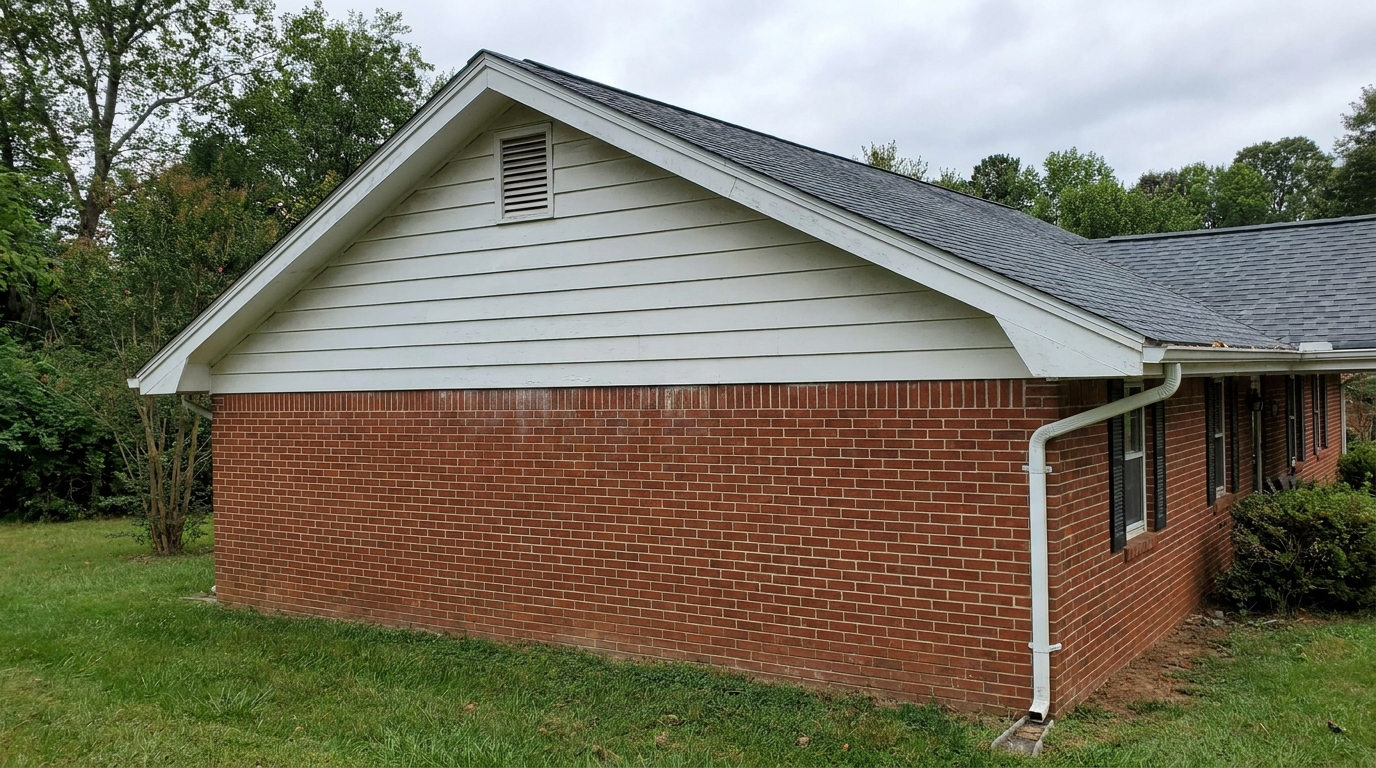
On our own jobs, we flash the chimney, the valleys and the step flashing, and fit drip edge, ridge cap and pipe boot flashing, and every job carries a ten-year workmanship warranty. If a roof that's already on your house is showing trouble at any of these spots, our roof repair service is the place to start.
What Does a Hip and Gable Combination Roof Cost for Greensboro Homeowners?
There's no separate price for a combination roof. CertainTeed's manual tells estimators they need two things for any roof: its area, and the length of its eaves, ridges, hips, rakes and valleys. A combination roof simply has more entries in that second list, and that's usually why it costs more than a plain hip or a plain gable of the same area.
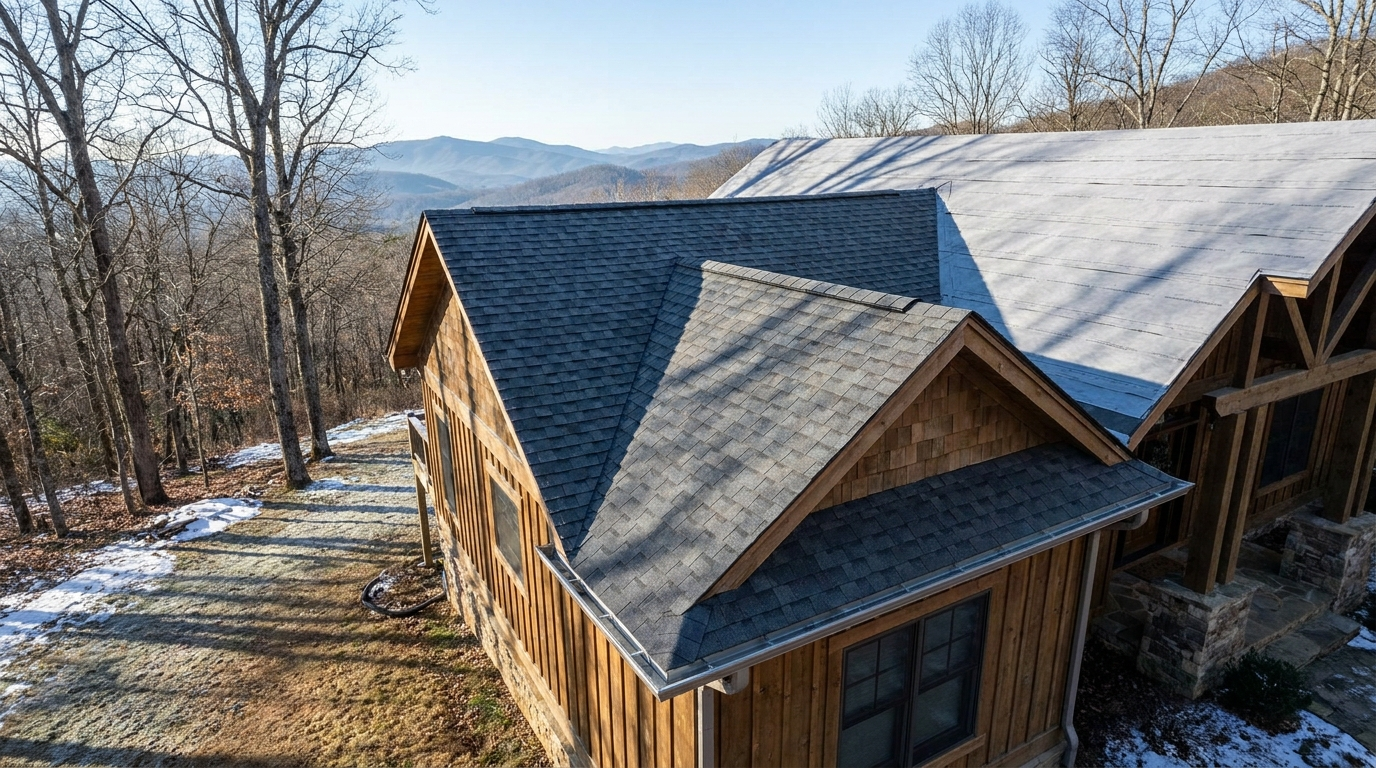
Plenty of roofs are both shapes at once. A Dutch gable is a gable at the very top that flares out into hips below. An intersecting roof lays a hip section across a gable section at a right angle. Wherever two sections meet like that, a valley forms, and valleys are the entry to watch. They're among the leak-prone spots named in the last section, and each one needs its own flashing, which our guide to roof flashing types in Greensboro covers.
A quote that states the roof area and the linear feet of hip, ridge and valley behind the price can be compared line by line with another one; our guide to budgeting a roof replacement in the Carolinas shows how. Two quotes built on the same measurements can be compared. Two totals can't.
Our Bottom Line
For a Greensboro owner, the short version:
- A hip roof usually costs more to replace because it has more lines to cut along and cap, plus an eave on every side, not because it has more area.
- A gable roof's attic is worth the most to owners who use it. Whichever shape you own, ask how the attic will be vented.
- A hip roof has an eave, and a gutter, on every side, so gutter work is priced on more linear feet.
- All else being equal, a hip roof experiences smaller wind pressures than a gable roof, but a reroof doesn't buy that, and it isn't a line on a quote.
- Trouble tends to start along the hips and ridge on a hip roof, and at the gable ends on a gable roof.
- A combination roof is estimated from its area and the length of its eaves, ridges, hips, rakes and valleys, and it usually costs more because it has more of them.
Every job starts with a free on-site inspection. If you'd like to know what your own roofline adds up to, our Greensboro roofing team can start there.