Who Qualifies for an SC Safe Home Grant in Charleston?
RoofingBaker Home Exteriors
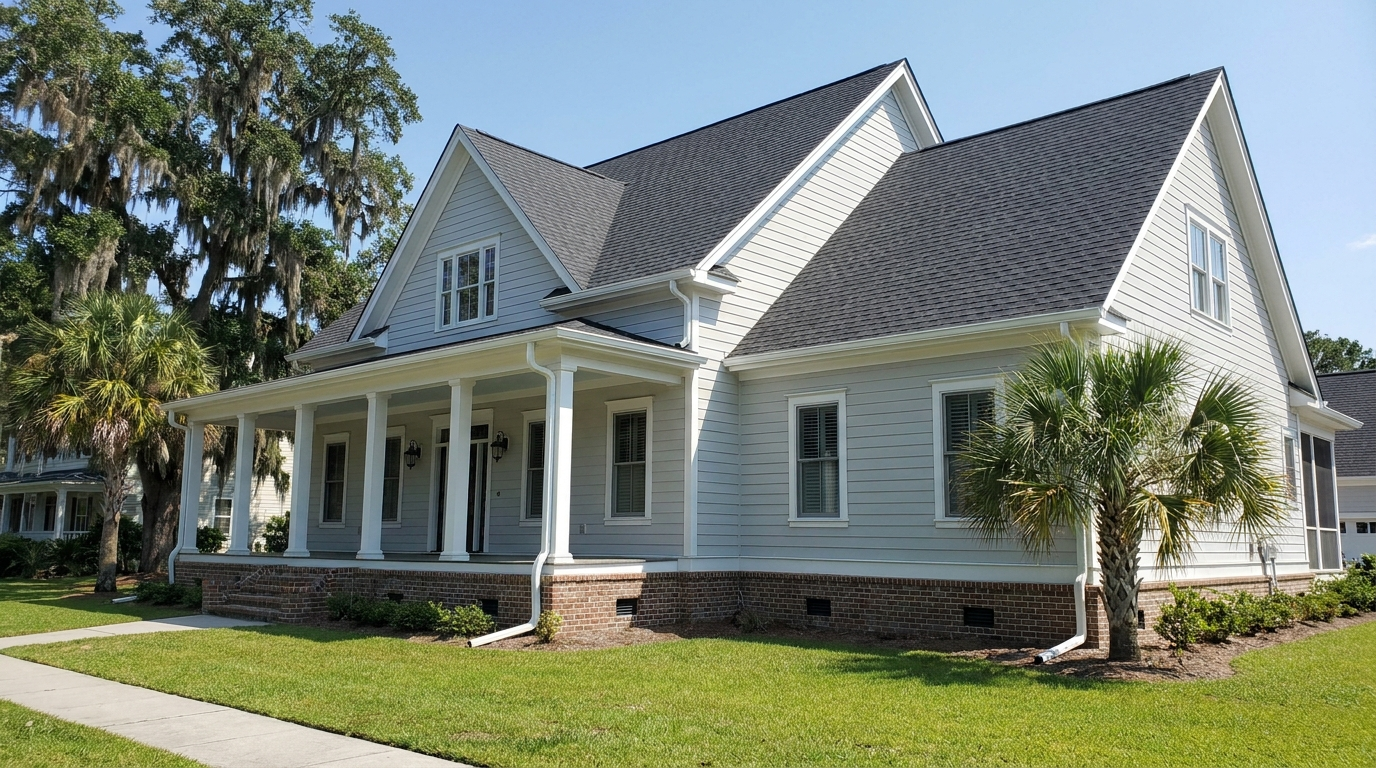
SC Safe Home is a South Carolina grant program that helps homeowners near the coast pay for upgrades that make a house stronger against hurricanes and high winds, including a new high wind-rated roof covering. To qualify in the Charleston area, the home has to be a freestanding single-family house that you own and live in as your primary residence, with an active homeowners insurance policy, no prior storm-related damage or insurance claim payouts, and no Safe Home grant awarded and used before. The Department of Insurance also weighs household income.
If a roof replacement is on your list, timing matters as much as the rules: when we checked on October 26, 2026, the program was not accepting new applications. Below, we walk through who qualifies, what the roof grants pay, what they cover, when to apply and how to choose a participating contractor.
What Is SC Safe Home, and Which Charleston Homes Can Apply?
SC Safe Home is the South Carolina Department of Insurance’s mitigation grant program. It gives homeowners who live near the coast grant money for safety upgrades, like a stronger roof, and it does not pay for regular home repairs, remodeling or building new rooms. Roof grants like this are real: South Carolina created the program through the Omnibus Coastal Property Insurance Reform Act of 2007.
For a Charleston-area home, the Department of Insurance’s eligibility rules ask for the following:
- The home is in a designated coastal county. The program currently awards grants in 11 counties. Charleston, Berkeley and Dorchester counties are all among them, so the county rule covers addresses across the tri-county area, and Colleton, Beaufort and Jasper counties, farther down the Lowcountry, are on the list too.
- You own the home and live in it as your primary residence. Renters do not qualify, and vacation homes, rentals and investment properties are not eligible.
- It is a single-family, freestanding house. Duplexes, townhomes, apartments and other multifamily homes do not qualify.
- You carry an active homeowners insurance policy.
- You have not been awarded and used a Safe Home grant before.
- The home has no prior storm-related damage or insurance claim payouts, a rule we come back to below.
Income is part of the picture as well. The Department bases grant eligibility on household income along with other qualifying factors, and income also decides whether your grant is matching or non-matching, which is the next question.
How Much Can SC Safe Home Grants Pay Toward a Roof in Charleston?
Up to $7,500, for roof work that meets the Resilient standard on a non-matching grant, under the Department of Insurance’s current award table. Resilient roof work has to meet both the Safe Home guidelines and the FORTIFIED Roof standard from the Insurance Institute for Business & Home Safety (IBHS). The Sustainable award covers roof work that meets the Safe Home guidelines only, up to $5,000 on a non-matching grant. Matching grants carry lower caps:
| Roof award | Roof work must meet | Non-matching grant | Matching grant |
|---|---|---|---|
| Resilient Mitigation | SC Safe Home and FORTIFIED Roof guidelines | Up to $7,500 | Up to $6,000 |
| Sustainable Mitigation | SC Safe Home guidelines only | Up to $5,000 | Up to $4,000 |
Which column applies depends on household income. The Department of Insurance compares your total annual adjusted gross household income, adjusted for family size, with the higher of your county’s area median income or the state median family income, from figures the U.S. Department of Housing and Urban Development (HUD) publishes each year. For a Charleston-area house, that means the Charleston, Berkeley or Dorchester County figure, depending on which county the house is in. Households below 80% of that benchmark get the non-matching grant with no match required; at or above it, the grant is matching, and you put in money of your own alongside it. The Department of Insurance’s award calculator gives an estimate for your household, though not a guarantee.
On either type, the grant is a contribution toward the job, not the whole bill: if the project costs more than the grant, you pay the rest. Being unable to cover that share is the main reason approved grants are canceled, per the June 2026 report the Department and the SC Office of Resilience made to the General Assembly, so price your part of the roof before you apply.
Separately, South Carolina offers state income tax credits for fortification work, and the Department of Insurance says SC Safe Home projects can qualify, so ask a tax professional how they apply to your return.
Which Roof Upgrades Does an SC Safe Home Grant Cover?
Wind-resistance work on the roof, not general repairs or maintenance. These are the roof retrofits on the Department of Insurance’s qualifying list:
- Strengthening the roof deck attachment, the fasteners or adhesives that secure the roof decking to the framing
- Installing a secondary water barrier, a layer under the roof covering that keeps water out if shingles are damaged or blown off
- Installing a high wind-rated roof covering
- Bracing gable ends
- Reinforcing roof-to-wall connections
- Strengthening weak trusses, studs or other structural components
Several of these sit under the roof covering or up in the attic, out of sight from the yard, and the program’s wind inspection is what recommends the retrofits for your home.
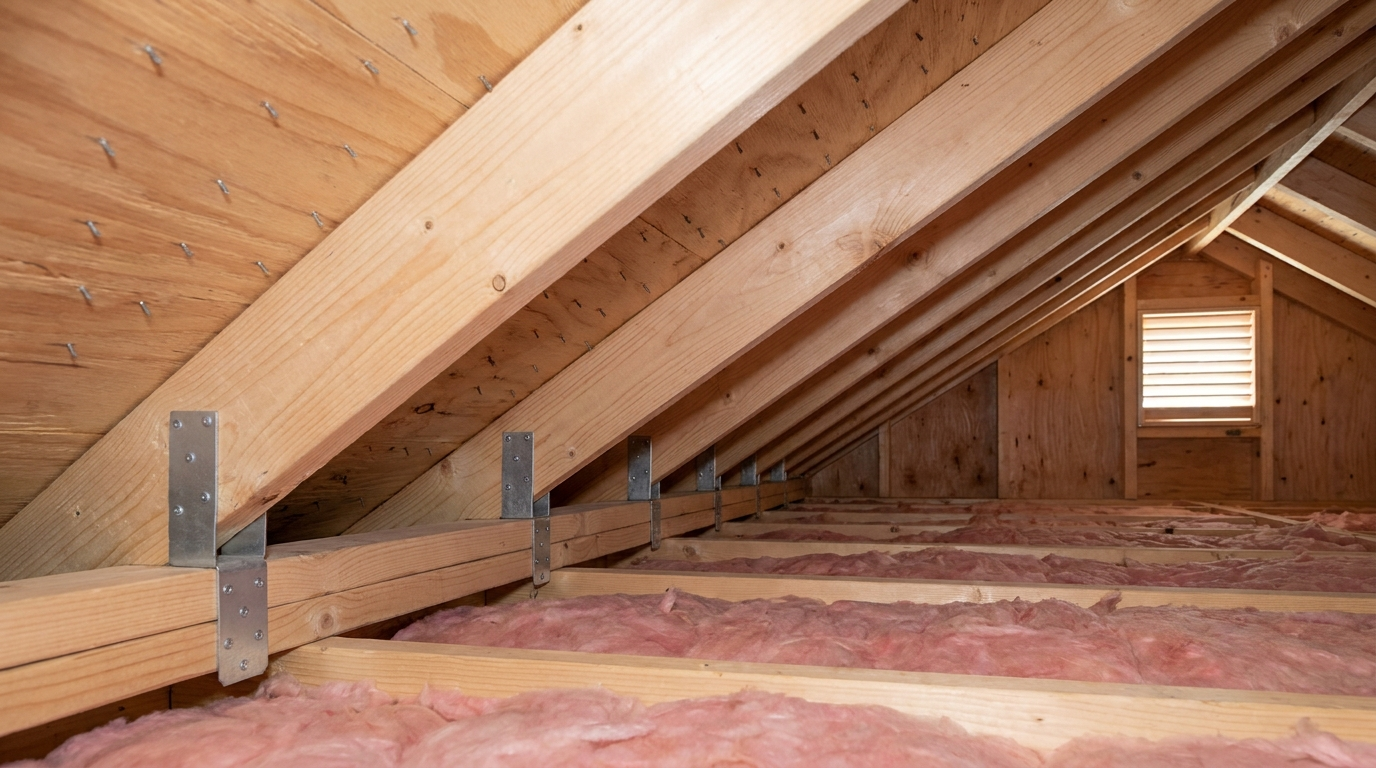
If your roof is due for replacement anyway, the grant can put money toward building the new one to the program’s standard. The program also funds protection for a home’s exterior openings, which falls outside this roof guide. How hurricane straps and wind-rated shingles perform on a Charleston roof is covered in our guide to the best roof for hurricane season in Charleston.
The Resilient award’s dual standard is worth understanding before you choose an award type. The Safe Home and FORTIFIED Roof standards are nearly identical, because both rest on the same nationally recognized mitigation standards, except that Safe Home requires roof-to-wall connectors, as the Department of Insurance’s comparison of the two explains. The main difference is the check: Safe Home certification confirms the work meets the program’s requirements, while FORTIFIED Roof adds a third-party evaluation and a national designation when the contractor completes the documentation correctly. Both certifications can make a home eligible for insurance discounts, which vary by carrier, and our wind mitigation inspection guide explains how those discounts work in Charleston.
When Does the SC Safe Home Application Window Open for Lowcountry Homeowners?
Not right now, and the Department of Insurance had posted no reopening date when we checked on October 26, 2026. That day, the Safe Home portal said the program was not accepting new applications, and the Department’s program page said the same. The Department says applications open twice a year and points homeowners to the Safe Home homepage for the current cycle’s status.
The notice can be short. In 2026, for example, the Department announced the February 10 reopening on February 4 and the July 13 reopening on July 8. Funding can then go fast: high demand often uses up the available funding within days of the portal opening, and once the year’s funds are exhausted, the program stops issuing new grants.
While the portal is closed, two things are worth doing now:
- Sign up for the email notice. The portal’s notification page takes your email address and tells you when the program is accepting applications again. It is not an application: accounts cannot be created and requests for funding cannot be submitted until the portal is open and funding is available.
- Gather your documents. To apply, you need a copy of your most recent IRS Form 1040 (or other most recent income tax return), your homeowners insurance declarations pages and your county property tax assessment, according to the Department of Insurance’s Safe Home FAQ. You do not need a wind inspection or photographs before you apply.
Why Should Charleston Homeowners Wait for Approval Before Any Safe Home Work Starts?
Because the program cannot pay for work that is already done. In accordance with state law, the Department of Insurance cannot reimburse retrofits you have already done, and you must have the inspection and receive grant approval before the retrofits are done to be eligible. That reaches the inspection as well. Do not schedule or pay for a wind inspection before you apply: the inspection is part of the grant process, and only inspectors on the Department’s participating list may be used if you want to remain eligible.
Up to the day work starts, the order runs like this:
- Apply while the portal is open, with the documents listed above.
- Choose a participating wind inspector. Once your application is approved, you select an inspector from the Department of Insurance’s participating list and pay the inspection fee yourself. The Department caps the fee by home size: up to $150 for up to 1,500 square feet, up to $200 for 1,501 to 2,000 square feet and up to $250 over 2,000 square feet.
- Get estimates for the recommended retrofits. A retrofit estimate must be submitted with your application, and the Department encourages getting more than one from its participating list.
- Wait for grant approval. It arrives as a Grant Award Notification letter, and the retrofits wait until you have it.
- Sign the contract after the award. You and the participating contractor you choose submit the signed agreement to the program before any work that will use grant funds begins.
From the date on the award letter, the approved work has to be finished within three months, and the staff will consider a written request for an extension when circumstances warrant one, under the program guidelines. The Department’s homeowner training video shows how the portal works.
Does Past Storm Damage Rule Out a Safe Home Grant in Charleston?
It can. A roof that is damaged now does not qualify, because the home must not have existing or previous damage. The Department of Insurance’s eligibility list also asks for no prior storm-related damage or insurance claim payouts on the home, so a past storm claim can count against you even after the roof was repaired.
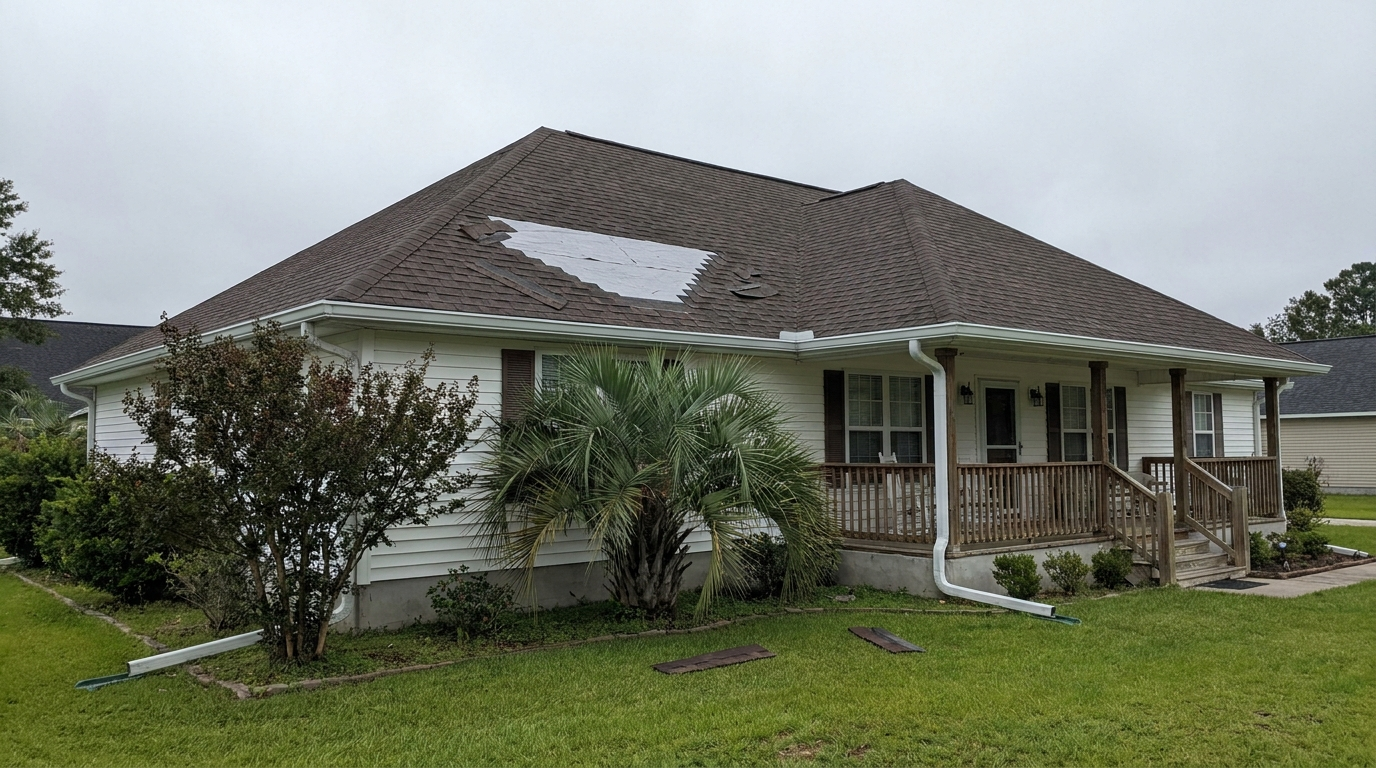
SC Safe Home is set up to strengthen homes ahead of a storm, and it does not pay for regular home repairs. If your home has a storm claim or a repaired roof in its history, ask the Safe Home staff, through the contact details on the Department’s program page, before you count on a grant. If the roof is damaged now, the grant is not the tool for it: that is a repair and insurance question, and our guide to whether homeowners insurance will cover your roof walks through that side.
How Do Charleston Homeowners Choose a Participating Safe Home Contractor?
Start with the Department of Insurance’s list of participating inspectors and contractors, because after the award letter you sign with the participating contractor you chose from the estimates in your application. To be on that list, each contractor has to hold the appropriate South Carolina licensure, complete the program’s training and attend its annual recertification training.
Each entry on the list shows the business, its address and service area, whether the person is listed as a contractor, an inspector or both, and, for contractors, the retrofit types they are listed for, such as Resilient, Sustainable or Hurricane Shutters. The area column groups contractors by region, for example Greater Charleston/Berkeley Area. When you compare contractors:
- Match the listing to your award. For a Resilient roof, choose a contractor the list shows for Resilient; for a Sustainable roof, one listed for Sustainable.
- Get more than one estimate. The Department encourages homeowners to shop the list for more than one estimate for the recommended retrofits.
- Ask for proof. Request proof of insurance and proper licensure from any contractor you choose.
Our Charleston team is on that list. You will find us as Baker Home Exteriors, LLC, at our North Charleston branch on Southrail Road, listed as a participating contractor for the Sustainable award. We are not listed as an inspector, so the program’s wind inspection comes from a participating inspector you choose, and the list does not show us for the Resilient award. If your plan is a Sustainable roof retrofit, we are glad to be one of the estimates you compare, and every job carries our ten-year workmanship warranty.
The Final Word
SC Safe Home can put money toward a stronger roof for a Charleston-area home that you own and live in as your primary residence, with active homeowners insurance, no prior storm-related damage or insurance claim payouts and no Safe Home grant awarded and used before. On the Department of Insurance’s current table, Resilient roof work, which meets both the Safe Home guidelines and the FORTIFIED Roof standard, can receive up to $7,500 on a non-matching grant or $6,000 on a matching one. Sustainable roof work, which meets the Safe Home guidelines alone, can receive up to $5,000 on a non-matching grant or $4,000 on a matching one. Either way, you pay whatever the job costs beyond the award.
The program was not accepting new applications when we checked on October 26, 2026, so sign up for the email notice and gather your documents now. When the portal opens, apply first: the program cannot pay for work done before approval, and you pay the participating inspector’s fee, up to $250 depending on the size of the home. For a Sustainable roof retrofit, you will find our Charleston team on the participating list.