Is a New Roof Tax Deductible for Asheville, NC Homeowners?
RoofingBaker Home Exteriors
Is a new roof tax deductible in Asheville, NC? The answer depends on how the house is used. The IRS applies different rules to a new roof on the home you live in, a roof on a rental, and storm damage from a federally declared disaster such as Helene.
We handle roof replacement, not tax returns. What follows is our plain-language summary of the IRS rules that touch a new roof, with links to the IRS pages behind them. This is not tax advice. Before you claim anything, talk to a tax professional who can look at your whole return.
Can Asheville Homeowners Deduct a New Roof on Their Taxes?
Generally not, on a home you only live in. A new roof counts as an improvement, and on a personal home the cost of an improvement is added to the home’s basis instead of being deducted. IRS Publication 530 lists installing a new roof among its examples of improvements.
Three situations change that answer:
- A rental. A new roof on a house you rent out is recovered through depreciation, which we cover below.
- A home office. If part of your home qualifies as a home office under IRS Publication 587 and you deduct actual expenses (the simplified method allows no depreciation), the business share of a new roof is depreciated rather than deducted at once.
- A disaster loss. Damage from a federally declared disaster can be a deductible casualty loss for the part insurance does not cover. In Buncombe County, that disaster is Helene, also covered below.
For example, the same new roof adds to basis on the house you live in and is depreciated on a duplex you rent out. The roofing work is identical; the tax treatment follows how the building is used.
How Does a New Roof Change the Tax Basis of an Asheville Home?
It raises it. Your home’s basis is generally what the home cost you, adjusted over the years, and improvements are added to it. For a new roof, Publication 530 counts your actual cost: all materials and labor, except your own labor, plus all expenses related to the improvement.
Basis matters most when you sell. The gain on a sale is the amount realized minus the adjusted basis, as IRS Publication 523 sets out, so roof costs recorded in your basis shrink the gain. If you qualify for the exclusion described there, up to $250,000 of gain on your main home ($500,000 if married and filing jointly) is tax free. When the gain is more than that, or you qualify for only a partial exclusion, some of it may be taxable, and that is when a well-documented roof can make a difference.
Two adjustments are easy to miss. If the roof coming off was itself an improvement you paid for, its cost leaves your basis once it is replaced, because Publication 530 drops improvements that are no longer part of the home. For example, on a house you have reroofed once before, the first roof’s cost comes off your records when the new roof goes on. And after storm damage, the arithmetic runs both ways: what you spend restoring the home is added to basis, while insurance or other reimbursement for the loss, and any casualty loss you deduct, are subtracted.
Where Does the IRS Draw the Tax Line Between a Roof Repair and an Improvement?
At what the work does for the house. In Publication 530’s terms, a repair keeps your home in an ordinary, efficient operating condition without adding to its value or prolonging its life. An improvement materially adds to the home’s value, considerably prolongs its useful life, or adapts it to new uses. On the IRS’s own lists, fixing leaks is a repair and installing a new roof is an improvement.
On a home you only live in, neither one is deductible, so the line mostly decides what goes into basis. A repair generally stays out. The exception: repairs done as part of an extensive remodeling or restoration of your home are treated as improvements and added to basis with the rest of the project.
On a rental, the same line decides whether a cost is deducted now or depreciated. IRS Publication 527 frames the rental test as betterment, restoration or adaptation, and it lists replacing a substantial structural part of the property among the expenses that may be a restoration.
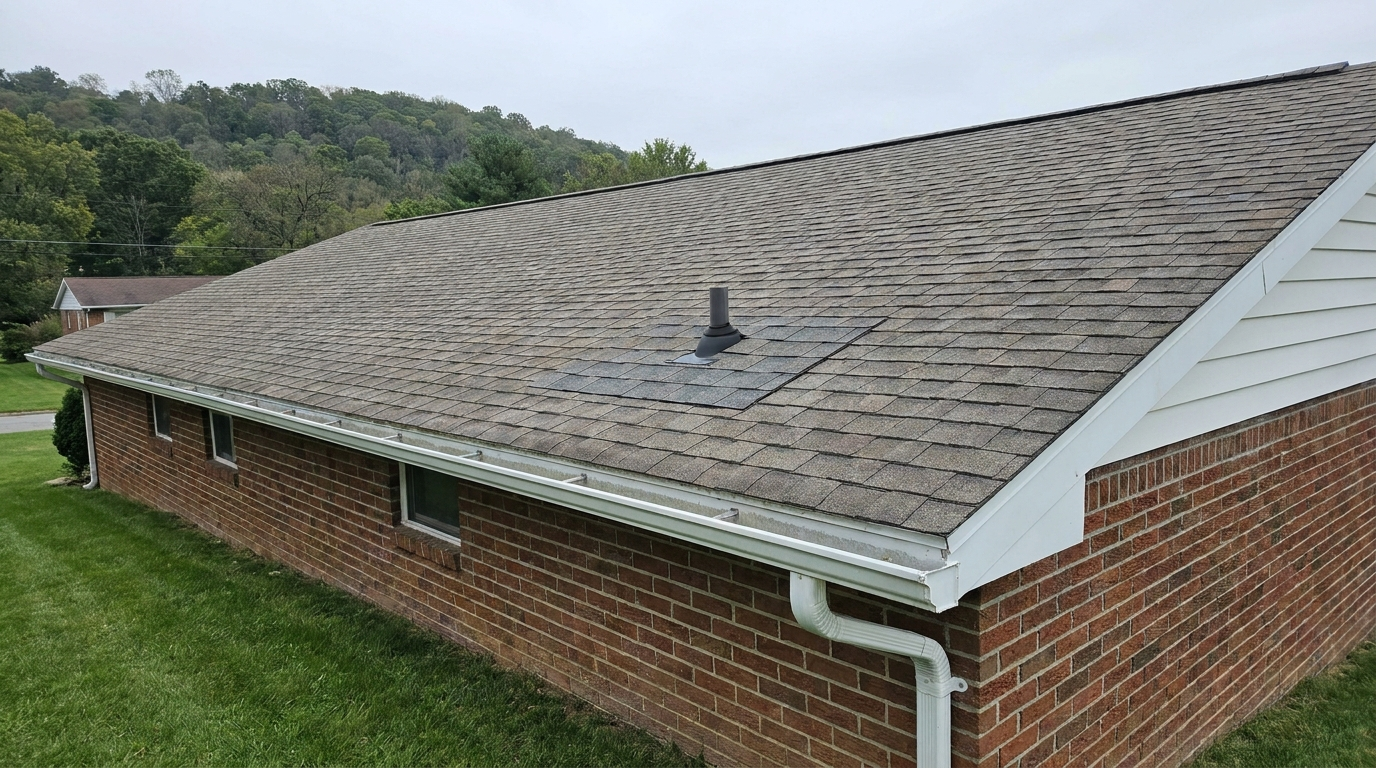
For example, patching a leak around a vent pipe sits on the repair side of the line, while tearing off and replacing the whole roof sits on the improvement side. If your job falls somewhere in between, such as one slope replaced after a storm, ask your tax professional which side it lands on, with the invoice in hand.
How Do Asheville Landlords Deduct a New Roof on a Rental?
Through depreciation, a share each year, rather than all in the year you pay for it. Publication 527 requires you to capitalize the cost of improving rental property, and a new roof is on its list of examples. The roof is then generally depreciated as its own item, over the same recovery period that applies to the house: 27.5 years for residential rental property under the general depreciation system.
Repairs work differently. An expense for repairing or maintaining a rental can generally be deducted, as long as you are not required to capitalize it. On a rental, that turns the repair-or-improvement line into a question of timing: a repair is generally deducted in the year it is paid, a new roof over 27.5 years.
A few situations call for a closer look. If you rent out part of your property, Publication 527 has you divide certain expenses between the rental part and the personal part, as though they were two separate properties. If you use a rental yourself for part of the year, expenses are divided between rental and personal use, and your rental deductions may be limited. And if Helene damaged a rental, the loss is figured under Publication 547’s rules for rental and other income-producing property, which differ from the rules for a home you live in described below.
Is There Still a Federal Tax Credit for a New Roof in Asheville This Year?
No. For a new roof put on in 2026, there is no federal energy credit to claim. The IRS’s 2025 instructions for Form 5695, the form for both residential energy credits, say the energy efficient home improvement credit can’t be claimed for expenditures or property placed in service after December 31, 2025, and the residential clean energy credit can’t be claimed for expenditures made after that date.
This was not a local program. It was a federal income tax credit, so the answer is the same for a house in Asheville as for one anywhere else in the United States.
A roof did not qualify for the energy efficient home improvement credit in its final year either. For 2025, the instructions list the qualifying building envelope components as insulation and air sealing materials, exterior windows and skylights, and exterior doors, and the energy property list covers equipment such as heat pumps, water heaters and furnaces. Roofing is on neither of those lists. If you are pricing a roof now, plan the cost without a federal credit.
Can Hurricane Helene Roof Losses Be Deducted by Buncombe County Homeowners?
Possibly, for the part of the damage that insurance and other reimbursement did not cover. For the 2024 tax year, IRS Publication 547 generally allows a casualty loss on a home you live in only when the loss is attributable to a federally declared disaster. Helene meets that condition here: FEMA’s major disaster declaration for the storm in North Carolina, DR-4827, was made on September 28, 2024, and it covers Buncombe County.
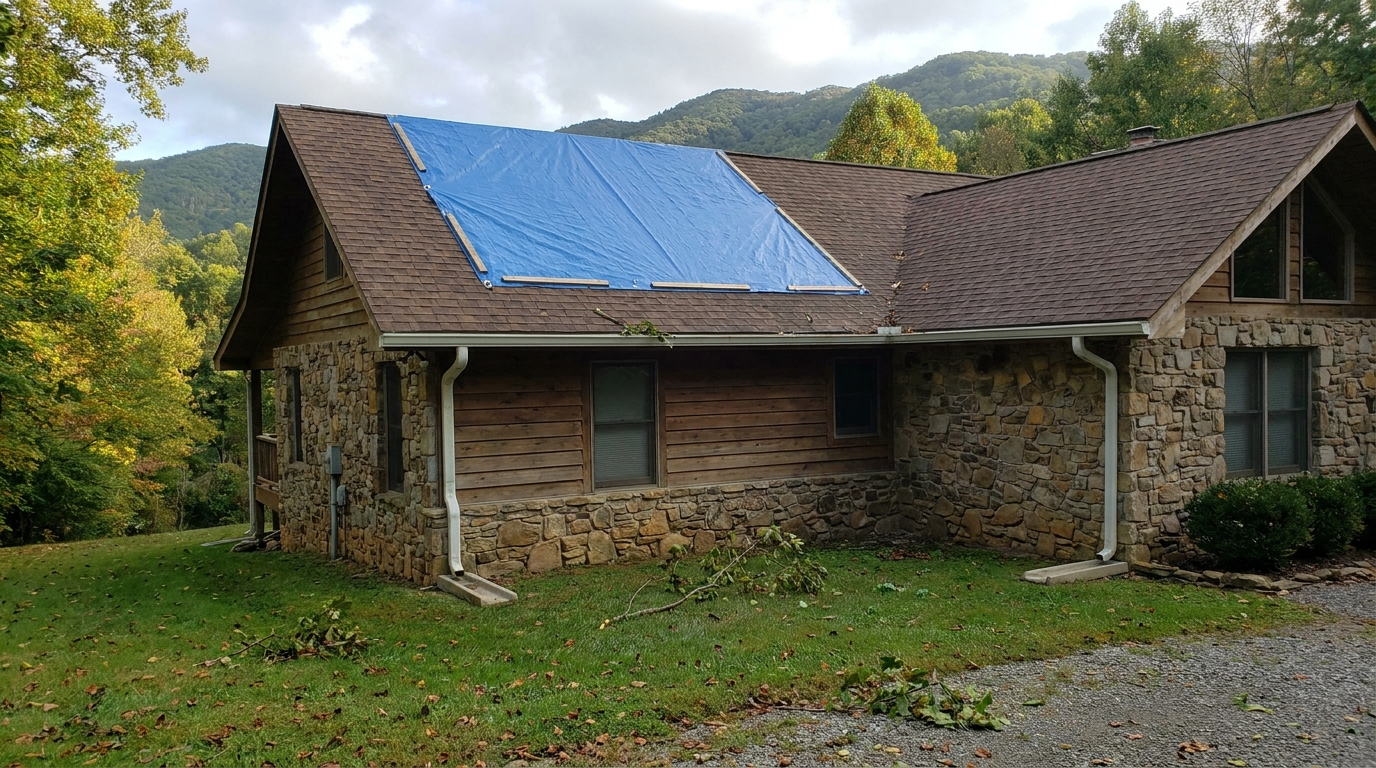
Insurance comes first. If the roof was insured, the IRS expects a timely insurance claim; without one, only the part of the loss the policy does not cover can be deducted. Whatever insurance paid, or is expected to pay, comes off the loss before the reductions described below. How the claim itself and its deductible work is a separate subject, covered in our guide to homeowners insurance and roof damage.
The loss is also not simply the price of a new roof. The IRS measures it as the drop in the property’s value or its adjusted basis, whichever is smaller, minus reimbursement. A repair bill can stand in for the drop in value only under conditions the publication lists, including that the repairs take care of the storm damage and nothing more.
Helene losses can also get easier treatment than ordinary casualty losses. Publication 547 has a category called qualified disaster losses: losses on a home you live in from a major disaster declared between January 1, 2020, and September 2, 2025, whose incident period falls inside the dates the publication lists. Helene’s North Carolina declaration fits those dates, with an incident period of September 25 to December 18, 2024. For a qualified disaster loss, the reduction is $500 per casualty instead of the usual $100, the usual reduction of 10% of adjusted gross income does not apply, and the loss can be deducted without itemizing. Your tax professional can confirm how that applies to your loss.
The year matters, too. Generally, a disaster loss belongs to the year it happened, which here means the 2024 return, although part of it can belong to a later year if an insurance claim with a reasonable prospect of recovery was still open. The IRS also let North Carolina filers claim Helene losses on their 2023 return instead, but for individuals the deadline to make that choice was October 15, 2025. If your 2024 return is already filed without the loss, ask a tax professional whether an amended return can still claim it.
For our Asheville team’s account of the storm and the rebuilding since, see our look back at Hurricane Helene.
Which Roof Records Should Asheville Homeowners Keep for Tax Time?
The ones that prove what the roof cost and, after a storm, what the storm cost you. For the roof itself, that means the written quote or contract you accepted, the final invoice and proof of payment. Publication 530 asks you to keep receipts, canceled checks and similar evidence for improvements, and its home improvement record (Table 4) has a line for the roof, with columns for the date and the amount.
Keep basis records longer than most tax papers. Publication 530’s general rule is to keep them for as long as you own the home and, after you sell it, for the period of limitations that applies to you. On a rental, Publication 527 adds one habit: keep repair costs and improvement costs separate, because you will need the cost of improvements when you sell or depreciate the property.
For a storm loss, Publication 547 asks that you be able to show you owned the property, the type of casualty and when it occurred, that the loss was a direct result of it, and whether a claim for reimbursement exists with a reasonable expectation of recovery. Keep photos of the damage, the insurance claim file and its payments, and the repair estimate and invoice together for that purpose.
When we inspect a roof, the project manager photographs what they find, and the quote comes back written, with options. Keep that written quote in the same folder as the invoice, the payment record and any insurance papers. For example, one roof folder like that is easy to hand to a tax professional, whether you are selling the house, depreciating a rental or claiming a storm loss.
The Takeaway
On a home you only live in, a new roof is generally not deductible. It is an improvement, and its cost goes into your home’s basis, which can shrink the taxable part of your gain when you sell if that gain runs past the exclusion of up to $250,000 ($500,000 if married and filing jointly). On a residential rental, a new roof is generally depreciated over 27.5 years, while repairs can generally be deducted. The energy efficient home improvement credit can’t be claimed for property placed in service after December 31, 2025, and roofing was not on its 2025 list. For Buncombe County homeowners, Helene adds one more case: storm damage from a federally declared disaster that insurance did not cover can be a casualty loss under Publication 547’s rules.
Keep the quote, the invoice and the payment record, and bring them to a tax professional, since this post is not tax advice. When you are ready to talk about the roof itself, every job starts with a free on-site inspection, and we can walk you through a new roof for your Asheville home.