Do You Need a Permit to Replace a Charleston, SC Roof?
RoofingBaker Home Exteriors
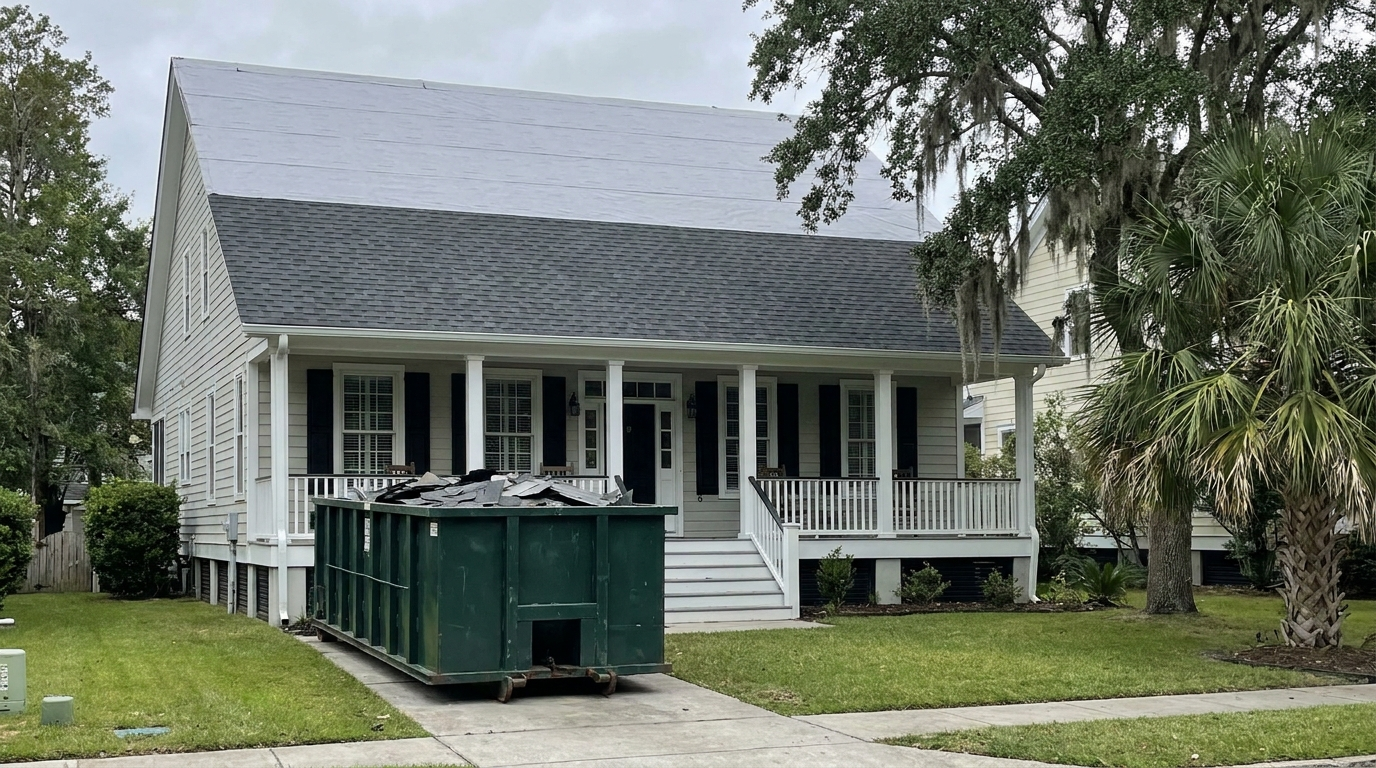
If you are planning a roof replacement in Charleston, the permit is part of the job, and the first step is knowing which office issues it. In the Lowcountry, “Charleston” can mean the City of Charleston, unincorporated Charleston County or a town such as Mount Pleasant, and each one runs its own permit office. Below, we walk through their rules, from the application to the final inspection.
Does Replacing a Roof in Charleston Require a Building Permit?
Yes. Inside the City of Charleston, replacing the roof on a house takes a building permit. The City’s August 2022 permitting guidance for residential roofing replacement and repair sets out the permit, notes that it is commonly submitted as a “re-roofing” permit, and lists a residential building final as a required inspection. The same guidance covers roof repairs as well as replacements.
Outside City limits, the two other offices we cover point the same way. In unincorporated Charleston County, the FAQ from Charleston County Building Inspection Services says a job under $1,000 can go without a permit only if it needs no inspection and the homeowner does the work, or a specialty contractor handles a single trade; otherwise, permits are required for all trades and work no matter the value. A roof replacement is not that kind of job. In Mount Pleasant, the Town’s building FAQ says permits are required for any owner or contractor who intends to alter or repair a building, and roofing is not among the exceptions it lists. When in doubt, the Town asks you to email its Building Inspection Division to confirm.
That holds even when the new roof matches the old one. South Carolina law sets out improvements a homeowner can make without a building permit, such as one-story outbuildings of up to 200 square feet, fences no more than seven feet high and painting. A roof is not among them.
Which Office Issues Roof Permits for Charleston Homeowners?
The office that governs your address. For the three we cover here:
- Inside City of Charleston limits: the City’s Permit Center, which takes residential roofing permits online through its Customer Self Service (CSS) portal.
- In unincorporated Charleston County: Charleston County Building Inspection Services, which takes permit applications through the County’s own CSS portal or in person at its office.
- In Mount Pleasant: the Town of Mount Pleasant’s Building Inspection Division, which takes building permit applications online.
Before you apply, confirm which side of the line you are on. The City’s Permit Center points homeowners to an interactive map to check whether an address is inside city limits, and when an address does not show up there, it points to the Charleston County and Berkeley County map services instead. For example, the City and the County each run a portal called Customer Self Service, but they are separate systems, so start in the one that matches your address. If your address falls under another town or county, that office’s rules apply.
Who Pulls the Permit, the Roofer or the Homeowner?
When you hire a roofer, the roofer should pull the permit. You can pull one yourself in all three places, but only as an owner-builder, acting as your own builder under state law, and that comes with conditions, including these:
- You supervise the work yourself. The County’s owner-builder disclosure calls for direct, on-site supervision and bars hiring an unlicensed person to act as your contractor.
- The house is for your own use. The exemption does not cover a home built or improved for sale or rent, and state law presumes a violation if you sell or rent it within two years after the work is complete. In unincorporated Charleston County, you can get the permit as a homeowner if you or your immediate family do the work and you will live in the home for at least two years after it is completed, according to the County’s FAQ.
- The property is in your own name. Mount Pleasant says the owner-builder option does not apply when the property is deeded to a trust, LLC, corporation or similar entity.
- You record a notice. The City requires a filing with the county Register of Deeds when the work is valued at over $5,000, and Mount Pleasant requires its owner-builder affidavit to be recorded before a permit is issued.
If a contractor asks you to pull the permit yourself, treat it as a warning sign. The Town of Mount Pleasant advises homeowners in that position to reconsider, because many times that contractor may not be properly insured, licensed or bonded and may not want to assume responsibility for the work.
When the roofer pulls the permit, the office checks the roofer’s credentials before issuing it. Under South Carolina law, a roofer who takes on a home job over $500 must be registered as a residential specialty contractor with the South Carolina Residential Builders Commission, unless the roofer holds that commission’s residential builder license or a license from the South Carolina Contractors’ Licensing Board. Both boards sit under the Department of Labor, Licensing and Regulation (LLR). On a job for an individual property owner where materials and labor total over $5,000, a registered residential specialty contractor must also obtain a surety bond in an amount the commission approves. Our list of what to look for when hiring a roofing contractor covers the rest of the checklist, including insurance.
What Does a Charleston Reroof Permit Application Ask For?
Mostly the who, where and what of the job. The City of Charleston’s residential alterations and additions application, updated July 31, 2026, asks for:
- The property: the address of the work, the owner’s contact details, the tax map (TMS) number and the flood zone.
- The people: a contact and a field contact, plus, for contractors only, a company name, an SC LLR license number and a City of Charleston business license number.
- The job: a detailed description, the total value of construction, and whether Board of Architectural Review approval has already been granted.
- The roof: whether the work is a full re-roof, a roof repair or a re-coating, whether sheathing is included, and the existing and proposed roof materials.
Not sure yet whether your roof needs a repair or a full replacement? Every job we take on starts with a free on-site inspection, and the project manager photographs what the inspection finds before the quote comes back written, with options. The City’s roofing guidance also asks for the type of roof covering, with Type H required for asphalt shingles unless otherwise specified, and the manufacturer’s specifications for metal or elastomeric roofs. If you are choosing shingles, ask your roofer to confirm the product meets that requirement before it is ordered.
Fees follow each office’s own schedule. The City bills an application fee, a plan review fee and a building permit fee from its fee schedule. Charleston County and Mount Pleasant base the permit fee on the value of the work. Our roof replacement cost guide for the Carolinas covers what permits add to your budget.
From there, the City’s permit application process runs in this order:
- The applicant submits the application through the CSS portal, by email or in person.
- Staff check it for completeness and email a request for anything missing. The applicant uploads those files through the portal and then emails staff at permits@charleston-sc.gov, because the portal does not alert staff to new uploads.
- Staff route it to each department the scope of work requires. Reviewers approve it or post comments in the portal. If they post comments, the applicant waits until all reviews are complete, then submits the revised materials with a revision application through the portal and emails staff again.
- Once every approval is in, staff confirm the contractor’s license or the owner’s exemption, and that any required business license is current.
- The City invoices the fees. Once they are paid through the portal, the permit is issued, the placard can be printed, and construction can begin.
Charleston County’s forms also include a roof underlayment form based on the 2021 codes, so ask your roofer whether your permit calls for it.
When Does a Historic District Roof Need Board of Architectural Review Approval in Charleston?
When the house sits inside the Board’s districts or purview. The City’s roofing guidance calls for Board of Architectural Review (BAR) review “only if project within designated purview or district.” Within the historic districts, the BAR reviews all new construction, alterations and renovations visible from the public right-of-way, and it also has jurisdiction over every structure on the City’s Landmark Overlay list.
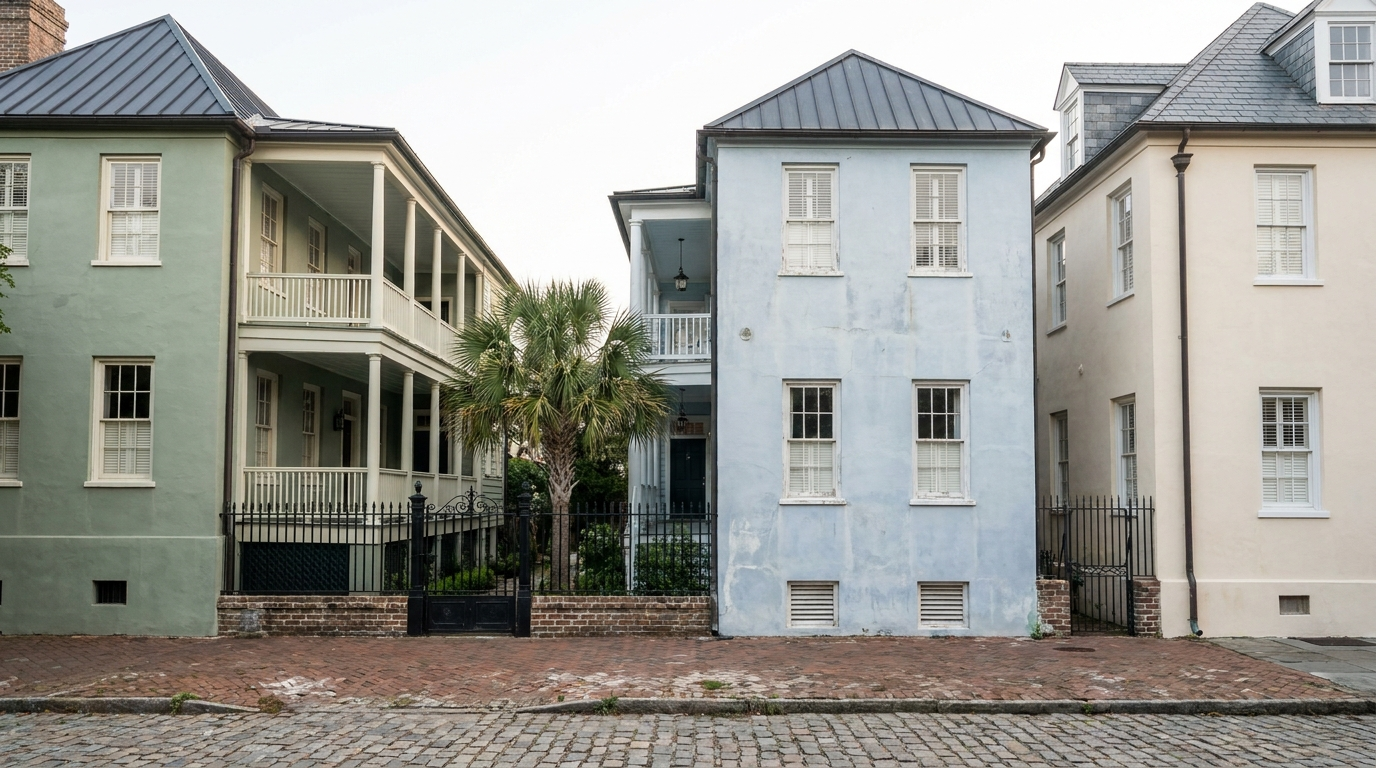
Start by checking the City’s historic districts purview map. The BAR is a City of Charleston board, so its review covers addresses inside the City.
Inside the districts, a like-for-like reroof is the simpler case. On the BAR’s list of quick review permits processed in the Permit Center, posted March 31, 2025, shingle to shingle and recoating a metal roof are among the roof scopes staff can typically process over the counter when all the documentation is submitted. “In kind” there means a material that exactly matches the original’s material, profile, dimensions, texture and color. The list says it is not exhaustive and is not an automatic approval, and the final decision rests with preservation staff, case by case.
Replacing a historic slate, standing-seam metal, wood shingle or tile roof is governed by the Board’s 2014 roofing policy for the Old and Historic and Old City Districts, and our post on synthetic slate for Charleston historic district homes covers what that policy says about materials. On a historic home downtown, we help you choose materials and colors that fit both your house and that process.
How Do Charleston County Inspections Close Out a Permitted Reroof?
With a passed final inspection, plus any earlier inspection the job calls for, made by the office that issued the permit: the City’s Building Inspections Division, Charleston County Building Inspection Services or the Town of Mount Pleasant’s Building Inspection Division.
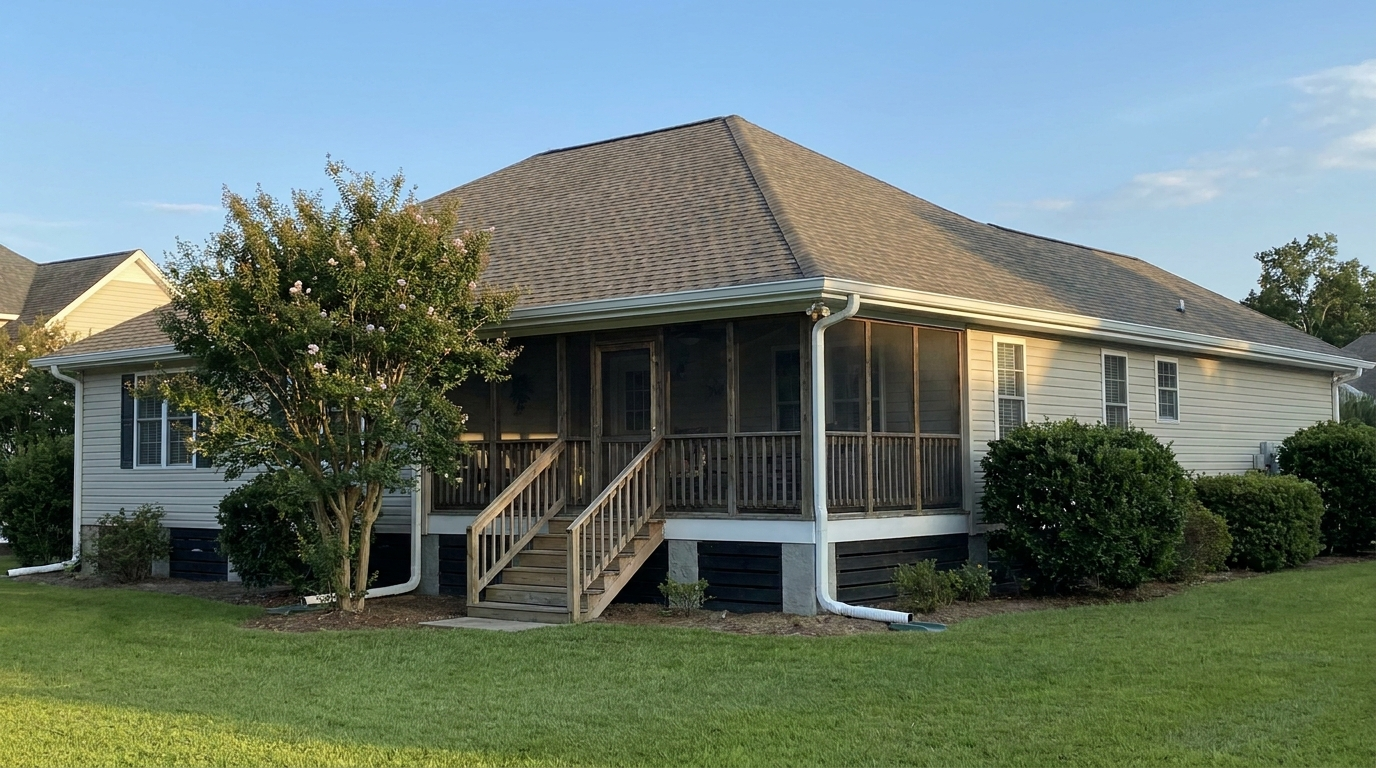
For a City reroof, the roofing guidance requires a residential building final, and the application lets the applicant add other inspections that apply, such as wall and roof sheathing. Charleston County’s list of required inspections includes a sheathing and strapping inspection before a roof is covered with felt or shingles, and notes that some inspections may or may not apply depending on the type of construction and that the inspector may require others. If your job includes new sheathing, ask your roofer which inspections are on the permit.
For a City permit, the post-issuance process runs in this order:
- Before any work starts, the permit holder applies for any sub permits the job needs (the City lists none for a reroof).
- When the work is ready, the permit holder requests the inspection through the CSS portal or by email. The City does not take inspection requests by phone.
- A City inspector visits the site. The City’s inspection procedures list what must be in place first, including the address and permit placard posted where they can be seen from the street.
- A pass is entered in the portal. A fail comes back as comments in the portal, and once they are addressed, the inspection is requested again.
- The City’s general process ends with a Certificate of Construction Completion, but for a reroof the City requires one only if the applicant requests it.
In unincorporated Charleston County, work cannot start until the permit card is posted in a conspicuous place on the property. Inspection requests go through the County’s CSS portal or by email, not by phone. Results are marked approved on the permit card, or a non-compliance notice is posted at the job site, and they also show in the portal.
A permit does not stay open indefinitely. For County permits, the code rule quoted on the County’s permit extension form says a permit becomes invalid if work does not start within 180 days after it is issued, or if more than 180 days pass between inspections, though the building official can grant written extensions of up to 180 days each when one is requested in writing with justifiable cause.
To confirm a permit was pulled and closed on your house, ask for the permit number, look for the placard at the site, and check the inspection results in the City’s or the County’s portal, or ask the office that issued the permit.
What Happens if a Roof in Charleston Is Replaced Without a Permit?
Skipping the permit can leave the homeowner holding the problem. In unincorporated Charleston County, Building Inspection Services says the current homeowner is liable for any fines from unpermitted work, as well as for demolition or retroactive building permits to bring the structure into compliance. In Mount Pleasant, the Town says work started without a permit can carry heavy fines and the possibility of a ticket.
The problem can also surface when a house changes hands. Charleston County tells prospective buyers to check with its Building Services that all work on a house was permitted and finaled, and its rule puts the liability on the current homeowner, which is why a buyer has reason to check.
If a contractor offers to skip the permit to save time or money, weigh that against who carries the risk afterward. A permitted reroof leaves a passed final inspection on record; an unpermitted one leaves nothing to show a buyer or the building department.
Your Next Step
Start with your address: whether the City of Charleston, Charleston County or a town such as Mount Pleasant governs it decides which office sets the forms, the fees and the inspections. Then ask any roofer you are considering who will pull the permit, whether your house falls inside the BAR’s districts or purview, and which inspections will be on the permit. If a contractor asks you to pull the permit yourself, treat it as a warning sign, and if one offers to skip the permit, remember who carries the risk afterward.
Every job we take on starts with a free on-site inspection, with photos of what the inspection finds and a written quote with options. On a historic home downtown, we help you choose materials and colors that fit both your house and that process. When you are ready, our roofing team in Charleston can start with that inspection.