Synthetic Slate Roofing Cost in Charleston, SC: A 2026 Guide
RoofingBaker Home Exteriors
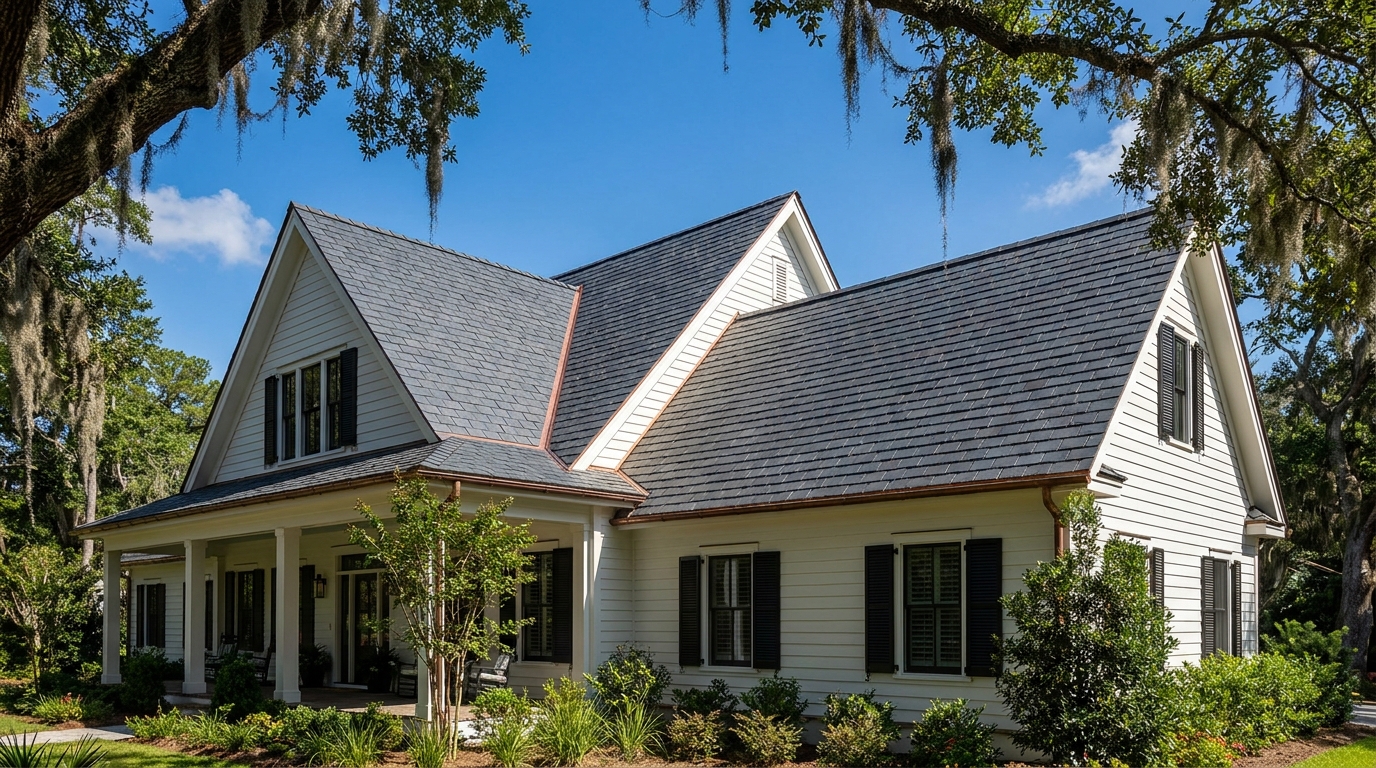
Most people who call us about synthetic slate have already done the hard part of the thinking. They want the look of a slate roof, they have seen what natural slate costs, and they have found that composite tile promises the same profile for less money and a fraction of the weight.
The question they ask next is almost always the same one: what does it actually cost here, on this house?
That number moves more in Charleston than it does almost anywhere else we work, and for reasons that have nothing to do with the tile. Salt air changes which parts of the roof wear out first. The peninsula’s review board has a written position on synthetic materials that surprises people. And the range you find online is built on national averages that were not priced against a steep Lowcountry roof with four dormers on it.
This guide walks through what drives the number, what our slate roofing crews look at before quoting one, and the questions worth asking any contractor who hands you a price.
One thing up front: the figures below are industry ranges, not our prices. We do not publish a price for a roof we have not measured, and any contractor who quotes a synthetic slate roof over the phone is guessing.
What Does a Synthetic Slate Roof Cost in Charleston, SC?
Installed synthetic slate generally runs $9 to $16 per square foot — the range we publish in our comparison of slate roofing options, where the natural and synthetic numbers sit side by side.
Applied to whole roofs, that band works out like this:
| Roof surface area | Cost at $9/sq ft | Cost at $16/sq ft |
|---|---|---|
| 1,500 sq ft | $13,500 | $24,000 |
| 2,000 sq ft | $18,000 | $32,000 |
| 2,500 sq ft | $22,500 | $40,000 |
| 3,000 sq ft | $27,000 | $48,000 |
Two cautions about that table. The first is that those are roof surface square feet, not the floor area of your house. A 2,000 square foot home with a steep roof and several dormers can easily have 2,800 square feet of roof, and people who work from their home’s listed square footage almost always under-budget.
The second is that Charleston homes tend to land in the upper half of the band rather than the middle. Steep pitches, dormers, and complicated roof planes all take longer to cut and detail, and the peninsula and older suburbs are full of exactly those roofs. National cost data compiled by HomeGuide puts synthetic slate at $9 to $12 per square foot installed — noticeably lower than the top of our range, because national figures average simple roofs and cheaper labor markets in alongside everything else. Charleston is neither of those things, which is why we quote against the roof rather than against an average.
Where synthetic slate sits against real slate is a separate question, and one we have already answered in detail in the comparison linked above rather than repeating here.
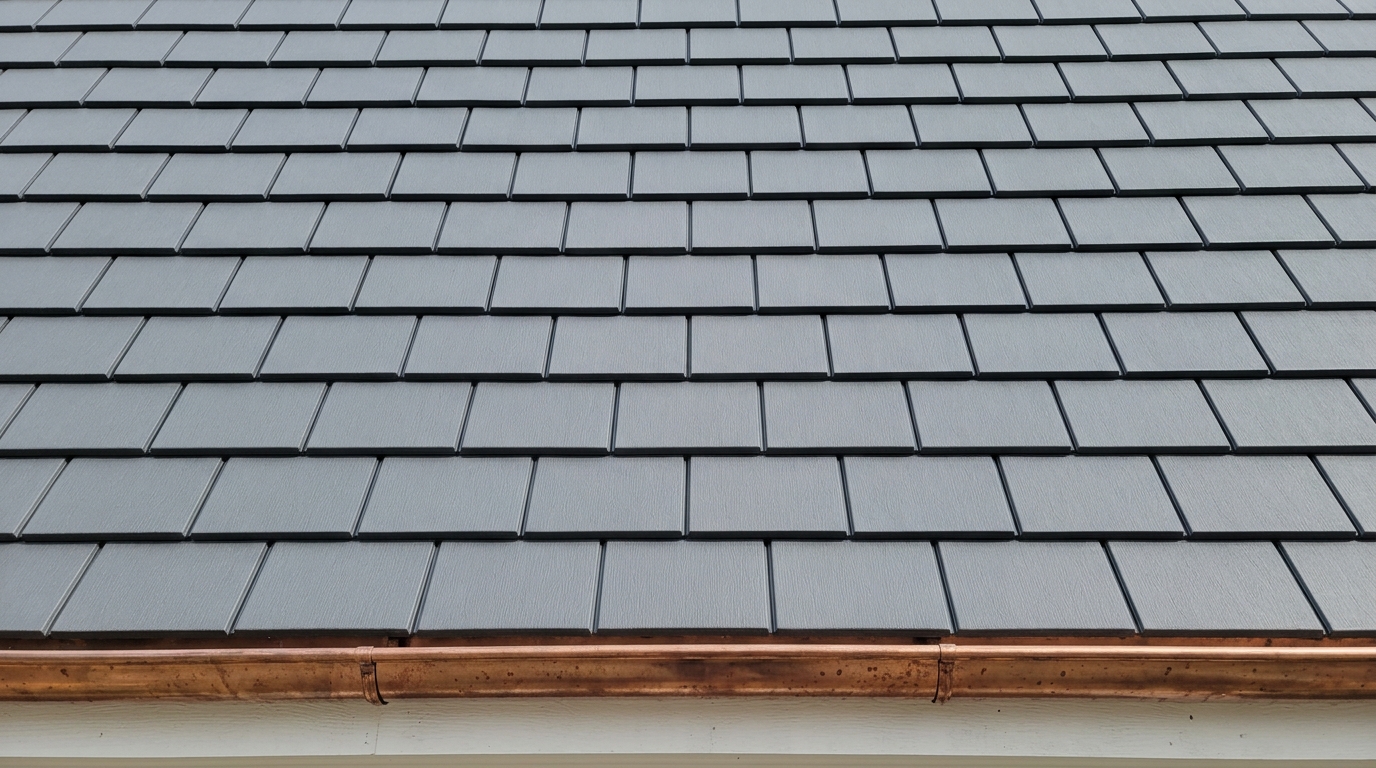
Which Synthetic Slate Tile Brands Do Charleston Homeowners Pay For?
Brand is the biggest single lever on cost inside that range, and it is the part homeowners have the least information about.
The name we get asked about most in Charleston is DaVinci Roofscapes. Their published specification for composite slate is worth reading before you compare quotes, because it sets the bar the rest get measured against. DaVinci states its tiles carry a “Class A Fire Rating, Class 4 Impact Rating, 110 mph straight line Wind Rating, and 180mph Hurricane Zone Winds”, and that the tiles are “made of pure virgin resins fortified with state-of-the-art UV stabilizers.”
That last point is where a lot of the price difference actually lives. Composite tile is a polymer product, and what separates a premium line from a budget one is largely the resin quality and the UV package protecting the color. It is not a visible difference on installation day. It shows up years down the road, in how well the color holds.
Brava Roof Tile is the other name we are regularly asked to quote against, and it is a separate manufacturer from DaVinci rather than a product line within it — a distinction worth keeping straight when you are comparing two quotes that each say “synthetic slate.” Others you may be offered include Inspire, EcoStar, F-Wave and CeDur.
We install synthetic slate alongside natural, and our honest position is that the brand matters less than which specific line within that brand you are being quoted. Manufacturers run budget and premium tiers under the same name. A quote that says only “synthetic slate” has not told you what you are buying, and two quotes that both say it can be thousands of dollars apart for entirely legitimate reasons.
Ask for the product line and the color by name, in writing. Then the quotes are comparable.
Does Charleston Salt Air Change What a Synthetic Slate Roof Costs to Own?
It does, though not in the way most people expect.
The tile itself is close to indifferent to salt. Composite slate has no metal in it and no organic content, so there is nothing for salt air to corrode or rot — which is genuinely different from asphalt, where salt accelerates granule loss, and from steel, which needs the right coating anywhere near the water.
What salt air does instead is shift where the roof’s weak point sits. On the coast, the tile will comfortably outlast the metal holding it down. The fasteners and the flashings become the life-limiting parts of the system, and they are also the parts a cheap quote economizes on, because nobody sees them.
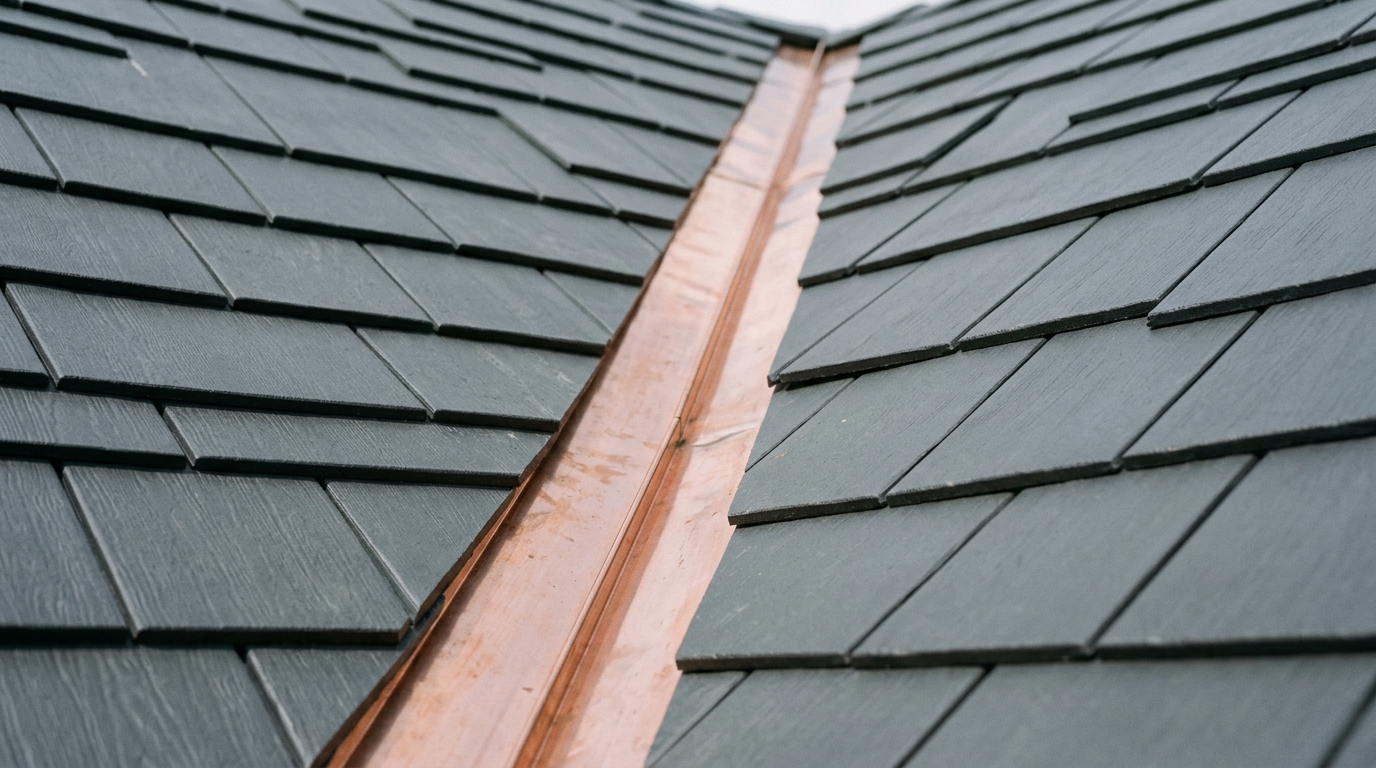
This is why our slate work specifies copper flashing at the valleys, chimneys and walls, and copper or stainless fastening rather than lesser metals. On a James Island or Mt. Pleasant roof, that is not an upgrade for its own sake. It is the difference between a roof that reaches its warranty life and one that starts leaking at a valley years before it should, while the tile above it is still perfect.
So the cost effect runs like this: salt air adds a few percent to the install through non-ferrous flashing and fastener specifications, and removes a much larger long-term cost by not forcing an early repair. When you are comparing a coastal quote, the metal is where to look. A materially cheaper number on a Charleston roof very often means galvanized fasteners where stainless belongs.
Salt is only one of the things a Lowcountry exterior deals with, and we have written more broadly about how coastal conditions wear on a home.
Is Synthetic Slate Worth It for a Charleston Historic District Home?
This is the question where the honest answer is not the one most homeowners are hoping for, and it is worth getting right before you spend anything.
If your home sits inside Charleston’s Old and Historic District or the Old City District, synthetic slate runs against the review board’s stated position. The City of Charleston’s Board of Architectural Review adopted a written policy statement on historic roofing at its December 2014 meeting, and its fifth provision states plainly that “synthetic materials (for example, artificial slate or tiles) are generally not appropriate for use in historic districts.”
The same policy sets two other expectations that matter if you already have a slate roof. It says that “wherever possible, historic roofs should be repaired rather than replaced,” that no historic roof should be replaced entirely “unless it can be documented that the roof is beyond reasonable repair,” and that when replacement is genuinely necessary, the roof “shall be replaced in kind.”
That repair-first principle is not unique to Charleston. It runs through the National Park Service’s guidance on maintaining historic slate roofs as well, and a slate roof that looks finished from the ground is frequently a flashing problem rather than a roof problem. If that is your situation, the route back is a restoration rather than a replacement, and we have covered bringing an existing slate roof back separately.
Two things to be clear about. The policy says “generally,” not “never” — the Board reviews applications individually, and that judgement is theirs to make, not ours and not your contractor’s. And the districts cover far less of the metro than people assume. West Ashley, James Island, most of Mt. Pleasant, Summerville, Goose Creek and Hanahan sit outside them, and in those neighborhoods synthetic slate is simply an ordinary material choice with no review attached.
The practical advice is the same either way: confirm your property’s district status with the city before you sign anything. It is a free phone call, and it is a great deal cheaper than a rejected application after the tile is ordered.
How Do Synthetic Slate Warranties Affect Long-Term Value in Charleston?
Synthetic slate is usually sold on a long material warranty, and the warranty is doing a lot of the persuading. It deserves more scrutiny than it normally gets.
Three questions separate a warranty that means something from one that reads well:
- Does it cover color, and for how long? Color fade is the failure mode that shows up first on composite tile, and the UV package is what you are paying the premium for. Manufacturers differ on how long and how completely fade is covered, and the terms are specific enough that they are worth reading rather than summarizing.
- Is it prorated, and from when? A long headline number that begins depreciating early is worth much less than a shorter non-prorated term. Ask what the coverage is actually worth in year twenty-five, in dollars.
- Does it transfer, and how many times? This is where the resale argument lives. A warranty that transfers to a buyer is a line in your listing; one that ends when you sell is not.
The part that catches people out is that a material warranty covers the material. It does not cover the installation, and on synthetic slate the installation is where most real-world failures start — the tile is unforgiving of poor detailing, and the fastening and flashing decisions we covered above are not the manufacturer’s responsibility.
That is why we back our work with a ten-year workmanship warranty alongside whatever the manufacturer provides. Two separate promises, covering two genuinely different failure modes. If a quote only mentions the manufacturer’s coverage, you are only insured against half of what can go wrong.
What Should Charleston Homeowners Ask Before Accepting a Synthetic Slate Quote?
By this point the useful questions are fairly specific. Before you sign, get answers to these in writing:
- Which product line and color, by name? Not “synthetic slate.” The line determines the price, the warranty and the fade behavior.
- What are the fasteners and flashings made of? On a coastal roof, stainless or copper is the answer you want. This is the single most common place a cheap quote is cheap.
- What is the measured roof area? Ask to see the number the price was built from, and confirm it is roof surface rather than home square footage.
- Is my property in a reviewed district? And if so, has the contractor actually read the Board’s roofing policy?
- What does the workmanship warranty cover, and for how long? Separately from the manufacturer’s.
- Who is on the roof? Synthetic slate rewards crews who install it regularly and punishes crews who do not.
A contractor who answers all six without hedging is quoting the same job as the next contractor who does. Anyone who cannot is quoting something else, and the two numbers are not comparable no matter how similar they look.
If you would rather have someone measure it properly first, we will come out and do that. A free inspection gets you a real roof area and an honest read on whether replacement is even the right call — and if you are weighing tile options more broadly, clay and terracotta run on a different cost structure again.
The Bottom Line on Synthetic Slate Roofing Costs in Charleston
Budget $9 to $16 per square foot installed, expect a Charleston roof to sit in the upper half of that band, and work from measured roof area rather than the square footage of your house.
Then check two things before anything else. Whether your property falls inside a reviewed historic district, because the Board’s written position on synthetic materials will decide the question for you. And what the quote specifies for fasteners and flashing, because on a coastal roof that metal, not the tile, is what sets how long the roof lasts.
We have been putting roofs on Carolina homes since 1915, and slate — natural and synthetic — is work we take seriously enough to turn down when it is not right for the house. If you want a straight answer about whether it is right for yours, ask us to look at it.