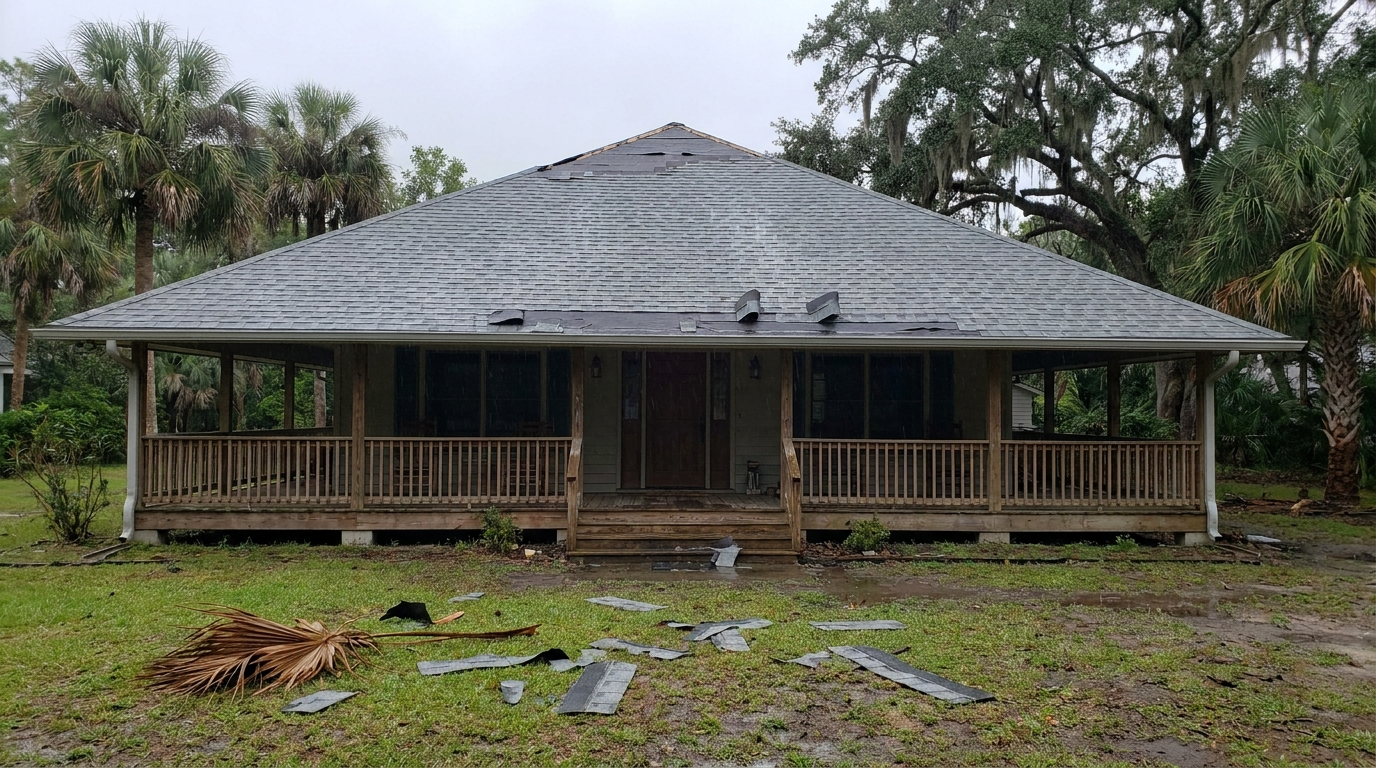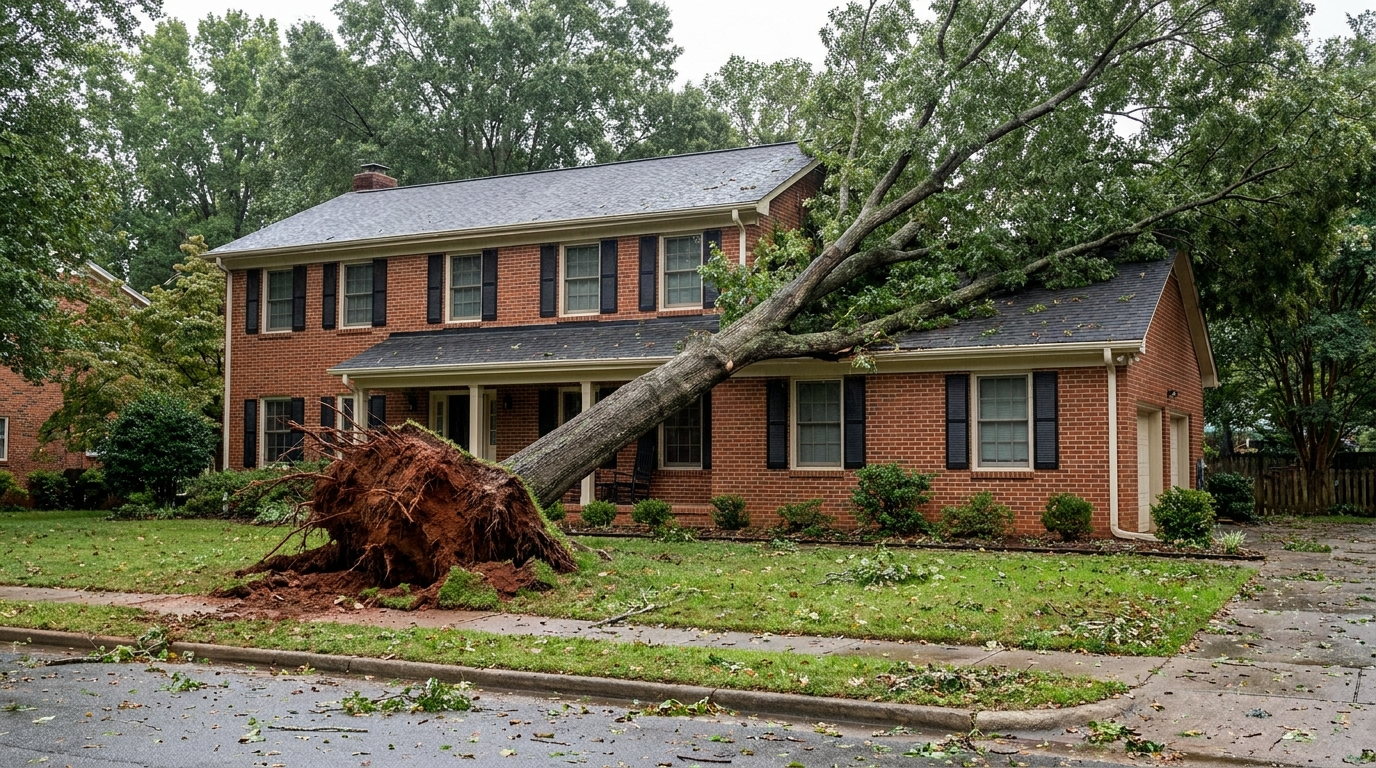
How to Find a Roof Leak in Greensboro Before the Next Storm
RoofingBaker Home Exteriors
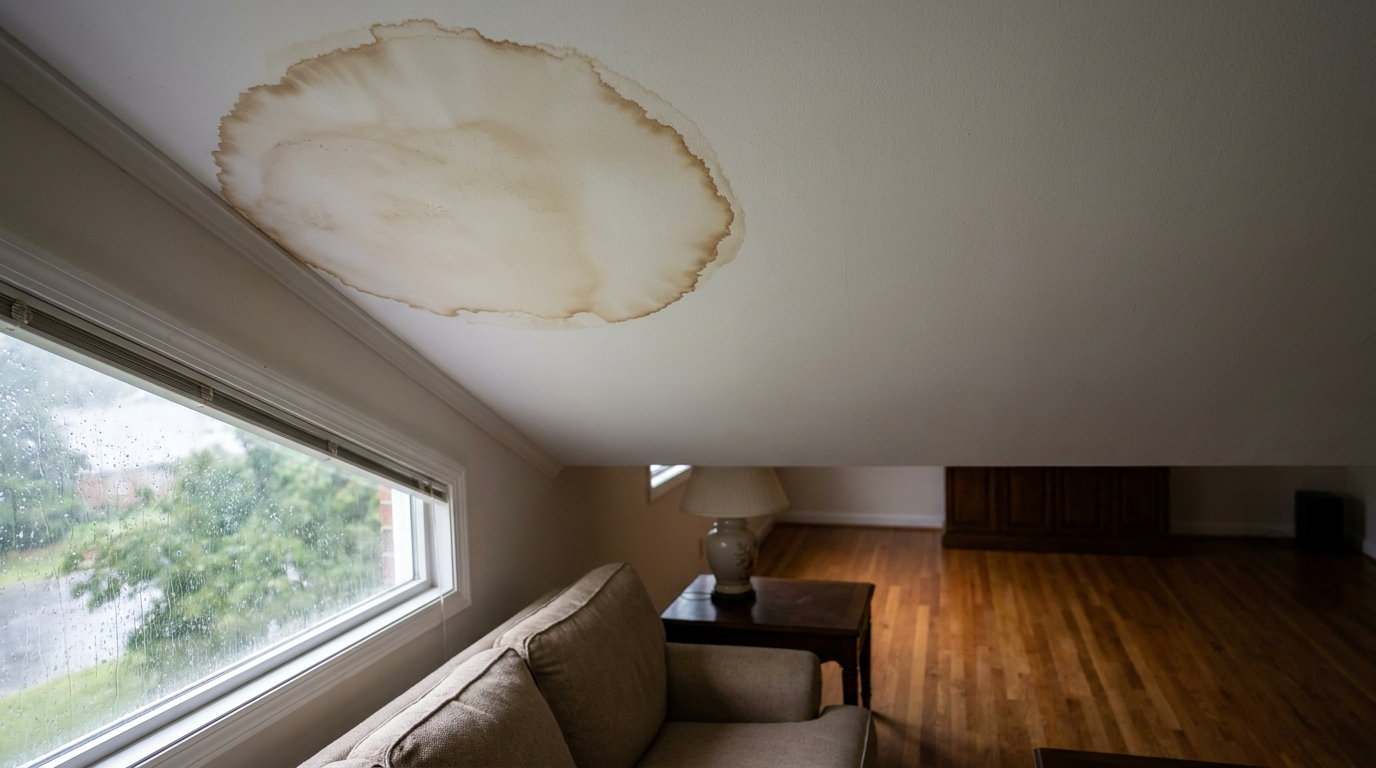
A brown ring on the ceiling after a hard rain tells you water got in. It does not tell you where, and an opening that let in one storm can let in the next one that crosses the Triad. This guide walks Greensboro homeowners through that search from inside the house and from the ground. Nothing in it asks you to climb onto the roof or stand on a ladder at the roof’s edge.
When the trail runs out, our roof inspection picks up from there. We walk the roof surface, check the flashing, valleys, pipe boots and shingles, then open the attic to look for leaks, and the inspection is free.
How Do You Find a Roof Leak From Inside a Greensboro Home?
Work backward from the water you can see. Pin down exactly where the stain sits, go into the attic above that spot and follow any wet trail uphill, rule out attic condensation, then look at the outside of the house from the ground. Anything that has to happen on the roof itself is a roofer’s job. Have a flashlight, a tape measure and a phone for photos on hand.
If water is coming in right now, the search can wait. Work through the first-hour steps in our guide to responding to roof damage, which covers containing the water and cutting power where it nears outlets or fixtures, then call us. For active storm damage, we can often get a tarp on the same day to stop the water while we plan the fix.
The U.S. Environmental Protection Agency’s brief guide to mold and moisture says that when water leaks indoors, wet or damp materials dried within 24 to 48 hours will, in most cases, not grow mold. Drying what got wet is half the job; finding the opening before the next storm is the other half.
How Do You Trace a Ceiling Stain Back to the Roof Leak Above It?
Pin down where the stain sits, then follow the water from the matching spot in the attic. On our leak repair calls, we trace water to its real entry point, which is often feet from the ceiling stain, and our guide to what roof leak repair costs explains why the two rarely line up. The job in the room below is to record the stain’s position precisely enough to find the same spot from above.
Check the ceiling first. If it is sagging or bulging with water, keep everyone out from under it and leave it alone. The National Roof Certification and Inspection Association warns that poking a hole in a water bulge can bring down a much larger section of the ceiling, wet drywall and insulation with it, and advises a call to a professional. Make that call first.
If the ceiling is sound:
- Measure from two outside walls. Standing on the floor, measure from the point below the center of the stain to the two nearest exterior walls, and sketch the room with those numbers on it.
- Photograph the stain. Take the picture from the same spot after each rain, so you can see whether it grows.
These steps assume a top-floor ceiling under the attic. For a stain on a lower floor, tell whoever you call what sits directly above it, such as a bathroom.
How Do Greensboro Homeowners Track Down a Leak in the Attic?
With a flashlight, starting above the stain and following the water uphill. Plan the trip first. ENERGY STAR’s do-it-yourself guide to sealing and insulating, written for air-sealing work, lists precautions that apply to any time spent in an attic:
- Light: a drop light for the work area and a flashlight in hand.
- Footing: walk on the joists or truss chords, not on the exposed ceiling drywall or insulation between them.
- Overhead: watch for sharp nails sticking through the roof deck.
- Gear: knee pads, a lightweight disposable coverall, gloves and a hat, plus an OSHA-approved particulate respirator or double-strap dust mask.
- Heat: in hot weather, go up early, because attics heat up as the day goes on, and drink plenty of water.
- Vermiculite: insulation that is lightweight, pea-size, flaky and gray may be vermiculite, which may contain asbestos. Leave it undisturbed unless an approved lab has tested it and found no asbestos.
- Framing: the same guide lists moldy or rotted attic rafters or floor joists among the problems you may need a contractor to correct. If the joists you would walk on, or the rafters above them, look moldy or rotted, stop there and leave the search to us.
Before you go up, if water is near electrical outlets or fixtures, turn off power to those areas at the breaker box, as the roof damage guide linked above advises. If your attic is hard to get into or to move around in, leave the search to us; we open the attic on our inspections.
- Find your place. Orient yourself to the outside walls, then use your two measurements to find the area above the stain.
- Look up first. Run the light along the underside of the roof deck and the rafters over that area, looking for water spots, darkened wood or drip marks.
- Then look down. Check the insulation below for damp patches. A leak does not have to reach a ceiling to be real: ENERGY STAR’s guide counts wet or damp insulation as a sign of a leaky roof.
- Follow the trail uphill. Owens Corning’s guide to roof leaks notes that once water is inside the attic, it can travel along rafters and other horizontal surfaces, which makes the exact entry point hard to find. Trace any wet line up the rafter or across the deck to the highest wet point you can see from the joists.
- Record it. Photograph the trail and the wet spots, and note their distance from the outside walls.
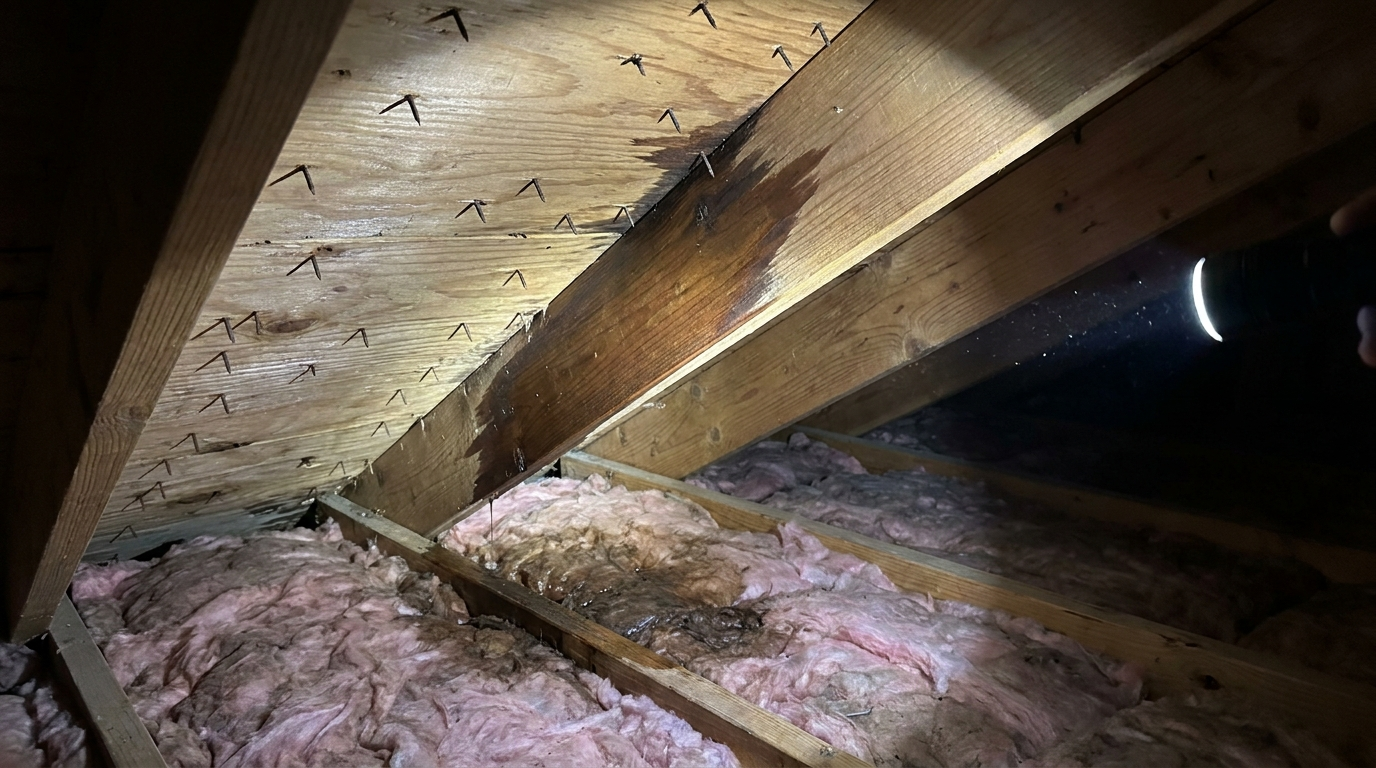
Look during a steady rain with no thunder, or soon after, while the trail is still wet. A dry attic above a fresh stain can mean the water only comes in during certain storms, or that it is not rainwater at all.
How Do You Tell a Roof Leak From Attic Condensation in Greensboro?
By when the water shows up and where it collects. A roof leak lets rain in from outside. Condensation starts with indoor air: the Department of Energy’s Building America Solution Center explains in its guide to attic condensation in cold weather that warm, moist air from the house or from ducts in the attic can escape into a cold attic and condense on cold surfaces such as the roof trusses or the underside of the roof sheathing. In cold conditions it often forms as frost, which turns back to liquid when warmer weather arrives.
Two clues follow from that:
- Timing. Water that follows rain points to a leak. Moisture that appears during a cold spell, or as one breaks, with no rain falling, is worth checking for condensation. Melting snow or ice on the roof, or a plumbing problem in the attic, can also put water there, so write it in your notes for the roofer. A cold Greensboro morning with no recent rain is a good time to look.
- Fan ducts. The Solution Center’s guide to exhaust fans says that in many older homes, the exhaust duct ends inside the attic, near a ridge, gable or soffit vent or sometimes on the attic floor, and that the moist air coming out can condense on cold rafters, trusses and sheathing, producing water droplets. In an older Greensboro home, check where each fan duct ends, with the same attic precautions; dampness gathered around one that stops in the attic suggests condensation.
The difference matters because condensation is not a shingle problem; the fix lies in where the moist air goes. Our inspections look under the deck as well: ventilation, insulation and the moisture problems that start inside.
Which Roof Leak Clues Can You Spot From the Ground in Greensboro After Rain?
A few, as long as you stay on the ground and let the weather pass first. The National Weather Service’s lightning safety guidance says there is no safe place outside when thunderstorms are in the area, and to wait 30 minutes after the last lightning or thunder before going back outside.
During a steady rain with no thunder, watch from inside the house. Look at the gutter on the side nearest the stain: water sheeting over the front edge, or pouring down behind the gutter near that spot, is worth a photo and a note for your roofer.
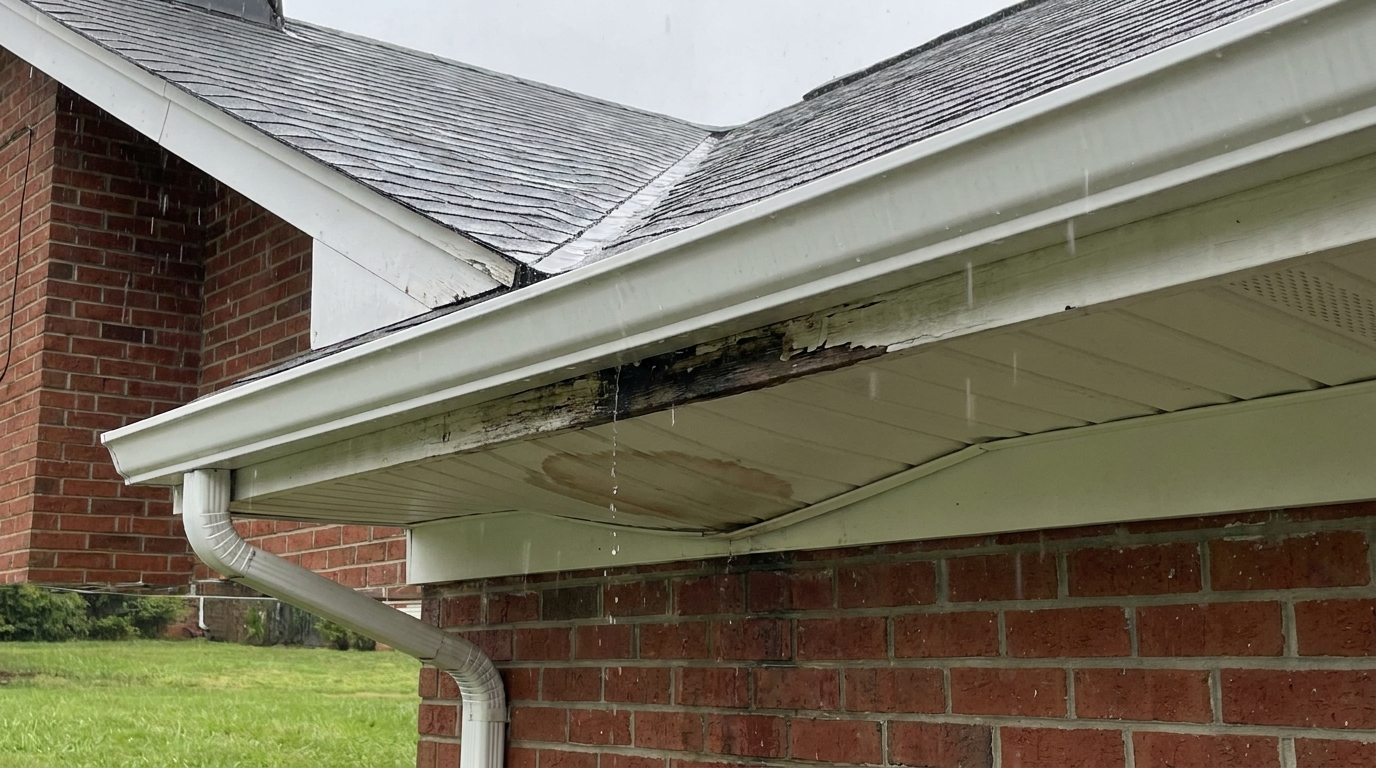
Once it is safe to go out, stand below the part of the house that lines up with what you found inside. The Department of Energy’s Guide to Durable Attics lists signs of possible water intrusion, and three of them can be seen from the yard: warped or rotted soffit panels or fascia boards at the eaves, bubbled paint on the fascia or soffit, and worn or warped shingles at the roof edges. Binoculars bring that part of the roof closer without leaving the ground. Note what sits there so you can describe it.
Flashing has its own checks, covered in our guide to roof flashing on Greensboro homes, and the general list of storm-damage signs is in the roof damage guide linked above.
Should You Run a Hose Test to Find a Leak on a Greensboro Roof?
Not from the roof, and not from a ladder. The National Roof Certification and Inspection Association’s guide suggests a controlled water test when an inside check cannot find the source. In its method, one person outside soaks the roof with a garden hose, starting low, just above where the damage shows inside, and working in small sections with a gentle stream, waiting a few minutes between sections, while a helper inside watches the suspect area and calls out at the first drip.
Wetting most of a roof that way means someone working on it, and that is a roofer’s job. OSHA’s guidance on fall protection in residential construction says falls are the leading cause of work-related deaths among residential construction workers, the people who do this work for a living. Older Greensboro homes often have steep rooflines, too.
So leave the test to a roofer and hand over your notes. On a free inspection of the roof and attic, we walk the roof surface and open the attic.
What Notes and Photos Help a Roofer Locate a Leak in Your Greensboro Home?
The ones that tie the leak to the weather and to a place. A dated record helps most when a leak only shows up in certain storms:
- Dates and weather: each day it leaked, whether the rain was light or heavy, how long after the rain started the drip appeared, and the wind direction if you noticed it.
- Dry-day sightings: any time the stain grew or the attic was damp with no rain, especially on a cold morning.
- Location: the room, your two measurements from the outside walls and your sketch.
- Inside photos: the stain from the same spot after each rain, plus the attic trail and any damp insulation.
- Outside photos: gutter overflow near the stain, the eave below it and anything you noted through binoculars.
- History: earlier repairs at that spot, and when the roof was last replaced, if you know.
- Access: where the attic hatch or pull-down stairs are.
For a roof leak, we usually schedule a free inspection within 24 to 48 hours. On that inspection, our project manager photographs what he finds and you get a photo report of all of it, so your notes and ours can sit side by side.
Quick Recap
- Work from the inside out: the stain, the attic above it, then the house from the ground. Anything on the roof itself is a roofer’s job; nothing here calls for climbing onto the roof or using a ladder at its edge.
- If water is coming in now, start with the first-hour steps in our roof damage guide, then call us. If a ceiling is sagging or bulging, keep everyone out from under it, leave it alone and make the call.
- Measure a top-floor stain from two outside walls, take every attic precaution above, including cutting power where water is near outlets or fixtures, leave the search to us if the attic is hard to get into or move around in or its framing looks moldy or rotted, and follow any wet trail uphill to the highest wet point you can see from the joists.
- Moisture that appears during a cold spell or as one breaks, with no rain, or around a fan duct that ends in the attic, is worth checking for condensation; melting snow or ice, or a plumbing problem in the attic, can also put water there, so note it for the roofer.
- Watch the gutter from inside during a steady rain with no thunder, and go out to check the eaves only after waiting 30 minutes past the last lightning or thunder.
- Leave the hose test to a roofer and hand over your notes.
- Keep dated notes and photos that tie each leak to the weather and to a spot.
When you want a second set of eyes, our Greensboro branch can take it from there, usually with a free inspection scheduled within 24 to 48 hours.