What Is a Wind Mitigation Inspection in Charleston, SC?
RoofingBaker Home Exteriors
Most Charleston homeowners meet the phrase “wind mitigation inspection” while opening an insurance renewal and wondering why the number went up again. It is one of the few things you can do about that number, and a lot of people who qualify for the discount never claim it.
The short version: an inspector documents the features of your home that resist high wind, and your insurer applies credits for the ones you have. The inspection usually pays for itself inside a year.
Every dollar figure below is national industry data rather than Baker pricing, and the discount figures come from published South Carolina sources cited in place.
This guide covers the inspection itself. For the wider question of which roof systems hold up best in a storm, see our companion piece on hurricane-ready roofing in Charleston.
What Is a Wind Mitigation Inspection, and Why Do Charleston Homeowners Need One?
A wind mitigation inspection is a focused survey of the wind-resistant features already built into your home. It is not a general home inspection and it does not grade condition — it records the presence or absence of specific construction details that reduce the chance of wind damage.
It matters here because of how seriously South Carolina treats wind mitigation. The state runs the SC Safe Home grant program through the South Carolina Department of Insurance specifically to help coastal homeowners strengthen their homes against wind, and mitigation credits are widely available from carriers writing in the state. Exactly which credits your carrier offers, and on what terms, is set by that carrier and your policy — your agent is the person who can tell you.
That is the part worth sitting with. The discount is generally not a promotion your carrier chose to run. It is a credit tied to the physical characteristics of your home, and the inspection is simply the evidence. If nobody has ever inspected your roof for it, you may be paying the undiscounted rate on a home that qualifies for something better.
Charleston homes have an additional reason to care: coastal wind premiums here are a large share of the total bill, and the credits apply specifically to that portion.
How Does a Wind Mitigation Inspection Work in Charleston?
The visit itself is short — commonly under an hour on an average home — and it is mostly documentation.
The inspector needs access to the attic, because the most valuable evidence is underneath the roof rather than on top of it. They photograph the roof-deck attachment, the connections between roof and walls, and the sheathing itself. Outside, they look at the roof covering, its age and its rating, and the roof’s geometry.
Everything gets photographed, because the report is an evidence document. Your carrier is not taking anyone’s word for it — the photos are what substantiate each credit.
You receive a completed report, usually within a few days, which you submit to your insurer or your agent. The carrier applies whatever credits your documented features earn.
One practical note specific to older Charleston housing stock: some historic homes have attics that are difficult or unsafe to access, and some have no accessible attic at all. That does not disqualify you, but it can limit which features can be verified, and it is worth raising when you book so the inspector arrives prepared.
Which Roof Features Do Wind Mitigation Inspectors Check on Charleston Homes?
Broadly, six things — and it helps to know them because several are visible from the ground.
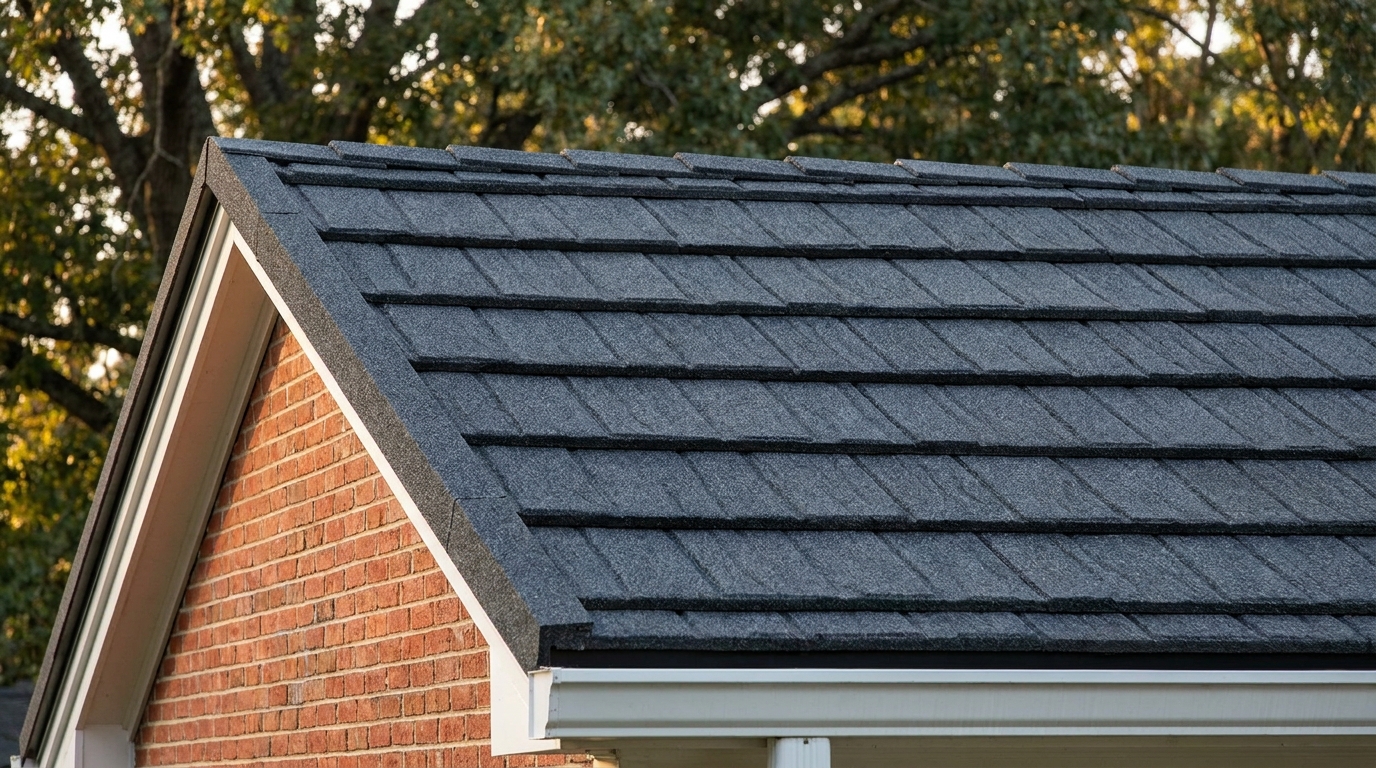
Roof covering. What the roof is made of, how old it is, and whether it meets current wind-rating standards. A roof that is well past its service life tends to weaken the whole report.
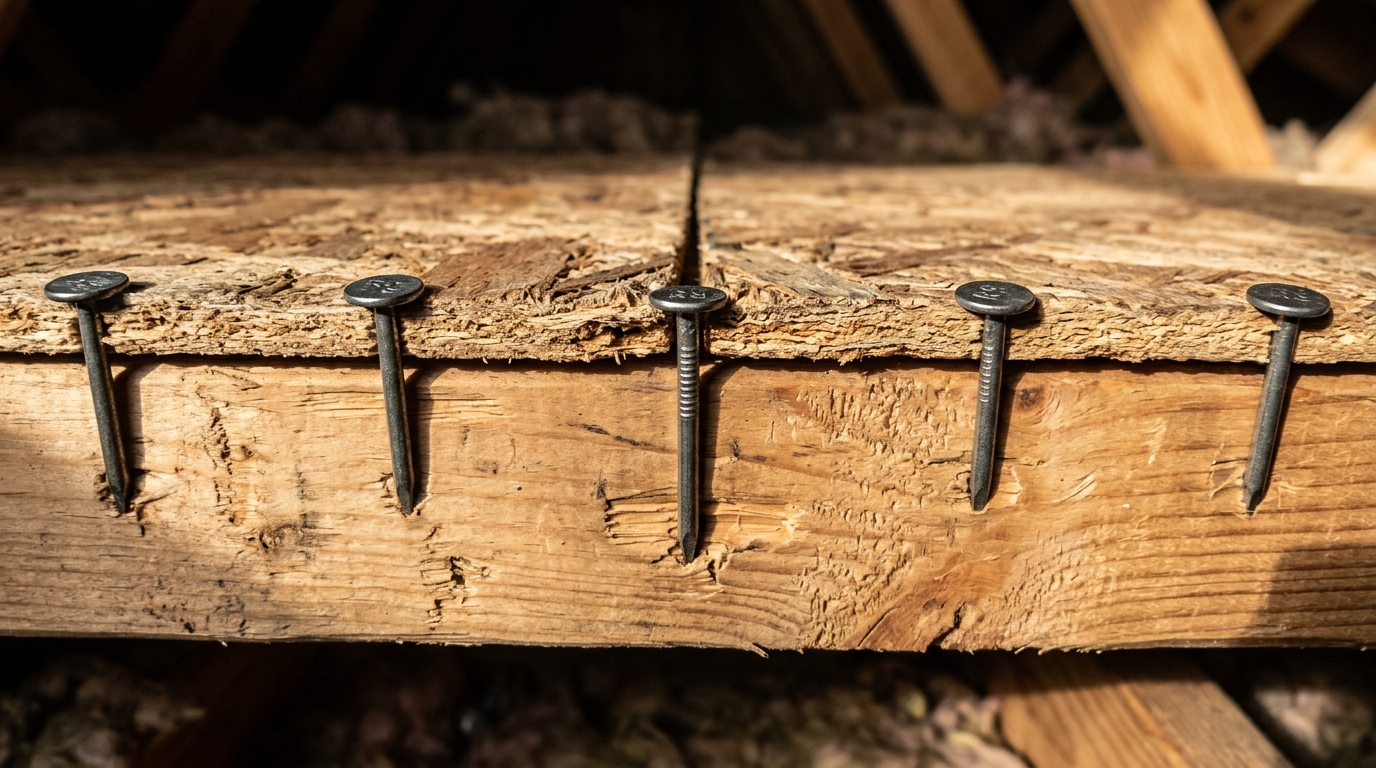
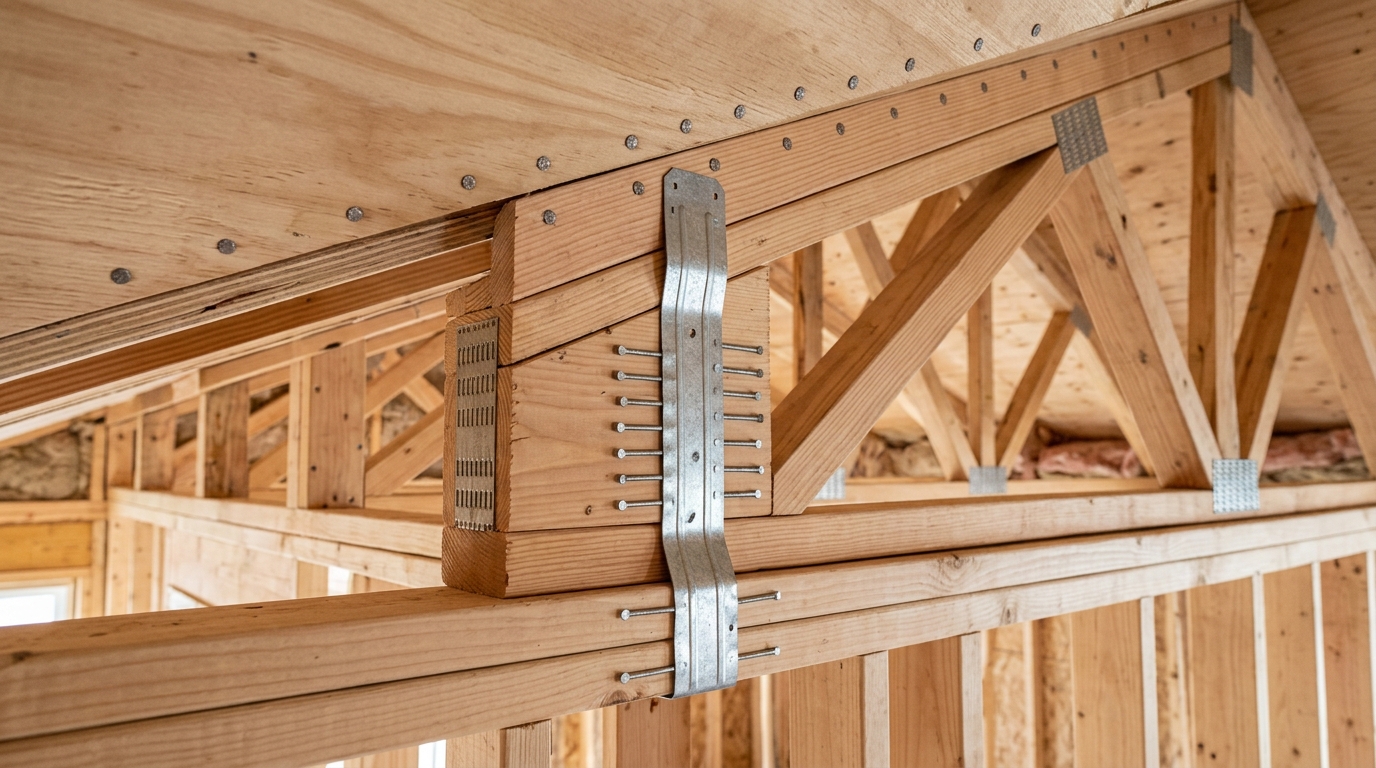
Roof deck attachment. How the sheathing is fastened to the trusses — nail type, length, and spacing. This is one of the highest-value items and the reason attic access matters. Older homes fastened with staples or short smooth nails score poorly; ring-shank nails at tight spacing score well.
Roof-to-wall connection. How the roof structure ties to the walls: toe-nails at the weak end, then clips, then single and double wraps. This is typically the single largest credit available. Because our hurricane roofing guide covers strap and connection upgrades in depth, we will leave the retrofit side there — for this inspection, what matters is documenting what you already have.
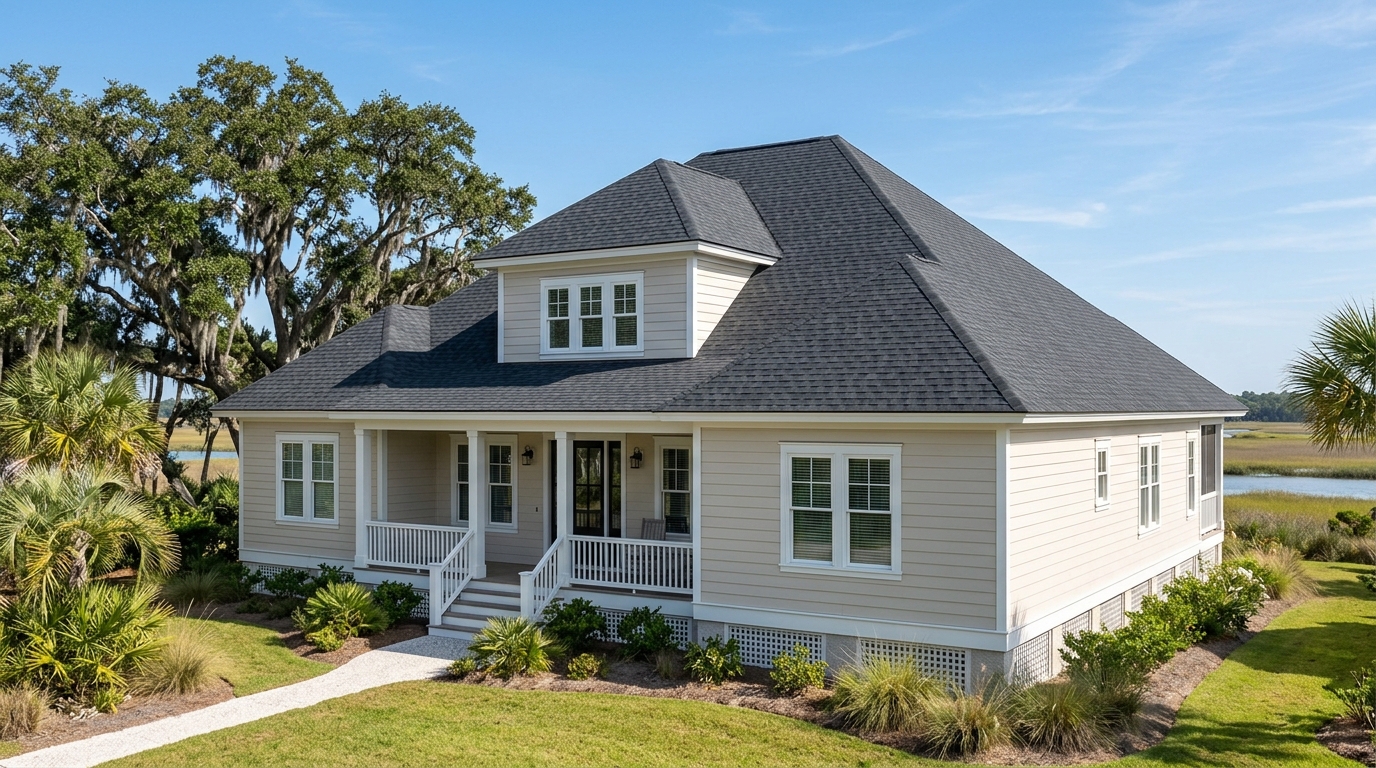
Roof geometry. Hip roofs, which slope on all four sides, resist uplift better than gable roofs and are credited accordingly.
Secondary water resistance. A sealed layer beneath the covering that keeps water out if shingles are lost. Present on some newer roofs, absent on most older ones.
Opening protection. Impact-rated windows and doors, or rated shutters. This one is not roofing, but it appears on the same report and carries real weight.
Who Can Perform a Wind Mitigation Inspection in Charleston, and How Long Does the Report Last?
Qualified inspectors are typically licensed home inspectors, licensed general or residential contractors, or licensed engineers and architects — the categories your carrier will accept vary, so the safest move is a short call to your agent before booking, asking which credentials they require.
Reports are generally treated as valid for around five years, though your carrier sets the term and some ask for a fresh one sooner. A new report is worth getting earlier than that if anything material changed — a new roof being the obvious example, since a re-roof is the most common way a poor deck-attachment or covering score becomes a good one.
One caution worth stating plainly. If a contractor offers a free wind mitigation inspection and then produces a report that happens to justify replacing your roof, treat that with the same skepticism you would any free inspection with a predetermined conclusion. An inspection report is a factual record, not a sales tool. If you want the two separated, hire an independent inspector who does not sell roofing.
What Does a Wind Mitigation Inspection Cost in Charleston?
These inspections are inexpensive relative to what they unlock. South Carolina insurance guidance commonly puts a wind mitigation inspection at under $250 for a standard single-family home. Ask two or three inspectors for a quote rather than working from a national average — this is a small enough job that local pricing varies more than any published figure will tell you.
What moves the price: home size, attic accessibility, how many structures are on the property, and whether you are bundling it with another inspection. Booking it alongside a general home inspection or a roof inspection is usually cheaper than a standalone trip.
There is also a route that costs nothing. South Carolina runs the SC Safe Home program through the Department of Insurance, which provides grants to help coastal homeowners retrofit against wind damage — and participation involves the same evaluation of your home’s wind-resistant features. If you are considering upgrades as well as documentation, check the program before you pay out of pocket for either.
Set against a premium reduction that recurs every year, the arithmetic is straightforward. Most Charleston homeowners recover the inspection fee within the first renewal.
How Much Can a Wind Mitigation Inspection Save on Charleston Insurance Premiums?
This is the number people want, and it deserves an honest answer rather than a big one.
Documented savings in South Carolina run roughly 10% to 35% off the wind portion of a premium, with around 17 insurers writing mitigation discounts in the state — figures compiled by Smart Home America, the nonprofit that works alongside the IBHS FORTIFIED program. Homes built or re-roofed to the FORTIFIED standard can reach the upper end.
Two clarifications matter more than the percentage.
First, the credit applies to the wind or hurricane portion of your premium, not the whole bill. On the Charleston coast that portion is substantial, which is exactly why the credit is worth having here and less exciting inland.
Second, the amount depends entirely on what your home actually has. A 1960s house with staple-fastened sheathing, a gable roof and toe-nailed connections may earn very little. A newer home with a hip roof, ring-shank decking, double wraps and secondary water resistance can earn a great deal. The inspection tells you which house you own — and that answer has value either way, because it also tells you which upgrade would move the needle most.
We would rather you hear that than a promised figure. Anyone quoting you a specific dollar saving before looking at your roof is guessing.
When Will Charleston Homeowners See Insurance Discounts After an Inspection?
Not automatically, and this is where the process most often stalls.
The report has to reach your carrier. Some inspectors submit it; many hand it to you and consider the job done. Send it to your agent directly and confirm receipt rather than assuming.
Carriers commonly apply credits at the next renewal rather than mid-term, though some will re-rate immediately and issue a refund for the unused portion. It is worth asking which your carrier does, because if they will re-rate now, waiting a year costs you money for no reason.
Then check the renewal declaration itself. The credits should be visible as line items. If your premium came back unchanged and you cannot find them listed, the report has probably not been applied — which happens often enough to be worth checking every time rather than trusting the paperwork.
What If Your Charleston Insurer Will Not Apply the Wind Mitigation Discount?
Sometimes the answer is legitimate and sometimes it is an administrative failure. Work through it in order.
Ask specifically which features were credited and which were not. A vague “we applied what we could” is not an answer. Feature-by-feature, you should be able to see what earned a credit.
Check whether the report actually arrived and was legible. A surprising share of non-applications are a missing attachment or an unreadable scan.
Confirm the inspector’s credentials met the carrier’s requirement. If they did not, the fix is a re-inspection by someone who qualifies, which is irritating but cheap.
Ask whether your home simply did not qualify. This is a real outcome. If your roof scored poorly across the board, there may be no credit to apply — in which case the report has told you what to fix.
If you have worked through all of that and still believe credits are being withheld that your documented features earn, the South Carolina Department of Insurance is the consumer-facing body for questions about how carriers apply mitigation credits. We are roofers, not licensed insurance advisers, so treat that as where to direct the question rather than as advice on your specific policy.
Should You Prepare Your Charleston Roof Before a Wind Mitigation Inspection?
Preparation helps in some ways and not at all in others, and the difference is worth understanding.
Worth doing. Clear a safe path to the attic hatch — an inspector who cannot get to the sheathing cannot credit it, and that is the highest-value evidence on the report. Find your existing documents: permits, the roofing contract from your last re-roof, product data on impact-rated windows. Documentation of a feature is sometimes accepted where visual verification is difficult.
Not worth doing. Cleaning, cosmetic tidying, or minor repairs before the visit. This is not a condition inspection and presentation earns nothing.
Worth thinking about first. If your roof is near the end of its life, sequence matters. Replacing it and then inspecting captures the improved covering, deck attachment and secondary water resistance in one report. Inspecting an old roof first and re-roofing after means paying for two inspections to get the credit you will eventually earn anyway.
If you are unsure which side of that line your roof sits on, a straight roof inspection answers it before you spend anything.
The Bottom Line on Wind Mitigation Inspections in Charleston
A wind mitigation inspection is a small, one-off cost — commonly cited at under $250 — against a discount that can repeat every renewal for as long as the report stands. In South Carolina the credits are reported at roughly 10% to 35% off the wind portion, with around 17 insurers writing them.
The two things to actually do: book it before your renewal rather than after, and confirm the report reached your carrier and shows up as line items on the declaration. Most of the people who miss out on this discount are not unqualified — they simply never sent the paperwork.
If your roof is old enough that you are weighing replacement anyway, sequence it deliberately. Our Charleston team can inspect the roof, tell you where it would score, and help you decide whether to document it now or improve it first. Schedule a free inspection and we will give you a straight read.