What Does a Standing Seam Metal Roof Cost in Charleston, SC?
RoofingBaker Home Exteriors
Ask three Charleston contractors what a standing seam metal roof costs and the answers can differ by more than the price of a whole shingle roof. That is not evasion. Standing seam is a system, not a product, and the panel is often the smallest line on the invoice. Once you understand what actually drives the number, the quotes in your inbox stop looking random and start looking comparable.
If you are weighing standing seam metal roofing for a home in the Lowcountry, the coastal question matters more here than almost anywhere else in the Carolinas. Salt air changes which metal makes sense, and that choice moves the price.
This guide sticks to standing seam specifically. For a wider look at every metal roofing type, our Carolina metal roofing guide covers the full range of panels, materials, and lifespans.
How Much Does Standing Seam Metal Roofing Cost in Charleston?
Every figure in this guide comes from national industry data, not from Baker pricing. We publish ranges rather than quotes because roof size, pitch, and complexity swing the total far more than any published average suggests.
Nationally, standing seam metal roofing runs roughly $10 to $16 per square foot installed for steel systems, and $11 to $18 for aluminum. Industry data compiled by Angi puts full projects between $9,400 and $32,600, with an average near $19,000. Modernize lands in a similar place, putting a 2,000-square-foot roof at $16,000 to $28,000.
Scaled by roof size, steel systems track roughly like this. Aluminum sits above these figures, which matters on the coast for reasons covered further down:
| Roof size | Typical installed range |
|---|---|
| 1,000 sq ft | $10,000 – $18,000 |
| 1,500 sq ft | $15,000 – $24,000 |
| 2,000 sq ft | $18,000 – $32,000 |
| 2,500 sq ft | $25,000 – $40,000 |
| 3,000 sq ft | $30,000 – $48,000 |
Standing seam costs materially more up front than an architectural asphalt roof — that much is not in dispute — and the lifespan question later in this guide is what decides whether the difference is worth paying. How wide the gap runs on your specific roof depends on its size, pitch and complexity, so ask any quote to price both options on your own house rather than working from a national multiple.
Charleston homes push toward the upper half of these ranges more often than inland homes do. Coastal material choices cost more, and the historic and near-historic housing stock around the peninsula tends to have steeper pitches, dormers, and roof planes that take longer to detail.
What Is a Standing Seam Metal Roof, and Why Do Charleston Homes Use Them?
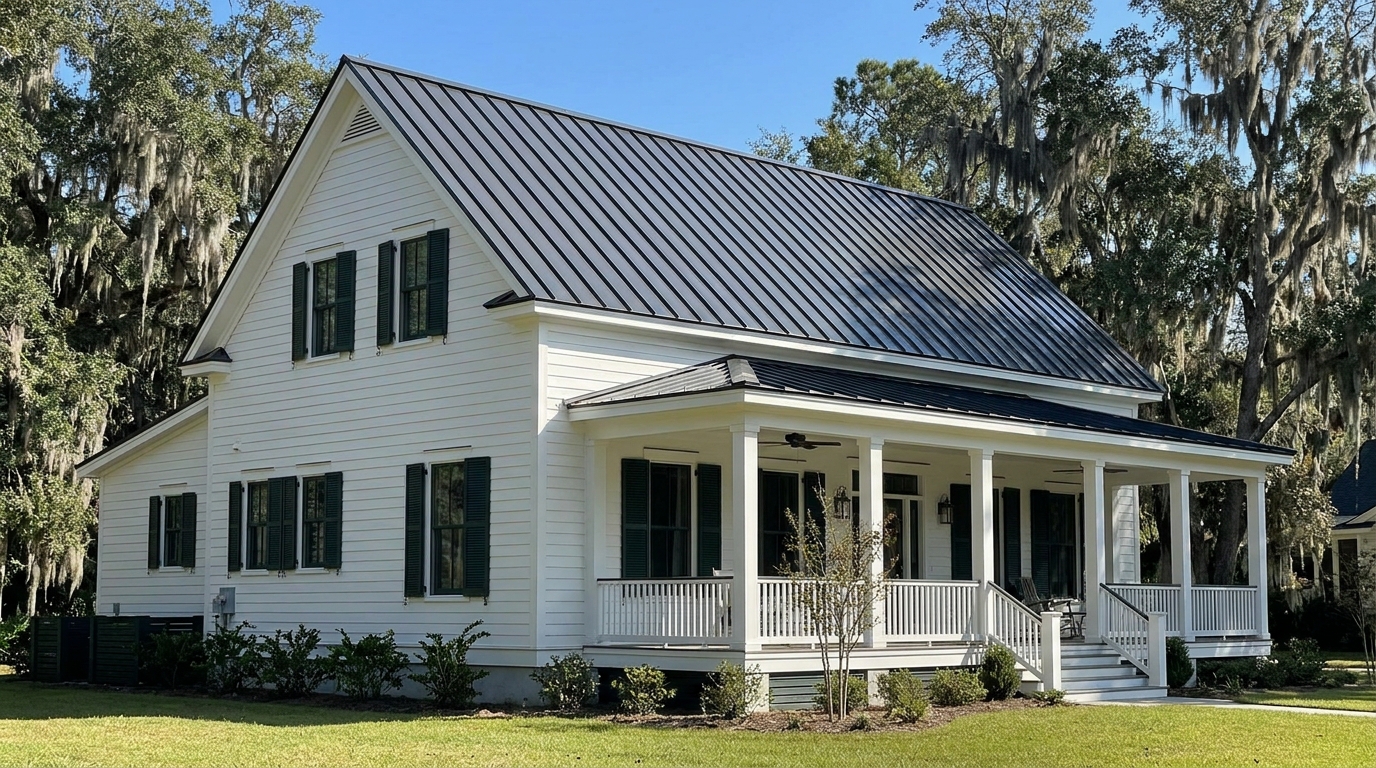
A standing seam roof is made of long vertical metal panels joined by raised seams that stand above the flat of the panel. The fasteners sit underneath, hidden inside those seams, rather than being driven through the face of the metal.
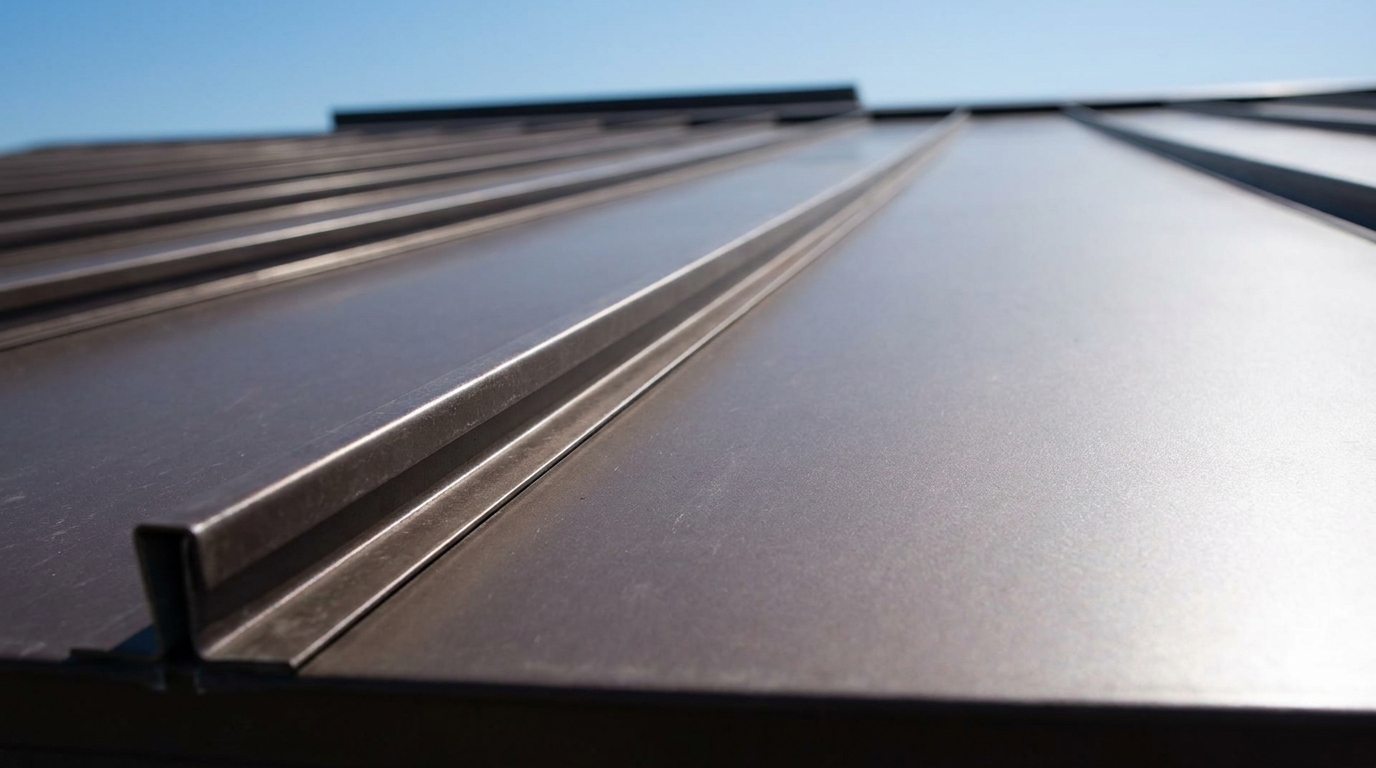
That single detail is the reason the system suits the coast. On an exposed-fastener roof, every screw is a penetration through the panel, sealed by a rubber washer. Those washers age, and each one is a potential leak path. A concealed-fastener system removes hundreds of those penetrations from the weather side of the roof entirely.
Charleston homes also deal with wind-driven rain, which is a different problem from ordinary rainfall. Water pushed sideways and upward finds seams that vertical rain never tests. Raised, mechanically joined seams give that water far less to work with.
We think in lifetimes, not jobs, and coastal roofs are where that framing earns its keep. A system that removes failure points instead of sealing them is the kind of decision that still looks correct in year twenty.
Which Standing Seam System Suits Charleston: Snap-Lock or Mechanically Seamed?
The two systems differ in how the seam closes, and the choice affects both price and wind performance.
Snap-lock panels click together along their edges. Installation is faster, no seaming machine is needed, and labor costs less. For most residential roofs with adequate pitch, snap-lock performs well and is the more common residential choice.
Mechanically seamed panels are folded closed on site with a seaming machine, either a single or double fold. The result is a tighter, more weather-resistant seam that performs better under wind uplift and on lower slopes. It costs more, because the machine and the extra labor step both add to the install.
For a Charleston home, the honest guidance is that pitch and exposure decide it. On a steeper roof set back from open water, snap-lock is usually sufficient. On a low-slope roof, or a home with direct exposure to wind coming off the harbor or the marsh, a double-locked mechanical seam buys real performance that shows up in a storm rather than on a brochure.
How Does Standing Seam Compare to Corrugated Metal in Charleston’s Salt Air?
Corrugated metal is the wavy, exposed-fastener panel most people picture on a barn or a porch roof. It is considerably cheaper, often less than half the installed cost of standing seam, and on the coast that discount comes with a bill attached later.
Corrugated panels are fastened through the face. Each screw compresses a neoprene washer against the metal, and in salt air those washers degrade faster than they do inland. As they harden and shrink, the fastener backs out slightly and the penetration begins to weep. A corrugated roof on the coast typically needs a fastener inspection and partial re-screwing well before a standing seam roof needs meaningful attention.
There is a second, less obvious difference. Standing seam panels are designed to float, expanding and contracting with temperature swings while clipped to the deck. Corrugated panels are pinned in place by their own fasteners, so thermal movement works against the screw holes over years of Charleston heat.
Corrugated still has a place, particularly on outbuildings, porches, and budget-driven projects. On a primary residence within reach of salt air, the cost gap narrows considerably once you account for the maintenance the cheaper system requires.
Should You Choose Aluminum or Steel Standing Seam Near the Charleston Coast?
This is the most consequential cost decision in a Charleston metal roof, and it deserves more than a line in a quote.
Steel — usually Galvalume, an aluminum-zinc coated steel — runs roughly $10 to $16 per square foot installed nationally. It is strong, widely available, and the value choice for most of the country.
Aluminum runs roughly $11 to $18 per square foot installed. It costs more per square foot and it is a softer metal, which means it dents more easily from hail or a dropped tool.
That softness is worth weighing against local weather history, since hail and wind damage behave differently on a dentable panel than on a rigid one.
The trade-off is corrosion. Aluminum does not rust. It forms a stable oxide layer and simply stops corroding, which is why cost guides across the industry consistently flag aluminum as the choice for coastal homes and salt-air environments. Steel resists corrosion only as long as its coating stays intact; once the coating is breached at a cut edge or a scratch, salt exposure attacks the steel underneath.
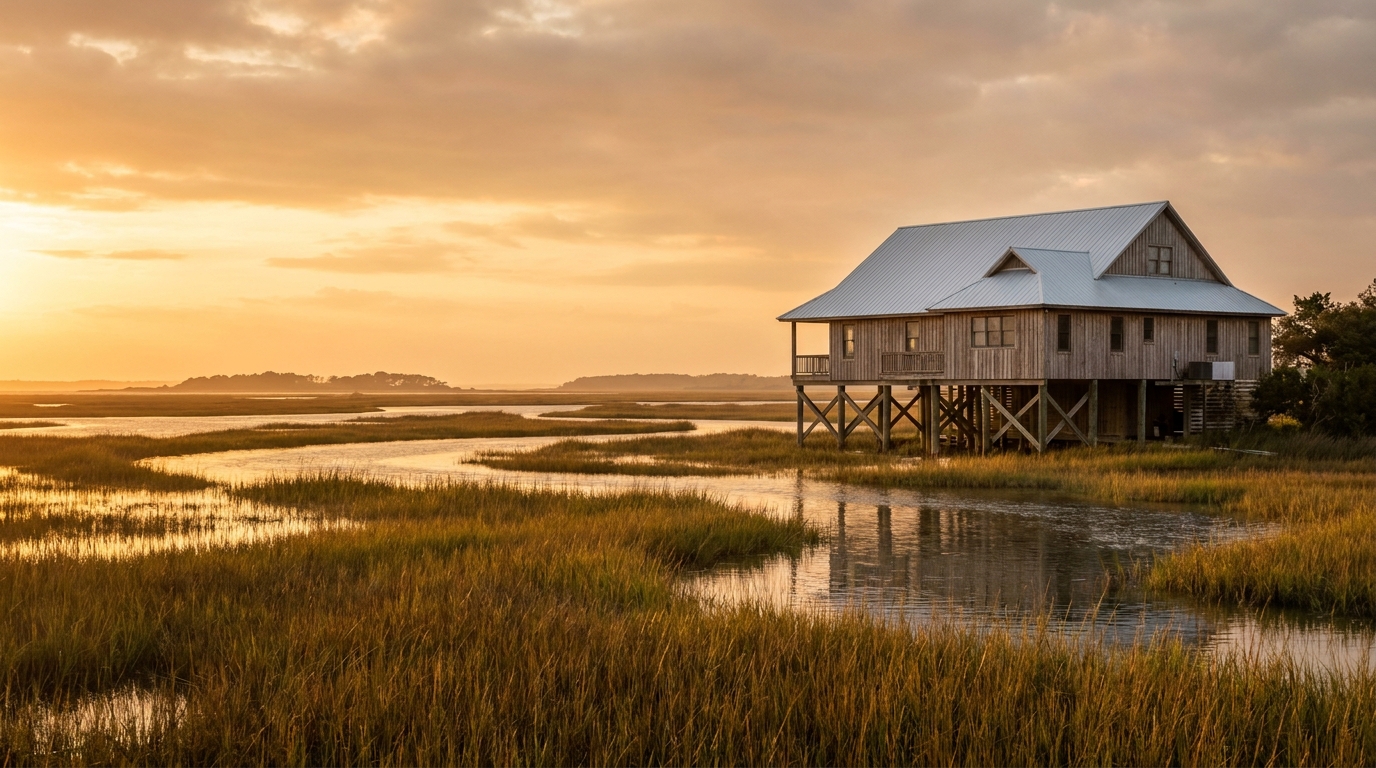
The practical rule most coastal roofers apply is distance from salt spray. Homes within roughly a mile of open salt water, or directly exposed to marsh air, are the strongest candidates for aluminum. Further inland around Summerville or Goose Creek, quality Galvalume steel with an intact finish performs well and saves money.
If a Charleston quote specifies steel without ever raising the salt-exposure question, that is worth asking about before you sign. Not because steel is wrong, but because the conversation should have happened.
Which Standing Seam Colors and Finishes Hold Up Under the Charleston Sun?
Finish is where a metal roof either holds its appearance or fades into a chalky version of itself, and it is a genuine cost line rather than a cosmetic afterthought.
The meaningful distinction is between PVDF finishes (often sold under the Kynar 500 name) and cheaper SMP polyester finishes. PVDF holds color and gloss dramatically better under UV exposure, and it carries longer, stronger chalk-and-fade warranty language. Using manufacturer material pricing published by Western States Metal Roofing, a PVDF painted finish on 24-gauge panels adds roughly $0.40 to $1.00 per square foot over bare Galvalume in materials alone.
In Charleston’s UV load and humidity, that upgrade is one of the easier calls in the whole quote. A cheaper finish on a roof meant to last decades saves a few hundred dollars and then looks tired years earlier than it should.
Color choice also has a thermal dimension. Lighter and more reflective colors shed solar heat better through Lowcountry summers, which matters for attic temperature and cooling load. Deeper colors absorb more heat and, on some finishes, show fade more readily.
One local constraint worth flagging early: if your home sits in a Charleston historic district or under an HOA architectural review, panel profile and color may need approval before anything is ordered. That review is easier to complete before a color is selected than after.
How Long Will a Standing Seam Metal Roof Last on a Charleston Home?
A properly installed standing seam roof is generally expected to last 40 to 70 years, with aluminum systems on the coast frequently reaching the upper part of that range because they are not fighting rust.
Set that against asphalt shingles, which in a hot, humid, storm-exposed coastal climate often deliver closer to 15 to 20 years of real service life. Over a fifty-year horizon, standing seam is typically one roof where asphalt is two or three.
Coastal caveats are real, though, and worth stating plainly. Salt accelerates any exposed steel component, so fasteners, flashing, and trim need to match the panel’s corrosion resistance. Mixing metals — steel fasteners on aluminum panels, for instance — creates galvanic corrosion that will fail long before either material would on its own. That kind of detail is invisible from the driveway and decisive over decades.
For a broader look at how different metal systems age across the Carolinas, our metal roofing guide walks through lifespans by material.
What Does Standing Seam Installation Involve for a Charleston Roof?
Understanding the install explains most of the price gap between quotes.
The old roof comes off. On many Charleston homes that means more than one layer, and disposal is priced by weight and volume. The deck is then inspected and repaired, and coastal homes turn up rotted decking more often than inland ones because humidity and past leaks have had decades to work.
A high-temperature synthetic underlayment goes down next. This matters more than homeowners expect, because metal roofs run hot and standard underlayment can break down beneath them.
Panels are then formed, frequently on site with a roll former, cut to the exact length of each roof plane. Clips fasten to the deck and the panels attach to the clips, allowing the metal to expand and contract without stressing the fastener.
Then comes the part that separates good installs from bad ones: flashing and trim at every valley, hip, ridge, chimney, skylight, and wall intersection. Standing seam panels are straightforward on a simple gable. Every penetration and every change of plane is custom work. A Charleston home with dormers, a porch roof tying into a wall, and two chimneys can carry substantially more labor than its square footage implies.
That is also why our own metal roofing install standards put so much weight on the transitions. On a metal roof, the panel is rarely what fails. The detailing is.
Is a Standing Seam Metal Roof Worth It for Charleston Homeowners?
Worth it depends on how long you intend to own the home, and we would rather say that plainly than sell past it.
The case for yes is strongest when you plan to stay a long time, when the home is exposed to coastal wind and salt, or when insurance economics are in play. A roof built to a recognized resilience standard can matter here: the IBHS FORTIFIED program sets tested requirements for roof performance in high wind, and the FORTIFIED Roof designation is recognized by many coastal insurers. In wind-exposed South Carolina markets, that designation can affect both premiums and how a roof holds up when a named storm actually arrives.
The case for no is equally honest. If you expect to sell within five to seven years, you are unlikely to recover the premium over a quality architectural shingle roof. Resale value does not credit the full difference, and a buyer rarely pays the whole gap.
There is also a middle path worth knowing about. Some Lowcountry homeowners put standing seam on the most exposed or most visible planes — a porch, a front-facing section, a low-slope area where shingles struggle — and use shingles elsewhere. It is not the purist answer, but it puts the money where the weather is.
The Bottom Line on Standing Seam Metal Roofs in Charleston
Standing seam is a long-horizon decision. Nationally it runs about $10 to $18 per square foot installed, putting most 2,000-square-foot Charleston roofs somewhere between $18,000 and $32,000 depending on metal, finish, and how complicated the roof actually is.
The choices that move that number most in the Lowcountry are aluminum versus steel, the seam type, and the finish grade. All three are worth understanding before you compare quotes, because two bids can differ by $10,000 and both be fair — they are simply describing different roofs.
If you want a straight read on which system fits your home, its exposure, and how long you plan to stay, our team will walk the roof and give you an honest answer. Schedule a free inspection with our Charleston roofing team and we will start with what the roof actually needs rather than what we would like to sell.