Storm Damage Roof Repair Cost in Charleston, SC: A Guide
RoofingBaker Home Exteriors
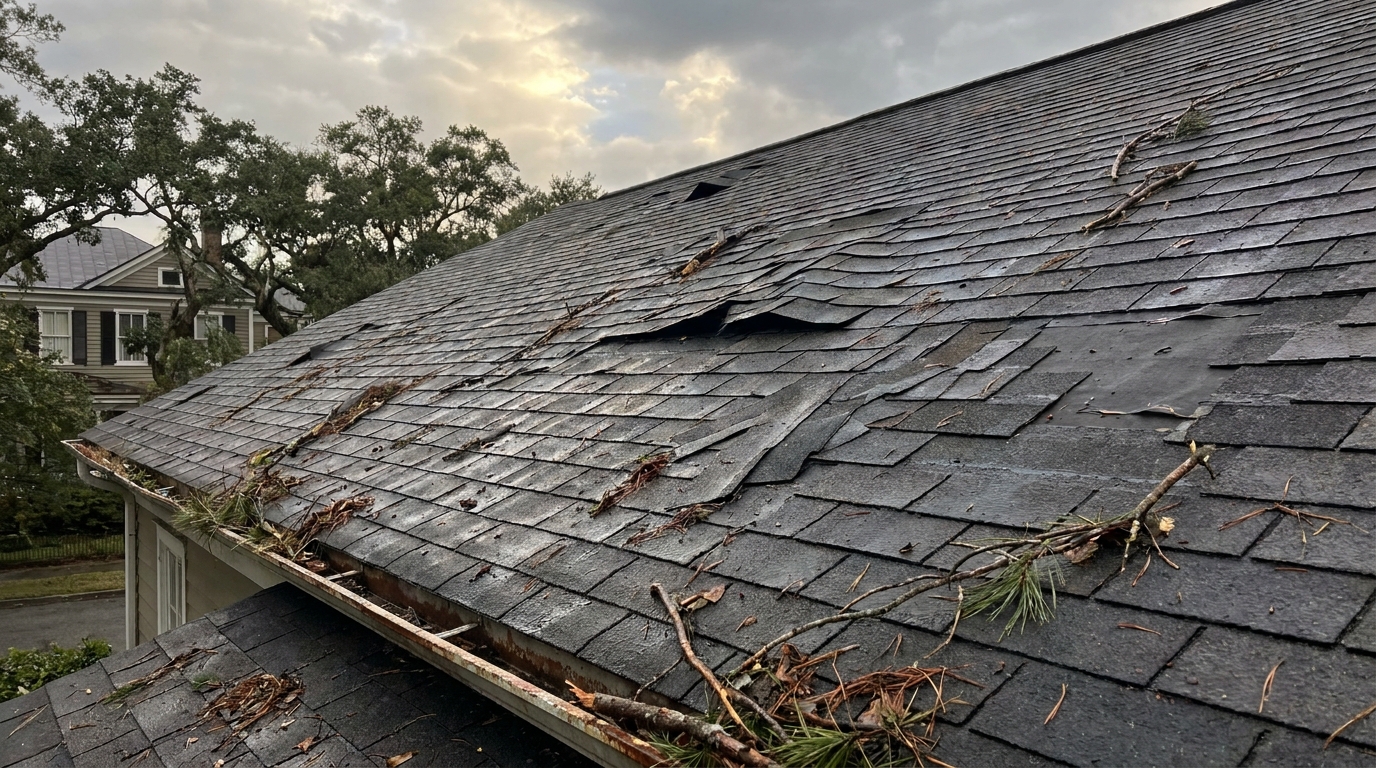
The morning after a storm moves through the Lowcountry, the questions come in a rush. How bad is it, who pays for it, and how fast does this need to happen. The cost answer is genuinely wide, because storm damage ranges from a dozen lifted shingles to a roof that is finished.
What is more predictable, and more useful, is how the money works in South Carolina. Coastal wind and hail coverage here does not behave the way most national articles describe it, and understanding that before you call anyone will save you more than any repair discount.
Every dollar figure below is national industry data, not Baker pricing. We publish ranges because a real number requires someone on your roof.
How Much Does Storm Damage Roof Repair Cost in Charleston?
Nationally, storm and hail roof repairs run a wide band. Industry data compiled by HomeAdvisor puts the range at roughly $2,641 to $22,127, with an average near $12,331. Modernize puts hail-specific repairs lower, at $1,500 to $8,000 with an average near $4,250, and notes that minor spot fixes can start around $300.
That spread is not sloppy data. It reflects a real split in outcomes:
| Damage level | Typical national range |
|---|---|
| Minor: spot fixes, isolated shingles | $300 – $1,500 |
| Moderate: multiple slopes, valleys, flashing | $3,000 – $9,000 |
| Hail damage, repairable | $1,500 – $8,000 |
| Extensive: pushing into partial replacement | $8,000 – $25,000 |
Charleston adds two pressures. Wind-driven rain finds its way into places ordinary rain never reaches, so interior damage is more common here and it is priced separately from the roof itself. And after a widespread named storm, regional demand for crews and materials rises sharply, which affects both scheduling and price.
What Do Wind and Hail Roof Repairs Cost for Charleston Homes?
Wind and hail damage a roof differently, and they price differently.
Wind lifts and creases shingles. The visible damage is missing tabs, but the more expensive problem is the shingle that got bent back and laid down again. It looks intact from the ground and its seal is broken. Asphalt shingle storm repairs nationally run about $1,700 to $8,400, with replacement shingles at roughly $1 to $5 per square foot.
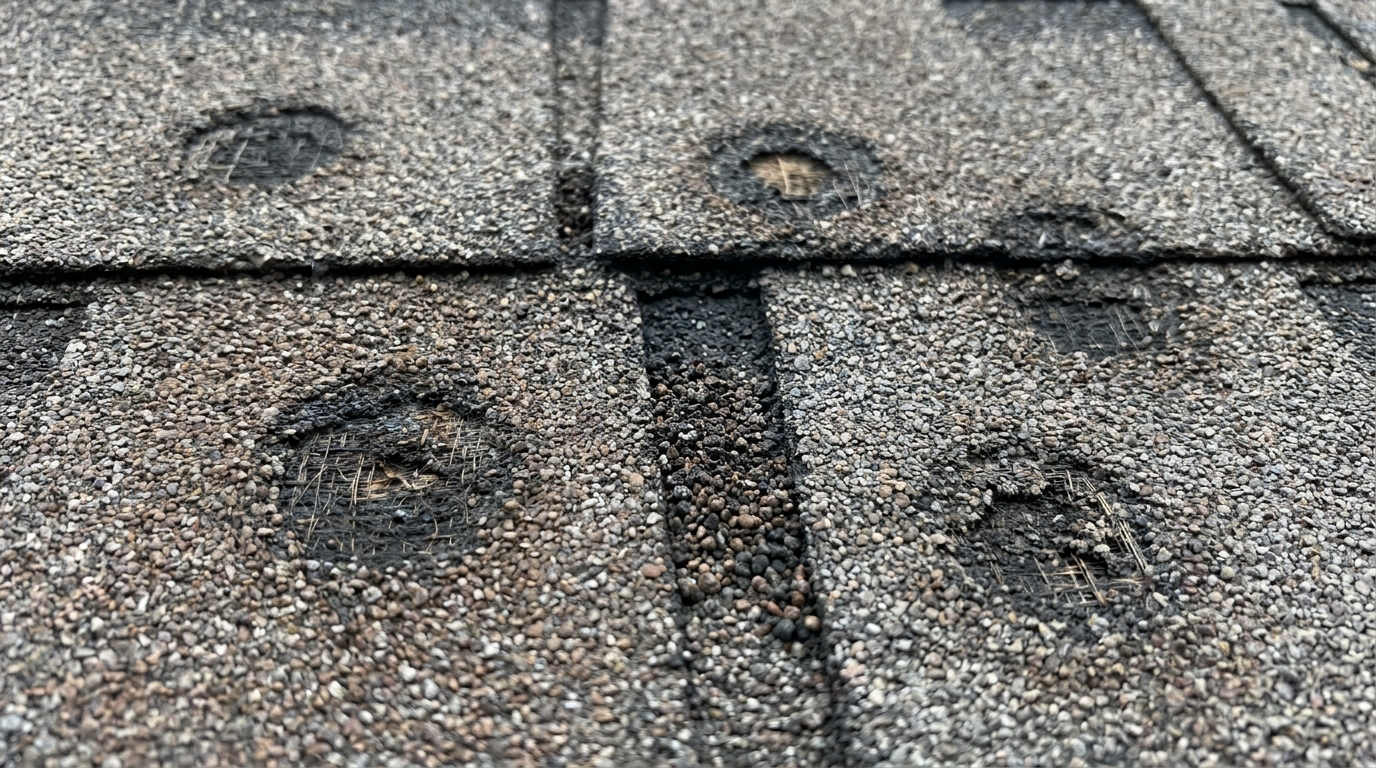
Hail bruises rather than tears. Impact knocks granules loose and compromises the mat underneath. A bruised shingle can look almost normal and still have years cut off its life. This is why hail claims turn on documentation more than on obvious holes.
Metal roofs behave differently again. Repairs to metal roofing average around $300, with most falling between $390 and $1,900 — but hail on metal is often cosmetic denting rather than functional failure, which becomes its own argument with an insurer about whether the damage is covered.
Our roof damage action plan walks through the first steps after you spot any of this.
How Does Storm Damage Severity Change Repair Costs in Charleston?
Severity drives cost less through square footage than through how many building layers the water reached.
A roof where the damage stopped at the covering is the cheapest outcome: replace shingles, replace affected underlayment, done. Once water passes the underlayment and reaches the decking, sheathing has to come off and be replaced, and the price steps up. If water traveled into the attic, insulation and drywall enter the conversation and the job stops being purely a roofing job.
Charleston’s humidity compresses the timeline on all of that. Wet sheathing in Lowcountry summer does not dry out and wait for you. Mold and rot begin quickly, which is why the gap between the storm and the repair often matters more to the final bill than the storm’s severity did.
Roof geometry matters too. Valleys, dormers, and low-slope porch tie-ins concentrate water and take more labor to detail correctly, so the same wind event costs more on a complex roof than on a simple gable.
Which Storm Damage Should Charleston Homeowners Document Before Paying for Repairs?
Document before anything is touched. This is the single highest-value hour you will spend, and it is free.
Photograph the roof from the ground on every elevation. Photograph every interior stain, ceiling, wall and attic, with something in frame for scale. Photograph the gutters and the ground for granule accumulation, and any fallen limbs or debris. Date matters, so do not rely on memory.
Write down the date and approximate time of the storm. If a named storm or a specific hail event caused it, that event is a matter of public record, which strengthens the connection between the weather and your damage.
Keep every receipt for emergency work, including tarping. Reasonable emergency measures to prevent further damage are commonly reimbursable, but only if you can produce the paperwork.
And be careful with the roof itself. Do not climb it after a storm, and do not let anyone remove damaged material before it has been documented and, if you are filing, before the insurer has had the chance to see it. Discarded evidence is difficult to argue about later.
Will Homeowners Insurance Pay for Storm Roof Damage in Charleston?
This is where South Carolina genuinely differs from what national guides describe, and it is worth reading carefully. We can explain the mechanics; only your policy and your insurer can tell you what you specifically are covered for.
In South Carolina, wind and hail are frequently handled separately from the rest of a homeowners policy. According to the South Carolina Department of Insurance, insurers may apply a separate deductible that applies only to wind or hail losses, distinct from your standard deductible. Coastal policies also commonly carry a named-storm or hurricane deductible expressed as a percentage of the insured value rather than a flat dollar amount.
That percentage structure surprises people. On a home insured for $400,000, a 2% wind and hail deductible means the first $8,000 is yours before coverage responds. A repair that would clearly be worth claiming under a $1,000 standard deductible may not be worth claiming at all under a percentage one.
There is a further wrinkle specific to the coast: in South Carolina, wind and hail coverage can be excluded from a homeowners policy depending on the property’s location, which is why many coastal owners carry separate wind and hail coverage through the South Carolina Wind and Hail Underwriting Association.
Before you assume a claim makes sense, find your declarations page and look for three things: your standard deductible, any separate wind/hail deductible, and whether wind and hail are covered at all. For the broader question of what roof damage is and is not typically covered, our guide on whether insurance covers your roof goes through it in detail.
Should You Pay a Charleston Roofer Before the Insurance Claim Settles?
Be cautious here, because this is where storm-season problems usually start.
A reputable contractor will inspect, document, and give you a written estimate without requiring a large payment up front. A deposit for materials on a scheduled job is normal. Handing over thousands of dollars to someone who knocked on your door two days after a storm is not.
Some specific things to treat as warnings. Be wary of anyone who pressures you to sign immediately, who asks you to sign over your insurance claim rights, or who cannot produce a South Carolina contractor license and proof of insurance you can verify independently. Be especially wary of an offer to cover, absorb, or discount your deductible — that is not a favor. Misrepresenting the cost of work to an insurer can constitute insurance fraud, and the homeowner is exposed too, not just the contractor.
The same applies to a promise of a no-cost roof. Whether your claim is approved is the insurer’s decision based on your policy and the damage, and no contractor can guarantee that outcome in advance.
We have written more directly about this in the truth about storm work, because the Lowcountry sees a wave of out-of-town operators after every significant storm and locals are left with the consequences.
What Roof Costs Should Charleston Homeowners Expect After Storm Damage?
Beyond the repair line itself, several costs show up on storm jobs that homeowners rarely budget for.
Emergency tarping is usually first, and it is a separate item. Decking replacement is priced per sheet and is rarely known until the old covering is off, so an honest estimate will include an allowance and a per-sheet rate rather than pretending to know. Permit fees apply for work above certain thresholds. Disposal is priced by weight, and a storm-damaged roof with multiple layers is heavy.
Then there is the matter of matching. If your shingles are discontinued — common on a roof more than a decade old — a repair may not blend, and the conversation shifts toward replacing a full slope or a full roof for appearance reasons. Whether a policy covers that mismatch varies, and it is a specific question worth asking your insurer rather than assuming.
Code upgrades can also apply. If current requirements exceed what was on the roof, bringing the repair to code may add cost that a policy may or may not cover.
How Do Storm Damage Roof Repair Costs Compare With Replacement Pricing in Charleston?
At some point repair stops being the economical answer, and the threshold arrives sooner on an older roof.
The rough rule most roofers use: when the repair approaches somewhere between a third and a half of replacement cost, and the roof is already well into its service life, replacement is usually the better spend. A $9,000 repair on a nineteen-year-old asphalt roof buys a few more years on a system that was nearly finished anyway.
Damage distribution matters as much as damage cost. Storm damage concentrated on one slope is a strong repair candidate. Damage scattered across every elevation, which is typical of hail, usually points to replacement, because a patchwork of repairs across a whole roof rarely performs or looks like a roof.
Age is the honest tiebreaker. In Charleston’s heat, humidity, and UV load, asphalt shingles often deliver less service life than their rating suggests. A storm that arrives in year eighteen of a twenty-year roof has effectively made the decision for you.
Does Emergency Tarping Add to Storm Damage Costs in Charleston?
Yes, it is a real line item, and it is almost always worth it.
Tarping is priced by roof area covered, access difficulty, and urgency, and after-hours work during an active storm event costs more than a scheduled visit. It is a separate charge from the permanent repair.
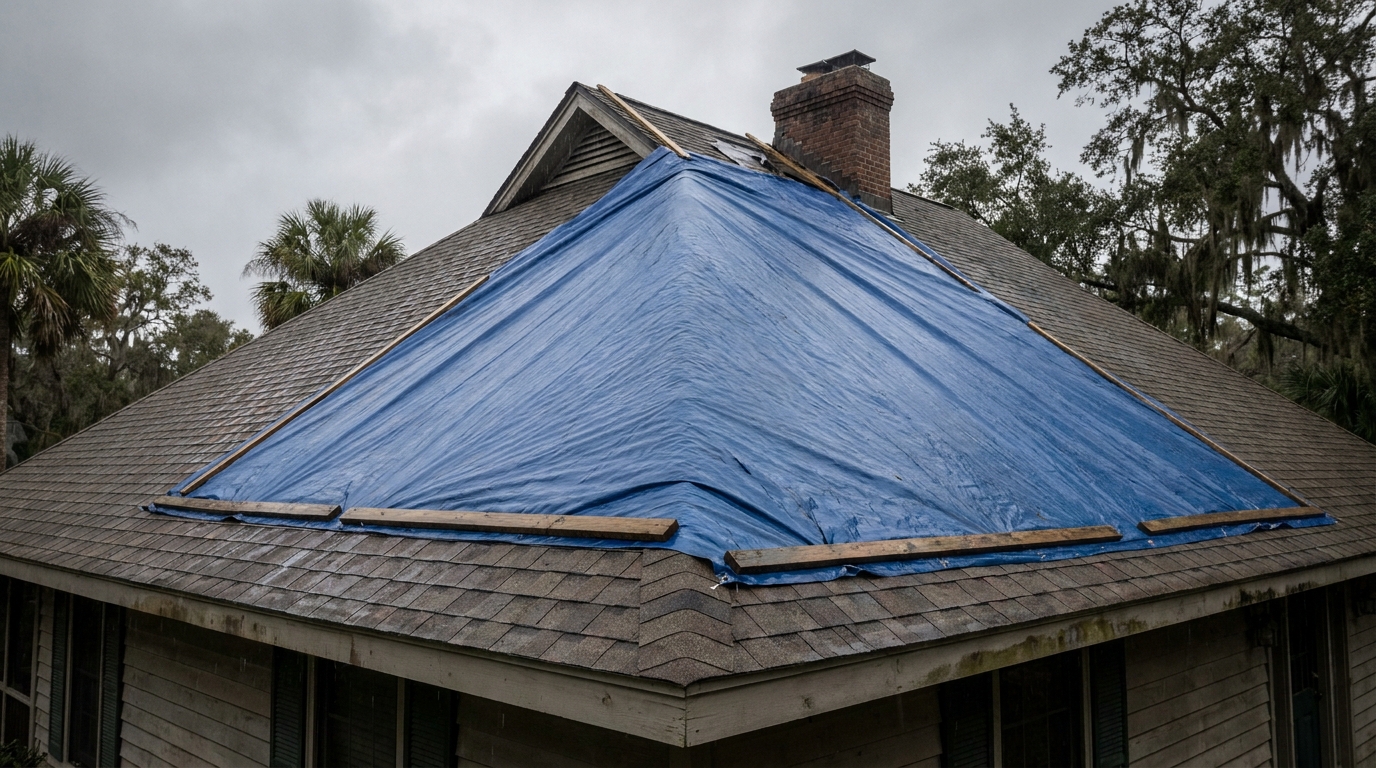
The reason to do it anyway is arithmetic. An open roof in Charleston humidity produces saturated insulation, ruined drywall, and mold growth within days. The interior damage from a week of water intrusion routinely exceeds the tarping cost several times over.
There is also a coverage dimension. Policies generally expect the homeowner to take reasonable steps to prevent further damage after a loss. Declining to tarp an open roof can complicate a claim for damage that occurred afterward. Keep the receipt, photograph the tarp in place, and note the date.
Our approach to storm response explains how we sequence emergency work against permanent repair.
The Bottom Line on Storm Damage Roof Repair in Charleston
Nationally, storm damage roof repair spans roughly $2,641 to $22,127, averaging near $12,331, while hail-specific repairs run lower at $1,500 to $8,000. Where you fall depends on how far the water traveled, how complex your roof is, and how quickly the work happened.
The Charleston-specific piece is the one worth acting on: check your wind and hail deductible before you decide whether to file. A percentage-based named-storm deductible can be many times a standard one, and it changes the answer entirely. Document everything first, be patient with anyone who is in a hurry to be paid, and remember that resilience standards like FORTIFIED Roof matter here both for how a roof survives the next storm and for how insurers view it.
If a storm has hit your home, our Charleston team will inspect the roof, document what we find, and tell you plainly whether you are looking at a repair or a replacement. Schedule a free inspection and we will start there.