How Long Does a Roof Replacement Take in Charleston?
RoofingBaker Home Exteriors
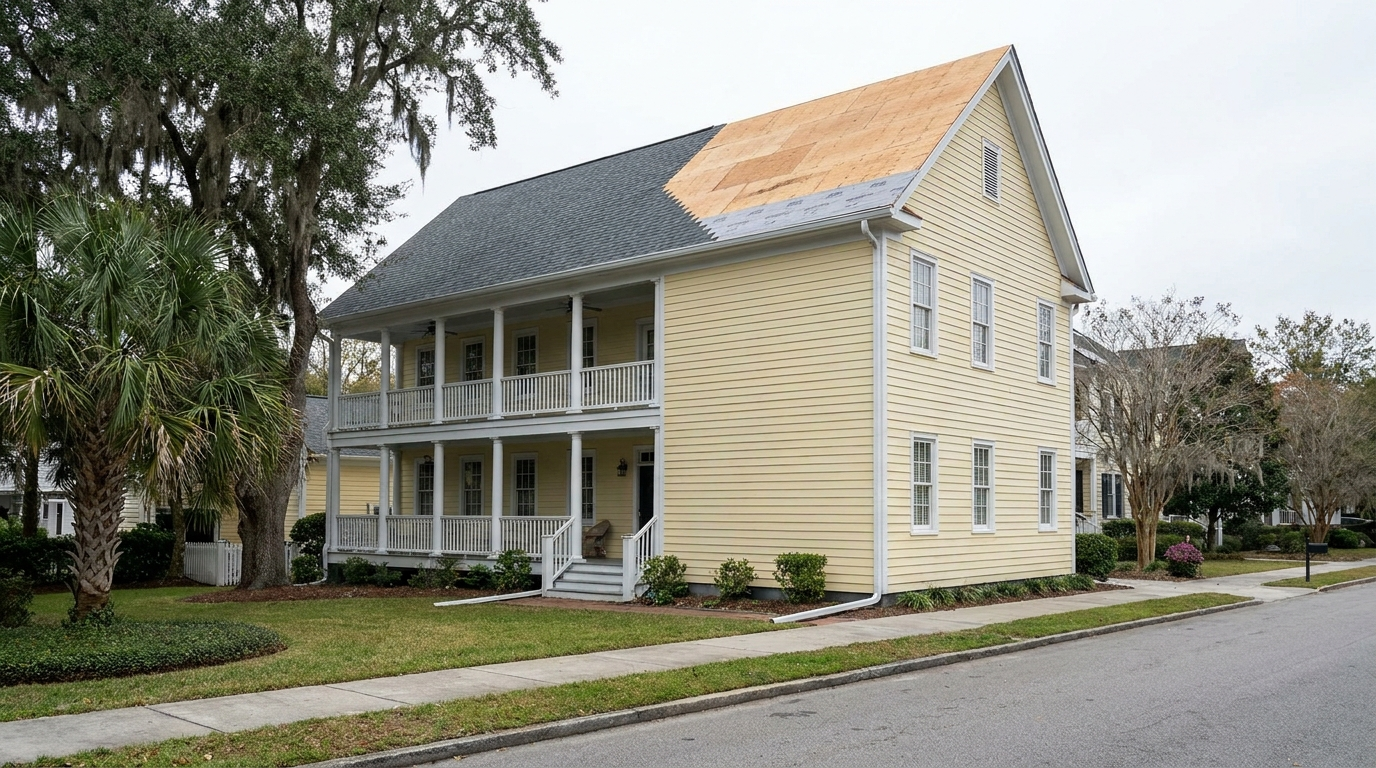
Most of our roof installs take one to two days once the crew is on the roof. That is the short part of a roof replacement in Charleston. The longer part is the calendar around it. That covers the permit, the materials order, the weather and, for some historic homes, a Board of Architectural Review step. Each one can move your start or finish date.
How Many Days Does a Roof Replacement Take on a Charleston Home?
For an asphalt shingle roof on an average-sized home, the work can often be done in one to two days. That is the figure in GAF’s guide to how long it takes to replace a roof. Stripping the old roof down to the decking usually takes only a few hours of that time.
The rest goes to checking the decking and flashing, laying underlayment, installing the shingles, ridge and vents, and cleaning up. On the asphalt shingle roofs we install, that means synthetic underlayment and ice and water shield. On those roofs, we also flash the chimney and valleys and fit drip edge, ridge cap and pipe boot flashing.
Your house decides where it lands in that range, or whether it runs past it:
- Size and shape. A bigger roof takes longer. So does one with many valleys, dormers, chimneys or skylights, since each means more cutting and fitting.
- Pitch. A steep roof calls for extra safety equipment, and crews work more slowly on it.
- Layers. Tearing off more than one layer of old roofing adds time.
- Material. Metal takes us longer than a typical install. Slate and tile often take longer than asphalt shingles because they are heavier.
- Crew size. A larger crew tends to finish faster.
- Access. A fence, close neighbors or dense landscaping can add hours to setup, because the dumpster and materials are harder to place.
For example, a one-story house with a single layer of shingles and a simple roof line sits at the short end. A steep two-story roof with dormers and a chimney runs longer.
If your neighborhood has a homeowners association, ask whether it reviews roof work. If you are still weighing budget and contractors, our guide to planning a new roof for a Carolina home covers those decisions.
Which Permit and Inspection Steps Add Time to a Charleston Roof Replacement?
The permit decides when work can start, and the final inspection decides when the job is closed out. Inside City of Charleston limits, a residential reroof is commonly filed as a “Re-roofing” permit. The City’s permit guidance for residential roofing lists one required field inspection for it: the Residential Building Final.
That guidance gives no processing time for the permit, so treat any fixed number of days as an estimate. The City sends each application to every review the job needs. Under its permit process, if one review turns up a needed change, the revised plans cannot go in until every other review is finished. Once every review approves the job and the fees are paid, the permit issues automatically at midnight. A complete application is the part of the wait your roofer controls.
When the roof is done, your roofer requests the final inspection. Inside the City, that request goes through the City’s online portal or by email. If the inspection fails, the inspector’s comments come back through the portal, and the inspection is requested again once they are fixed. A City reroof needs no Certificate of Construction Completion unless the applicant asks for one, so a passed final inspection ends the process.
If Charleston County Building Inspection Services issues your permit, inspections run Monday through Friday, except holidays. Under Charleston County’s inspection rules, a request made before 4:00 p.m. is booked one business day out. After 4:00 p.m., it is booked two business days out. So a request sent after 4:00 p.m. on a Friday lands on the following Tuesday, unless a holiday falls in between.
Our Charleston roof permit guide covers which office handles your address, who pulls the permit and what the application asks for.
Does a Roof Replacement in a Charleston Historic District Take Longer?
It can. In the City of Charleston’s historic districts, a reroof may need Board of Architectural Review (BAR) approval. The City generally takes zoning approval first, then the BAR, then the building review. So whatever time the BAR step takes is added before your start date, not to your days on the roof.
Whether your roof needs that review depends on the district and on what can be seen from a public right-of-way, such as the street. In the Old and Historic District, visible exterior work needs BAR approval. In the Old City District, it applies only to some houses. Under the BAR’s 2024 guidelines, the house must be at least 100 years old, have an architectural rating or have been reviewed by the BAR. City preservation staff make the final call on what falls under the BAR.
How much time the step adds depends on the path, and a shingle-to-shingle reroof has the shortest one. Shingle to shingle is on the BAR’s quick review list. Staff can typically process those jobs over the counter at the Permit Center when all the paperwork is in. The list notes that this is not an automatic approval.
Other roof work goes to BAR staff or to the full Board. Under the BAR’s submittal rules, staff reviews have no submittal deadlines. They are taken in the order received and deferred if incomplete. Board reviews follow a published meeting schedule with its own submittal deadlines, so a Board case waits for the next meeting it can make. An incomplete application is rejected and taken off the agenda, which pushes it to a later meeting.
Replacing a historic roof adds more steps. For the Old and Historic and Old City Districts, the BAR’s 2014 roofing policy asks for repair wherever possible. A historic roof can be fully replaced only once it is documented as beyond reasonable repair. The replacement must then be in kind, apart from a few metal substitutes staff can approve. The BAR’s 2024 guidelines describe most historic Charleston roofs as standing-seam metal or copper, terra-cotta tile or slate. They also call asphalt shingles inappropriate for historic buildings, so swapping a historic roof for shingles is not a shortcut.
What Can Delay a Roof Replacement Once Work Starts in Charleston?
A crew should not roof in the rain. When rain is due in the afternoon, the crew may finish only part of the roof and come back the next day. A crew may also tear off and re-cover one section at a time, which keeps the bare decking exposed for less time. Rain that wrinkles the underlayment does not always mean replacing it. If the wrinkling is not bad enough to affect the shingle installation, the underlayment can probably stay, according to NRCA, the national roofing trade association.
Rain is a regular part of planning a Lowcountry roof. The Coastal Plain, Charleston included, averages 50 to 52 inches of rain a year, according to South Carolina’s State Climatology Office. Sea-breeze thunderstorms are common near the coast in summer. In the summer and early fall of most years, one or more tropical storms or hurricanes affect South Carolina. Before work starts, ask your roofer how a storm in the forecast would change the schedule.
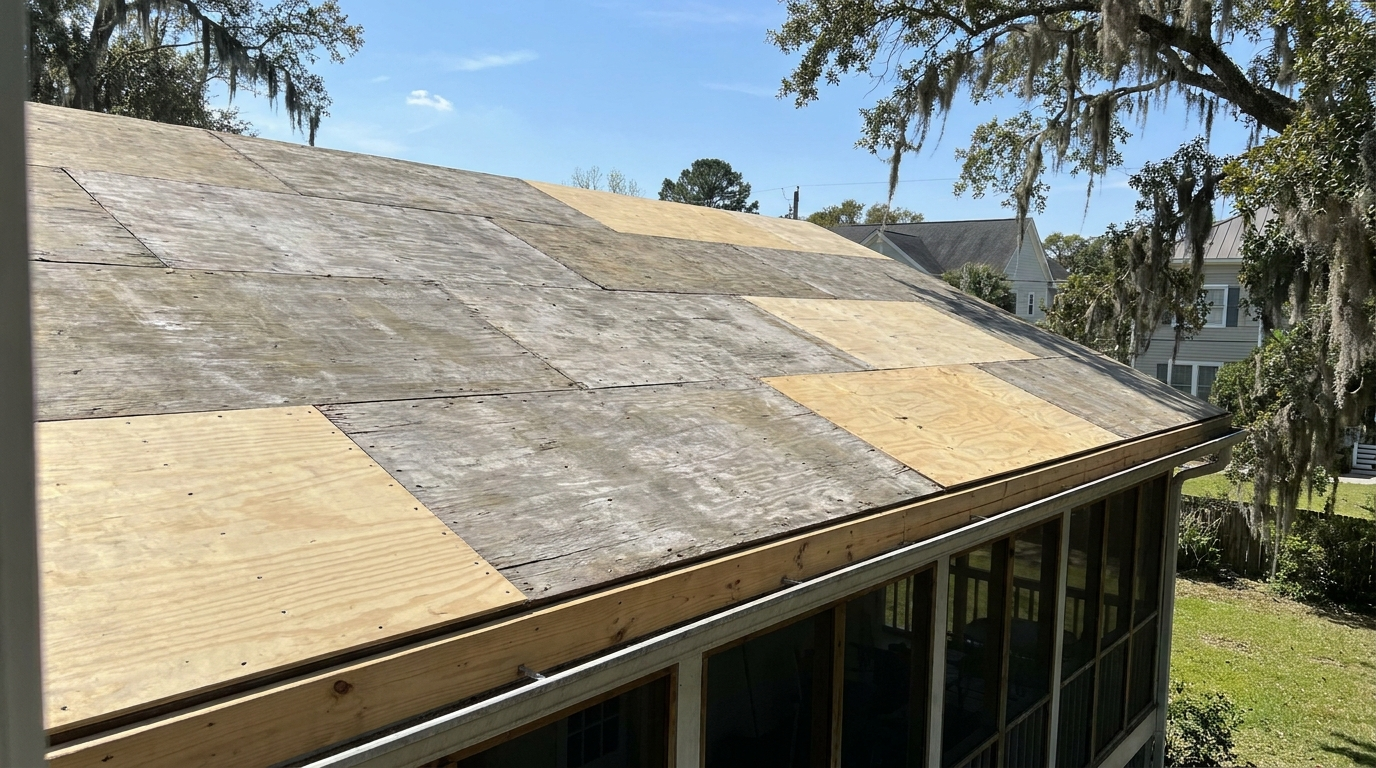
Rotted decking usually stays hidden until tear-off. The bad sections have to be replaced before anything new goes on. GAF puts that at anywhere from a few hours to an extra day. On the asphalt shingle roofs we install, we use 3/4-inch decking and replace any decking that needs it. Correcting poor attic ventilation also adds time to the job. Ask up front how your roofer handles decking repairs found at tear-off.
The materials order waits until your shingle color is final, so a late choice can push back your start date. Settle on a color early, and ask your roofer when the materials are due on site.
How Can Charleston Homeowners Get Ready for Roof Replacement Day?
Clear space for the crew and the dumpster, and plan your household around the noise. Owens Corning’s homeowner guide says the dumpster may arrive one to two days before the work starts. The shingles may come a few days ahead or the morning of. Agree with your roofer on where the dumpster will sit so your car is not boxed in.
- Move bikes, planters and garden tools away from the house.
- Point out garden statues or other valuables you want the crew to watch for.
- Unlock gates, and tell the crew about any that must stay shut for pets.
- Give your neighbors a few days’ notice, since tear-off is loud.
- Park on the street the night before, since crews usually start early in the day.
- Raise any special requests, such as bathroom use, before install day.
- Look for the permit card, and keep your house number in view. If Charleston County issues your permit, the crew cannot begin until the card is up where it can be seen. The County also makes no inspection until the 911 address is posted at the site.
You can stay home, since the crew does not need to come inside. Tear-off is the noisiest part of the job, so plan around it if you work from home.
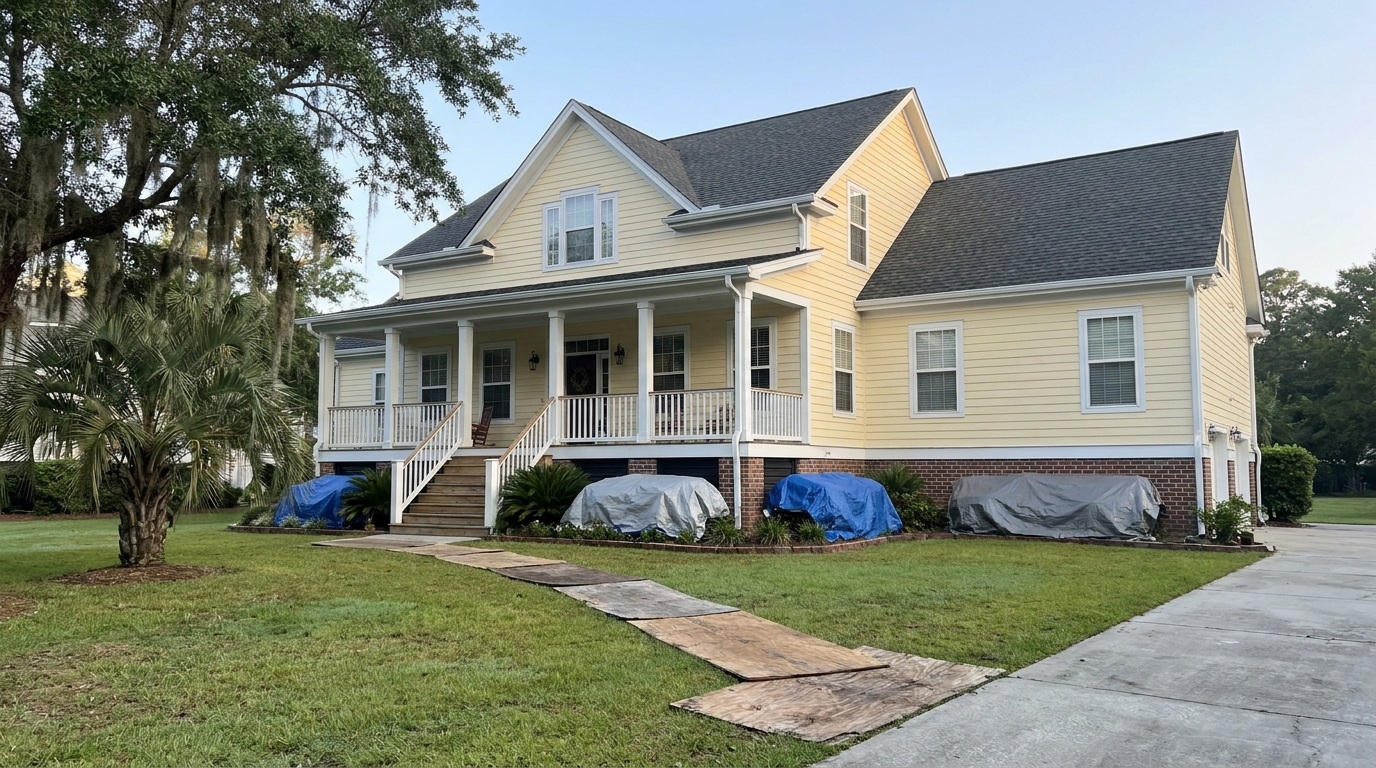
We tarp the shrubs and flowerbeds, lay plywood walk-pads and run a magnetic nail sweep before we leave. While the crew is on the roof, keep children and pets inside and away from the work zone. Keep them out of the yard until the sweep is done. Before the crew goes, a project manager does a final walkthrough. If you find a stray nail later, ask for a second sweep.
The Bottom Line on Roof Replacement Timelines in Charleston
Ask any roofer you are considering for a timeline that names each step, from permit to final inspection. Each of our jobs starts with a free on-site roof inspection. Our project manager photographs what the inspection finds, and the quote comes back written, with options. When you are ready, our Charleston roofing team can begin with that inspection.