Is Fiber Cement or Vinyl Siding Better in Raleigh?
SidingBaker Home Exteriors
Fiber cement is the better siding if the budget can carry it, and vinyl is the better price. In the Raleigh column of the 2025 Cost vs. Value Report, fiber cement cost more to install. By the report’s estimate, it also recouped more of its cost at resale. Vinyl wins when the budget sets the limit, and its upkeep is simpler. The report’s figures below describe a defined project, and they are not our pricing.
We install siding out of Raleigh, and every job starts with a free on-site inspection. On a siding replacement, that visit is where you can weigh both materials against your own walls.
Which Wins on a Raleigh Home, Fiber Cement or Vinyl Siding?
On a Raleigh home, fiber cement wins on fire and on estimated resale value, and vinyl wins on price and on upkeep.
James Hardie fiber cement is Class A fire rated, resists rot and insects, and carries a 30-year manufacturer warranty. That is a warranty term, not a promised lifespan. Its maker’s siding FAQ adds that the warranty is non-prorated and the boards are noncombustible. That fire resistance does not cover paint or coatings on the boards, which may still be damaged or char. Vinyl, in the same FAQ’s account, is vulnerable to melting and flame.
Fiber cement is also a painted board. It comes primed for paint on site or with a color finish cured on at the factory. The maker’s factory finish carries its own 15-year limited warranty, covering paint and labor against peeling, cracking and chipping. When you want a new color, the boards can be repainted. Vinyl’s look and life depend on its grade. Premium panels can mimic wood or stone and last 30 years or more, against about 15 for economy panels, per NerdWallet’s vinyl siding cost guide.
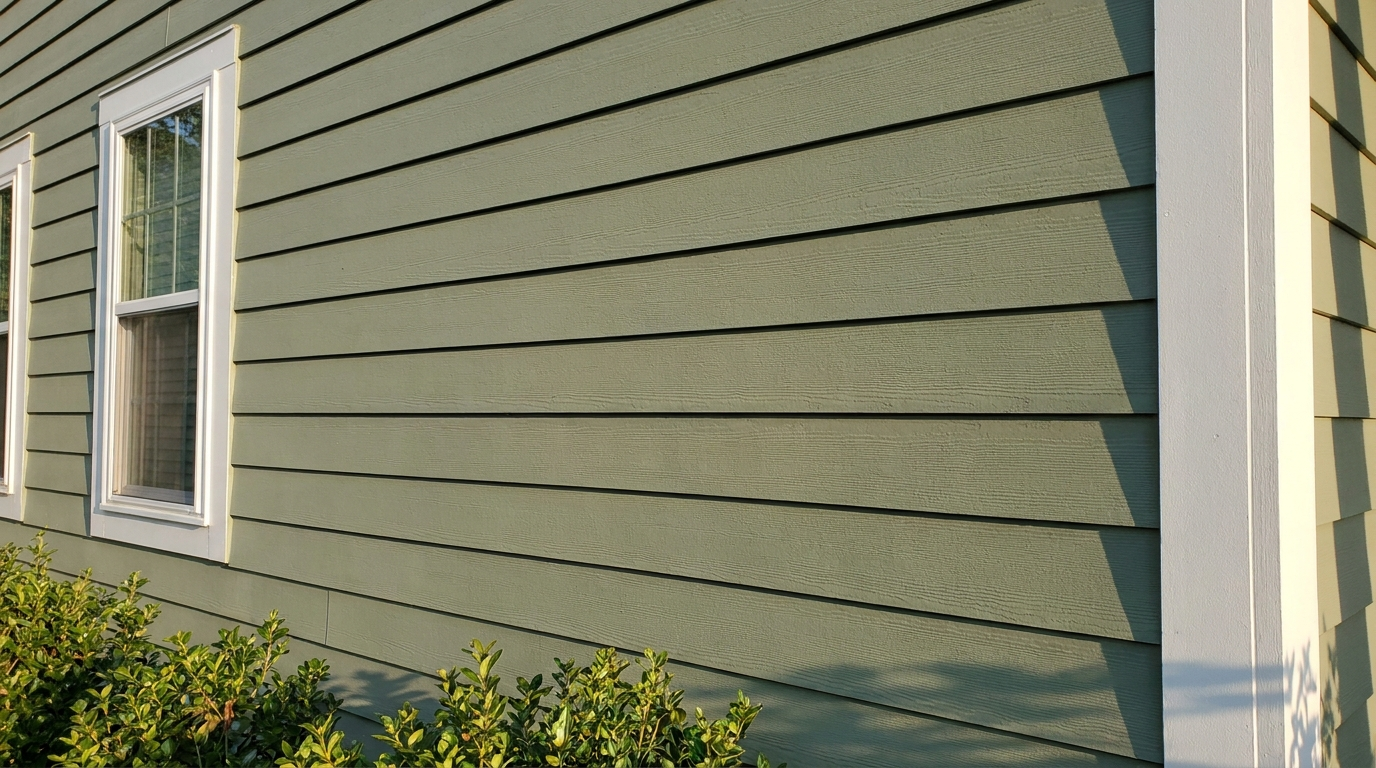
Upkeep favors vinyl. For vinyl, the same guide advises a yearly wash with mild soap and a hose and a yearly check for cracks and moisture. Fiber cement asks more. Its maker advises a wash once or twice a year with a garden hose and a soft brush, not a pressure washer. The caulk around the edges of the house needs checking too, and repairing where it fails. Small chips or dents in the boards take a cement-based patching compound.
Summer heat is one Raleigh condition that works against vinyl. The normal daily high at Raleigh-Durham International Airport runs about 90 degrees Fahrenheit through July, in the National Weather Service’s 1981 to 2010 normals. The same vinyl guide notes that vinyl tends to warp and crack in high Southern heat.
How Far Apart Are Fiber Cement and Vinyl Siding Prices in Raleigh?
In the 2025 report’s Raleigh column, fiber cement cost nearly a quarter more than vinyl on the same 1,250 square feet of siding.
| 1,250 sq ft re-siding project, 2025 | Fiber cement | Vinyl |
|---|---|---|
| Job cost, Raleigh column | $17,748 | $14,387 |
| Estimated resale value, Raleigh column | $22,572 | $15,784 |
| Cost recouped (estimated), Raleigh column | 127.2% | 109.7% |
| Job cost, national average | $21,485 | $17,950 |
| Cost recouped (estimated), national average | 113.7% | 96.5% |
Each figure is for a whole defined project, not a price per square foot and not a quote for your house. The two jobs also differ in scope. The fiber cement job uses factory primed and painted boards, with trim in fiber cement or cellular PVC. The vinyl job uses factory trim at every opening and corner. That scope difference explains part of the price gap.
Cost recouped is the report’s estimated resale value as a share of the job cost. Those resale values come from a survey: Realtors estimated what each project would add to a home’s sale price. They are not sale results. In Raleigh, those estimates put both jobs above their cost, and fiber cement by the wider margin. The national averages run lower, and there vinyl’s estimated resale value falls below its cost.
That 1,250 square feet is siding on the walls, not the floor area on a listing. For example, a 2,000-square-foot house can need more or less siding than that, so the report cannot price your house. For how wall area turns into a fiber cement price, see our fiber cement siding cost guide.
After the install, fiber cement’s costs include caulk and, in time, paint. Vinyl’s can include panels a hard storm has cracked. Those costs depend on the house and the weather, so weigh them against how long you plan to stay.
Insulated vinyl is the step up within vinyl, and the nearest thing to a middle path between the two. It is vinyl with a foam backing, and our vinyl siding cost guide prices it above the standard grades. Its insulating value is modest: R-2 to R-3 at best with EPS foam, in a project presentation from the Department of Energy’s 2023 peer review. So it adds some insulation, but it is still vinyl.
Does Raleigh Hail Crack Vinyl Siding More Easily Than Fiber Cement?
Vinyl is the siding with a measured hail weakness; for fiber cement, the hail claim is its maker’s. In a lab study of siding, new vinyl panels cracked under ice balls 3/4 inch to 1 1/4 inches across. The ice was fired at the speed of falling hail, and the first cracks formed at the lap, the lower edge of each course.
The weakest vinyl in that test was the one foam-backed panel, the type sold as insulated vinyl, which cracked at 3/4 inch. So the foam that adds insulation did not add hail strength there. The best performer, a thicker Dutch lap panel, did not crack until 1 1/4 inches. The study says the spread could relate to thickness, profile, support and material quality.
Fiber cement was not part of the study. On that side, the hail claim comes from the same maker, whose FAQ on fiber cement calls the siding hail-damage resistant. That is the manufacturer’s statement about its own product.
Hail is part of the weather here. NOAA’s Storm Events Database logged 122 Wake County hail reports from 2015 to 2024: 91 were 1 inch or larger, spread over 27 days. Those are reports of hail, not of damage. A lab test on new panels cannot tell you what a past storm did to your own walls. After a hard storm, look over the lower laps from the ground for cracks or holes, and leave anything higher to an inspection.
Moisture is the slower test, and the layer behind the siding matters as much as the siding. Both defined projects in the 2025 report call for a continuous water-resistive barrier, such as house wrap, beneath the new siding. The same peer review presentation notes that insulated vinyl has no built-in drainage for water. Either way, that barrier is worth checking before new siding goes on.
Who Should Choose Vinyl Siding Over Fiber Cement in Raleigh?
Choose vinyl when the budget is fixed, when you want the lightest upkeep, or when the wall itself needs the money first.
On a fixed budget, the gap in the table above matters, and vinyl covers the same walls for less.
If you want siding you wash and otherwise leave alone, vinyl fits. Fiber cement’s caulk checks and, in time, a repaint are part of owning it.
The wall can also decide it. For example, if our inspection finds wall repairs ahead, they come out of the same budget. Choosing vinyl can leave room to pay for them.
Fiber cement also asks more of the crew. The same maker recommends leaving a full siding project to experts who know fiber cement. Its boards go on with approved fasteners spaced to wind load tables. So compare installers as closely as you compare materials, and ask how long the crew has installed the material you pick. Every job carries a ten-year workmanship warranty, whichever siding you choose. If something goes wrong inside the warranty, the re-inspection is free.
What Should a Raleigh Siding Inspection Tell You Before You Pick a Material?
It should tell you whether the wall behind the old siding is sound and whether the siding clears the soil. Either answer can change the budget before you pick a material.
Start with the wall. Rot in the sheathing, the wall panels behind the siding, should be repaired before new siding goes on. That repair belongs in the price before you choose.
Then look where the siding meets the ground. Siding should always sit at least 6 inches above the soil line, and preferably higher, in NC State Extension’s guide to termites in existing homes. Mulch should never touch the foundation or the lowest siding. Too little clearance can lead to decay and let termite tubes go unnoticed. The same guide suggests checking around doors and windows for damage from decay or termites. Tree and shrub limbs touching the house can damage siding, it adds.
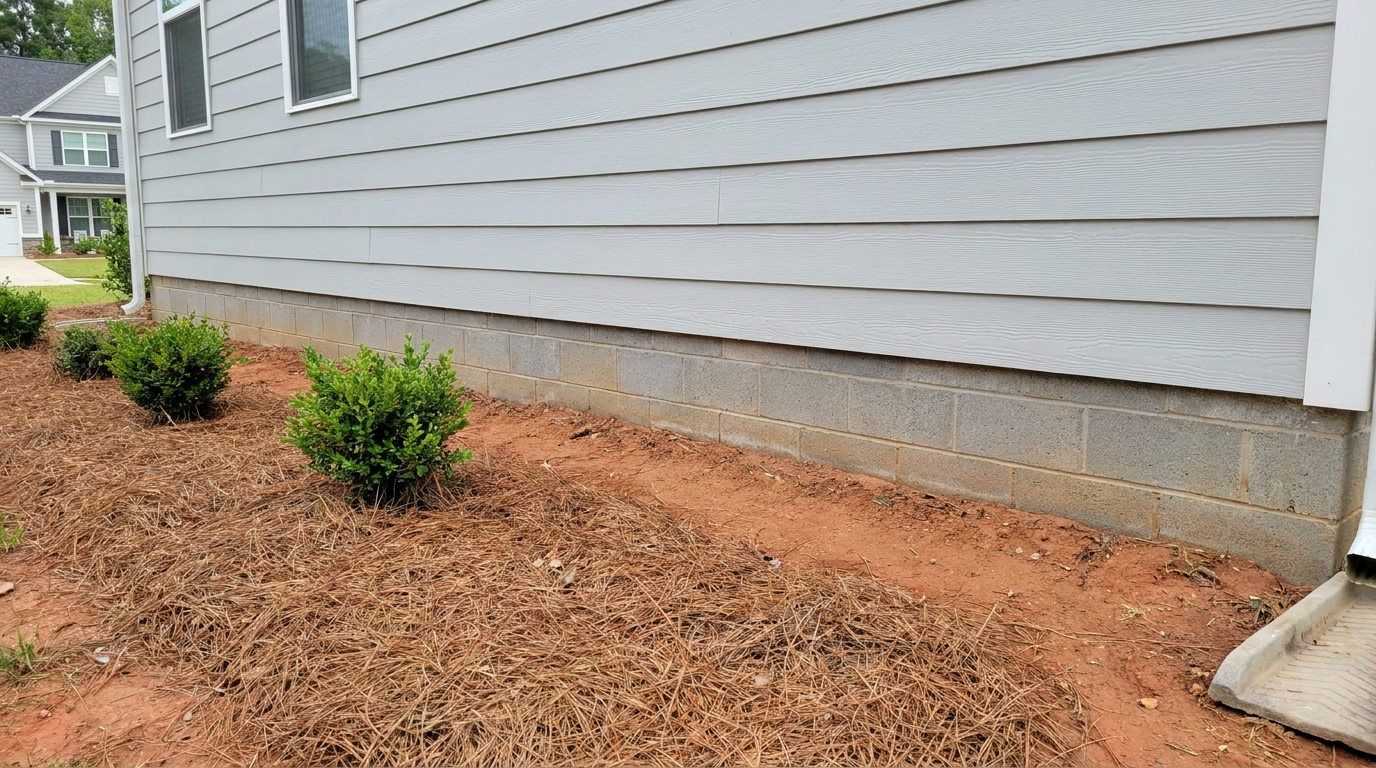
Choosing fiber cement does not change the termite advice. The same extension service notes that fiber cement’s makers sell it as termite and decay resistant. It also cautions that termite-resistant building materials are no substitute for an approved termite treatment or routine termite inspections.
Check the rules for your street, too. If the house sits in one of Raleigh’s historic overlay districts, switching siding materials can need the City’s approval before work starts. Our guide to fiber cement costs in Raleigh walks through that review.
The project manager photographs what he finds on the inspection, and the quote comes back written, with options. Ask for both materials on that quote, priced for the same walls, so you can compare them on your own house. Our siding inspection page shows what that visit covers.
The Bottom Line on Fiber Cement vs Vinyl Siding in Raleigh
Which siding is right for your house comes down to your budget and your walls. Book a free on-site inspection of your Raleigh siding, and the written quote that follows can price both fiber cement and vinyl.