Board and Batten Siding Costs in Raleigh: A 2026 Breakdown
SidingBaker Home Exteriors
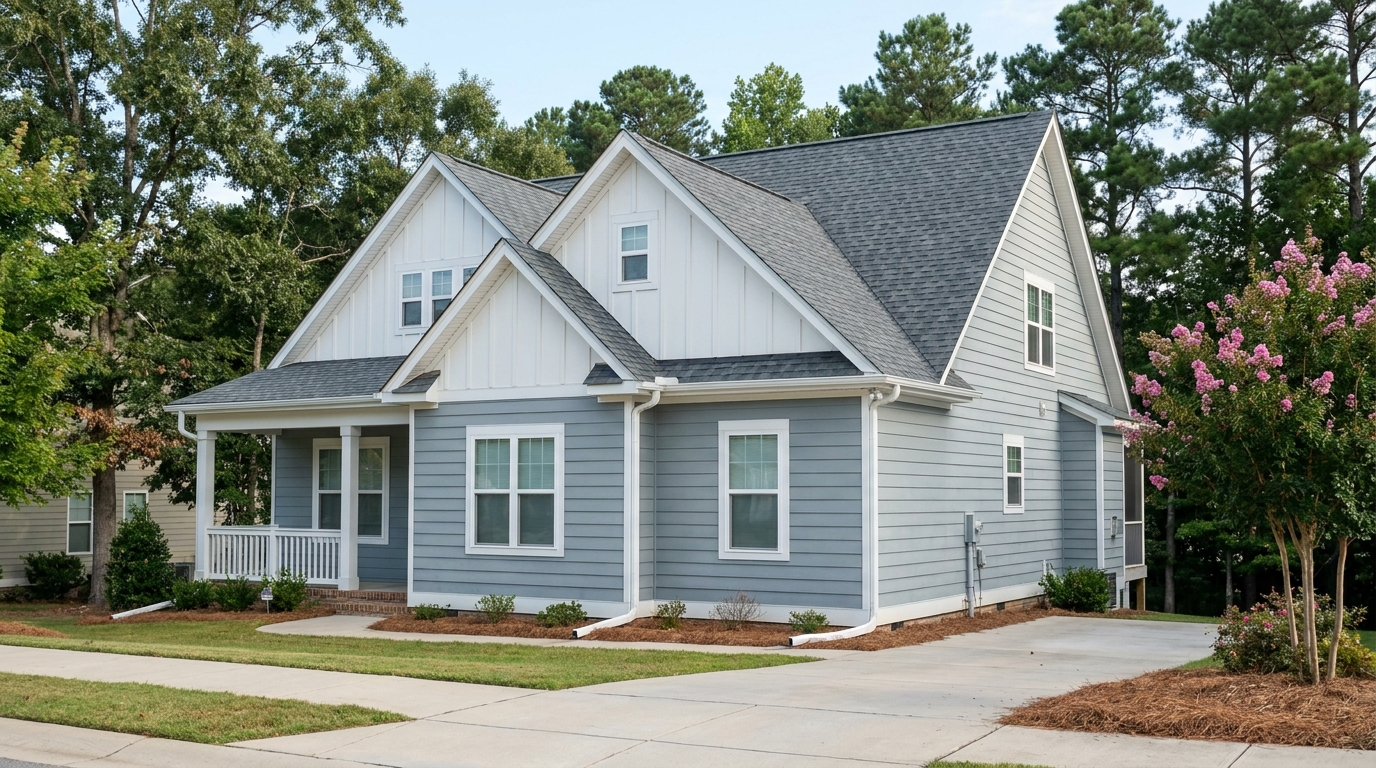
Board and batten is vertical siding: wide boards that run up the wall, with narrow strips, the battens, covering the seams between them. It goes on two ways, across a whole elevation or as an accent in the gables above lap siding, and it usually costs more than lap either way. Most of that difference is install labor.
If you're pricing a siding replacement, this breakdown covers the style's cost per square foot in 2026, the extra labor, fiber cement against vinyl through a Raleigh summer, and what gables, batten spacing, trim and an HOA review do to a quote. We install siding, windows and doors out of Raleigh, so that's the market we've written it for.
One note before the numbers: every dollar figure below is a published national figure with its source named in the same sentence, and none of them is our pricing. Board and batten is also made in wood, which is a different budget and a different upkeep schedule; this post stays with fiber cement and vinyl.
What Does Board and Batten Siding Cost Per Square Foot in Raleigh?
Neither of the national cost guides cited in this post breaks board and batten out for Raleigh, so the starting point is a national figure. HomeGuide, which builds its cost guides from contractor estimates and project costs its members report, puts the average installed cost of board and batten in fiber cement at $6 to $15 per square foot, on a page dated June 23, 2025 and titled for 2026. That is a national average, not our pricing.
| Board and batten, installed | HomeGuide's national average (page dated June 23, 2025) |
|---|---|
| Fiber cement | $6 to $15 per square foot |
| Installation labor alone | $2 to $7 per square foot |
Three things turn that national range into a number for a Raleigh home. The first is the square footage, which is wall area, not floor area, so it comes from measuring your walls, gables included. The second is labor, which makes Raleigh's labor market one of the inputs: HomeGuide puts installation labor at $2 to $7 per square foot on average, depending on job size, local labor rates and the material, and lists removal of the old siding as an additional labor cost, at $0.70 to $2.00 per square foot. The third is trim, which is priced on its own and covered further down.
HomeGuide's installed figure above covers fiber cement only. Vinyl siding pricing is a separate subject, and this post doesn't put a number on it. If you're still choosing a material for the whole house, our guide to the best siding options for Raleigh homes covers that decision.
Is Board and Batten Worth the Extra Install Labor Over Lap Siding on Raleigh Homes?
It is where the style carries the look of the house, and it helps to know that the premium buys installer time. Fixr, a national cost guide, says on a page updated January 26, 2026 that board and batten is usually more expensive than simpler designs such as lap siding, mainly because the installation takes more careful measuring and planning and because the large boards take more than one set of hands to move into place.
Two installation documents show where that time goes. For vinyl, CertainTeed's instructions for installing vertical siding say the installer may have to complete an extra step to give the panel's vertical edge solid nailing points, depending on the wall's substrate and the type of project, and they present that step as extra to the wall preparation for horizontal siding. The same instructions call for a balanced layout, with the same number of panels on each side of the wall's center.
Fiber cement gets there a different way. James Hardie's Best Practices installation guide for HardiePanel vertical siding, effective December 2019, shows the batten as a separate trim board that covers the joint between panels. For a two-story wall, the same guide says panels must not bridge the floors: a horizontal joint is always created between them, and horizontal joints between panels have to be flashed.
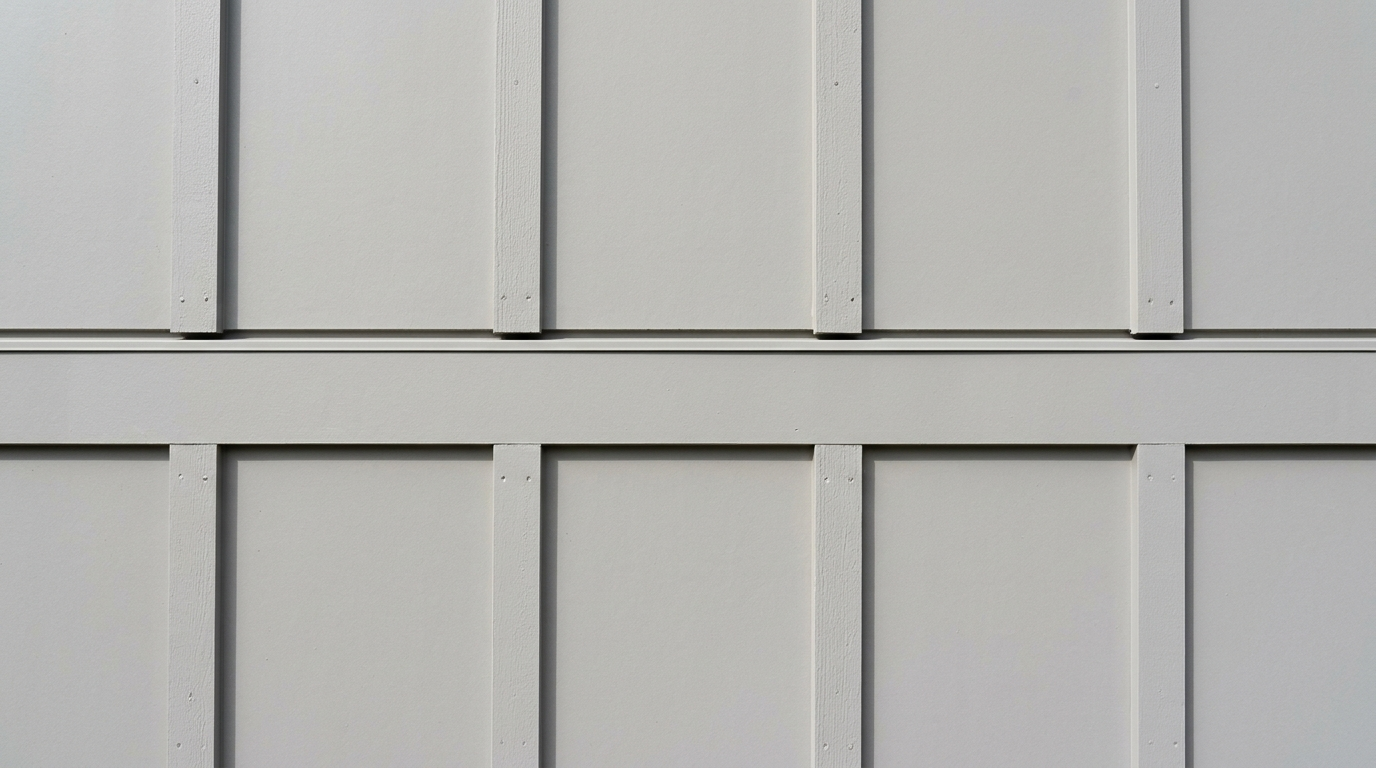
Read alongside Fixr's explanation, that is the work the style adds: backing and layout in vinyl, and in fiber cement a separate pass of battens and a flashed joint at each floor line. The premium is easiest to justify where the style does the most for the house, such as a front elevation, an entry or the gables.
Which Board and Batten Holds Its Value Better Through Raleigh Summers, Fiber Cement or Vinyl?
Our read is fiber cement, mostly because its finish can be renewed, while vinyl is sold as a finish that needs no paint. Vinyl asks less of you over the years, but it moves with the heat, so how it holds up depends on how it was hung.
Raleigh summers supply the heat. The National Weather Service's Raleigh office lists a normal daily high of 90 or 91°F for every day of July in its 1991–2020 climate normals for Raleigh-Durham. Vinyl responds to temperature. The Polymeric Exterior Products Association's Vinyl Siding Installation Manual says vinyl siding can expand and contract 1/2 inch or more over a 12-foot-6-inch length during normal, year-round changes in temperature, and that fastening it tightly will cause it to buckle as the temperature changes. A board and batten panel runs up the wall, so that allowance has to be built into every panel.
Fiber cement's terms come from its maker. James Hardie's FAQ says all of its fiber cement products come with a 30-year, non-prorated warranty, that its factory-applied ColorPlus finishes carry a 15-year limited warranty against peeling, cracking and chipping, and that its siding can be repainted. The board is covered for longer than its finish, which is why repainting shows up in the upkeep section below. CertainTeed's Board & Batten product page describes the opposite trade, calling its vinyl panels virtually maintenance free and saying they never need painting.
So it comes down to how long you plan to stay. A wall that takes new paint suits a long stay, and vinyl's lower upkeep suits a shorter one, provided it was hung to move.
Does Board and Batten on Just the Gables Save Money?
Against board and batten on the whole house, yes. A gable accent buys the labor-heavy style for the gable area only, and the rest of the house is priced as lap. Against plain lap everywhere, usually not, and a gable is not a cheap place to work.
The cutting is one reason. CertainTeed's vertical siding instructions have the installer balance a gable's layout around the center of the wall and cut the upper end of each panel to the height and slope of the roof, working from a pattern of that slope. The joints are another. James Hardie's HardiePanel installation guide says panels sometimes have to be stacked at gable ends, and that the horizontal joints this creates must be flashed.
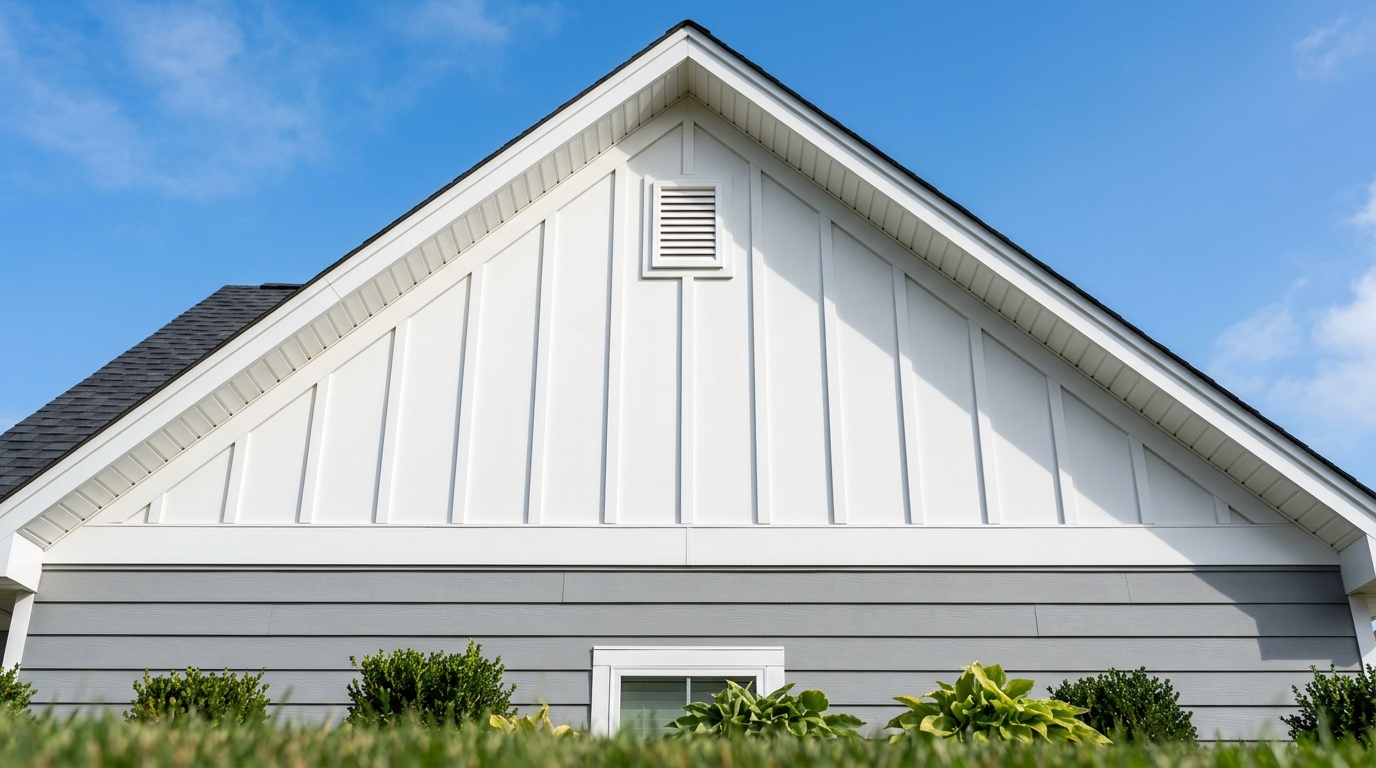
Two things help an accent earn its cost. One is doing it while the rest of the house is being re-sided, when the access for the high work is already in place. The other is settling the transition before material is ordered: where the vertical siding stops, what trim and flashing sit between it and the lap below, and what happens at the gable vent.
How Do Batten Spacing and Trim Choices Change the Price on a Raleigh Home?
In vinyl, the spacing comes with the panel. In fiber cement, every batten is a separate piece, so the spacing sets how many the job needs. Trim is its own line on a quote in both.
Vinyl board and batten is made with the board and the batten in one panel, so choosing the panel fixes the rhythm of the wall. James Hardie's guide to board and batten siding describes the fiber cement version as Hardie Panel vertical siding finished with separate trim batten strips. The guide also quotes one designer, who recommends wider spacing for a modern farmhouse with board and batten across the entire facade, so the look isn't too busy, and who has used very tight spacing in a dark color for a textured wall. Tighter spacing means more battens on the same wall, each one a piece to buy, fasten and finish.
Spacing is also a layout decision. In an April 2026 post to Reddit's r/Homebuilding, a homeowner building a lake house described battens that had been lined up with the roof and ended up running through one porch light and missing the center of the front door. The layout, they wrote, wasn't spelled out in the contract. It belongs in writing before the first panel goes up: where the battens start, and where they fall at doors, windows and light fixtures. On our jobs, a project manager does a final walkthrough before the crew leaves, which is the time to check the wall against what was agreed.
Then there's trim: corner boards, window and door surrounds, the band where a gable meets the wall below, and the fascia and soffit above. HomeGuide lists fascia and soffit replacement as its own cost factor, at $9 to $34 per linear foot. Priced by the linear foot, trim follows the number of corners and openings on a house, not the square footage of its walls.
Do Raleigh HOAs Restrict Board and Batten, and Does That Affect the Quote?
They can, and the way to find out is to read your own community's standards before a product is ordered. The North Carolina Real Estate Commission's question-and-answer brochure on residential subdivisions and planned communities is direct about it: asked whether property restrictions can dictate a home's style or its exterior colors, the Commission answers yes, "if the restrictions are properly drawn and consistently enforced."
One Raleigh example shows what that looks like. The Harrington Grove Community Association, in northwest Raleigh, publishes Architectural Standards and Construction Specifications dated August 1, 2024. They require prior approval for all exterior siding and trim replacement. They say siding must be the same width and style used in the community, and that other shingle styles, such as shaker-style shingles used as an accent, may be approved case by case. The document doesn't mention board and batten. Harrington Grove's standards also give its architectural committee up to 45 calendar days to act on an application, and they tell owners not to commit labor or materials until approval arrives in writing.
That is one community's rule, not a rule for every Raleigh HOA. What carries over is the effect on a quote: a review changes the order of things. Material, profile and color go to the committee first, and the order goes in after written approval. A standard like Harrington Grove's can also decide whether board and batten is on the table for the whole house, for an accent, or not at all.
What Keeps Board and Batten Upkeep Costs Low Over the Years in Raleigh?
Three habits: washing the siding the way its maker says to, staying ahead of the paint on fiber cement, and having small damage fixed while it is still small. The recurring cost to plan for is repainting fiber cement.
HomeGuide's maintenance schedule puts fiber cement on a repaint cycle of every 10 to 15 years, or sooner if needed, and the same page prices exterior painting at an average of $1.50 to $5.00 per square foot of surface area. Vinyl has no paint line.
Washing is where the two materials part ways. James Hardie publishes cleaning guidance for its fiber cement siding, and the Polymeric Exterior Products Association's manual has its own cleaning instructions for vinyl siding. The two differ, so we've linked both instead of repeating either. Raleigh's humidity is part of why washing matters here: our post on how Raleigh's climate shapes your home's exterior explains why algae and mildew favor shaded, north-facing walls.
When a panel or a batten is cracked, loose or missing, that is siding repair, which has its own page. If you would like the wall looked over first, the place to start is a siding inspection. And upkeep is separate from workmanship: every job we do carries a ten-year workmanship warranty, and if something goes wrong inside that warranty, the re-inspection is free.
Your Key Takeaways
- Cost per square foot: HomeGuide's national average for board and batten in fiber cement, on a page dated June 23, 2025, is $6 to $15 per square foot installed. It isn't Raleigh-specific and isn't our pricing.
- Why more than lap: board and batten is usually more expensive than simpler designs such as lap siding, mainly because of the measuring, planning and handling the installation takes.
- Fiber cement or vinyl: James Hardie says its fiber cement siding can be repainted, and CertainTeed says its vinyl board and batten never needs painting. Vinyl has to be hung so it can move with the heat.
- Gables only: an accent costs less than board and batten on the whole house, and usually more than plain lap.
- Battens and trim: vinyl's spacing comes with the panel. Fiber cement battens are separate pieces, so tighter spacing means more of them, and the layout belongs in writing.
- HOAs: the North Carolina Real Estate Commission says restrictions can dictate a home's style and exterior colors if they are properly drawn and consistently enforced. Your community's standards come before any order.
- Upkeep: HomeGuide puts fiber cement's repaint cycle at every 10 to 15 years, or sooner if needed. Each material gets washed its maker's way.
A national range is a frame. A number for your own house is a measurement, and every job we take on starts with a free on-site inspection. When you want figures for your own walls, our siding replacement service is where that begins.