What Does Fiber Cement Siding Cost a Raleigh Homeowner?
SidingBaker Home Exteriors
What fiber cement siding costs on a Raleigh home comes down to five things: how much wall there is to cover, the profile you choose, the finish, the trim and flashing at every edge and opening, and, on some older streets, the City’s historic district rules. Siding is one of the trades we run out of Raleigh, and the fiber cement in our siding replacement work is James Hardie. We are a James Hardie Alliance Elite contractor, so a Hardie install is done to the spec the warranty depends on.
One note before the number. The only price in this post is a national range from our own vinyl siding cost guide, and it is industry data, not our pricing. Every job starts with a free on-site inspection, because the real number depends on the house in front of us.
How Much Does Fiber Cement Siding Cost on a Typical House in Raleigh?
Installed, fiber cement siding runs roughly $4.50 to $11.25 per square foot, the national range in our vinyl siding cost guide, which also sets the two materials side by side. That range is national industry data. It is not a Raleigh price, and it is not ours.
We don’t multiply it into a price for a typical house, because for siding there is no typical house. A home listing gives you floor area. A siding quote is built on the area of the outside walls, measured around the house and up into the gables. For example, a 1,500-square-foot ranch and a 1,500-square-foot two-story house do not have the same amount of wall to cover, and porches, dormers and bump-outs change the count again.
Two more things move the number once the walls are measured: the choices covered in the sections below, and what turns up behind the old siding when it comes off. That is why we price a house only after seeing it. The project manager photographs the house on that visit, and you get the quote in writing, with options to compare.
Why Does Fiber Cement Labor Cost More Than Most Raleigh Siding Jobs?
Because fiber cement goes up one measured, cut and fastened board at a time, to the installation spec Hardie’s warranty depends on, and that care is paid for in crew time. The labor side of a quote is where that time shows up.
Fastening is a good example. Hardie siding goes on with fasteners spaced to match wind load tables, and the method James Hardie prefers is blind nailing, which hides the fasteners from view. Each course is set and nailed before the next one goes on, all the way around the house.
Cutting is another. These are cement boards, made with Portland cement, sand and cellulose fibers, and cutting them raises silica dust, so fiber cement is cut with the right tools at a cutting station set up for the job. Then there is the rest of the wall. We strip the old siding, inspect the sheathing and repair any rot, install house wrap, then hang the new siding with the correct fasteners, flashing and trim, and we clean up every day. For our crews, a siding job runs five to ten days.
When you read a fiber cement quote, it helps to sort the lines into two piles. Material is the boards, the trim, the wrap, the flashing and the fasteners. Labor is the tear-off, any repairs underneath, the wrap and flashing work, the cutting and hanging, the trim and the cleanup. When two quotes for the same house differ, the labor lines are the first place to compare.
Do Lap, Shingle and Panel Styles Change Fiber Cement Prices in Raleigh?
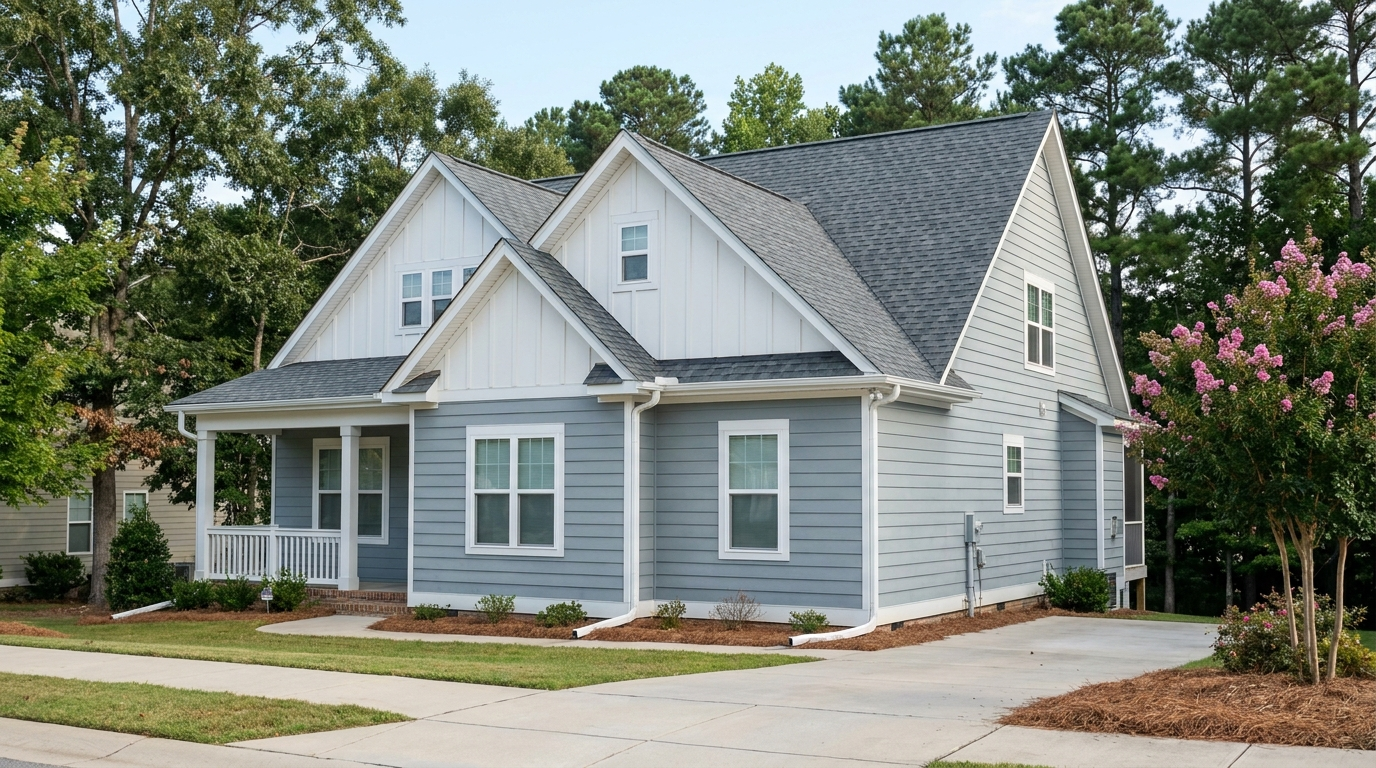
Yes. A per-square-foot figure prices a wall, but the profile decides how many pieces, cuts and trim boards that wall takes, and those land on the labor and trim lines of the quote. We install all three in fiber cement: HardiePlank lap siding, HardieShingle and HardiePanel board and batten.
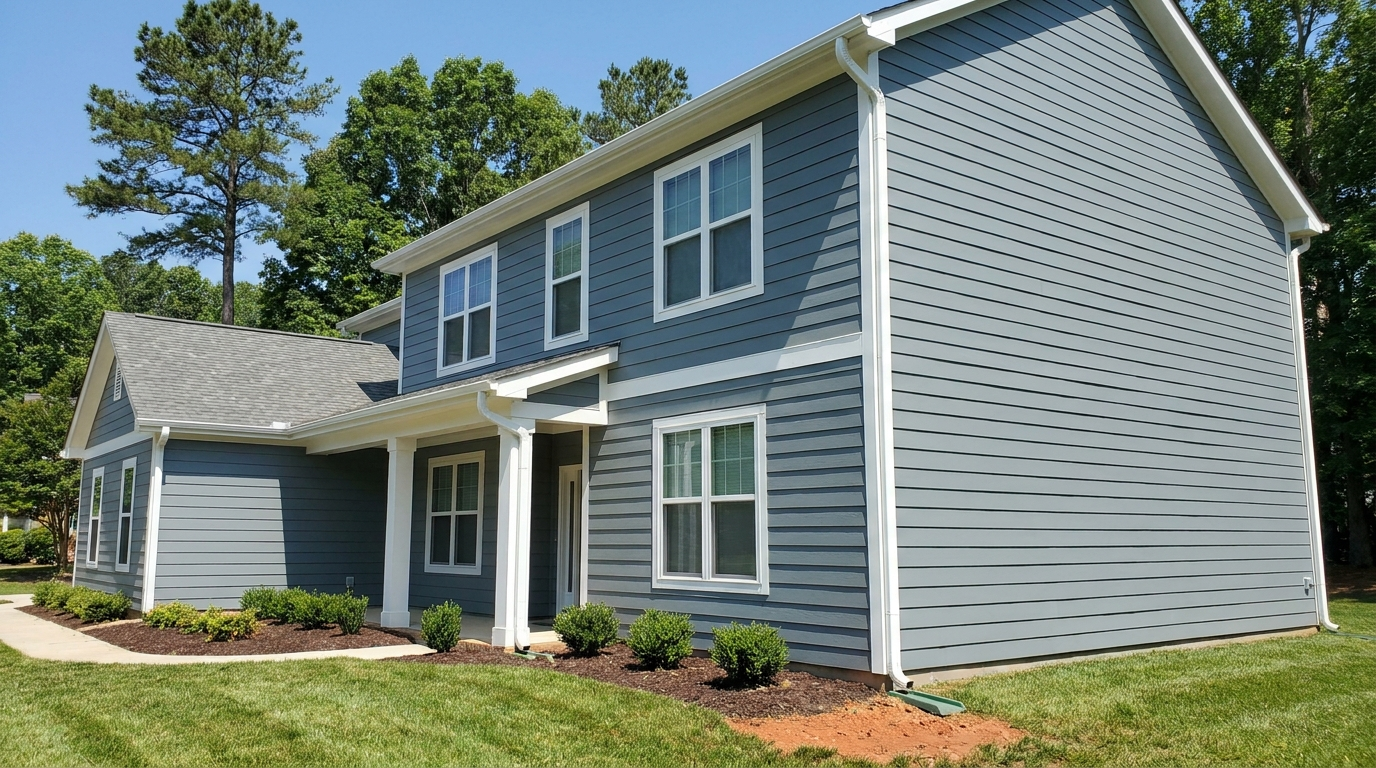
Lap is the familiar horizontal look: long planks in overlapping courses that repeat up the wall. On a lap house, the price follows the wall area and how often windows, doors and corners interrupt the runs.
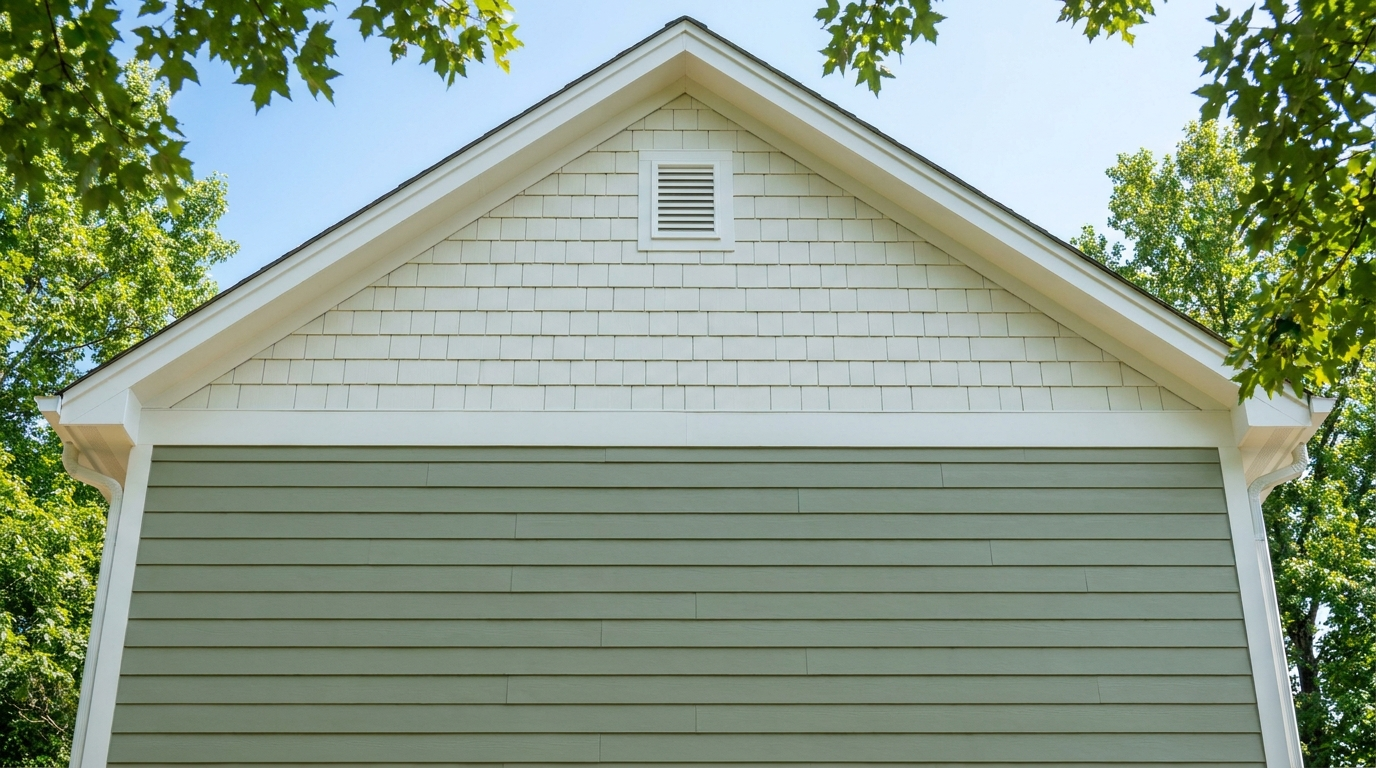
Shingle is a common choice for gables and accent walls, and HardieShingle comes in straight-edge or staggered-edge panels rather than as single shingles, so each piece covers more wall than one shingle would. A gable is still a triangle, though, and both ends of every course are cut to the slope of the roof. On a gable, that makes shingle a small area with a lot of cutting.
Panel is the vertical option. HardiePanel is vertical siding, and the board and batten look comes from adding Hardie trim battens over the panels, so every batten is one more piece on the materials list and one more to hang. Board and batten usually costs more than lap, mostly in install labor, and our board and batten cost breakdown puts numbers on it. On an older Raleigh house, the choice can also start with matching the siding that is already there, which we come back to in the historic district section below.
How Much Does a Factory Finish Add to the Price of Fiber Cement?
A factory finish is part of the board, so its cost is built into the price of every board rather than added afterward. What it changes is the rest of the job: a primed board still needs a top coat of paint, and a factory-finished board arrives with its color on. That makes the real premium the difference between two complete prices for the same walls: finished boards installed, against primed boards installed and then painted.
Hardie siding is sold both ways, primed and ready for paint, or with its ColorPlus finish, which is cured onto the boards at the factory. The ColorPlus finish carries its own 15-year limited warranty that covers paint and labor against peeling, cracking and chipping, separate from the 30-year warranty on the boards themselves. That warranty covers the factory finish, not paint applied on site.
We install Hardie siding in factory-baked ColorPlus finishes, so the color comes on the boards. If you are comparing our quote with one for primed boards, check that the painting is on it in full: the prep, the paint, the labor, and who stands behind that finish. Without the paint job, a primed quote prices walls that still need their finish.
Which Trim, Corner and Wrap Details Belong in a Raleigh Fiber Cement Quote?
Every detail that keeps water out or finishes an edge. A complete fiber cement quote names the house wrap, the flashing, the corner and window trim, the tear-off and disposal, and the price of sheathing repair, so you know what is included before work starts.
House wrap is the water management layer under the siding, over the sheathing, and on our jobs it goes on with the flashing before a single plank does. Flashing goes wherever the siding meets something water can run behind, for example the top of a window or door, or a spot where a roof line meets a wall.
Trim frames everything else: the corner boards, the casing around each window and door, and the boards along the roof line. Each is a separate piece from the siding, and each should be listed, along with whether the quote covers inside corners as well as outside ones.
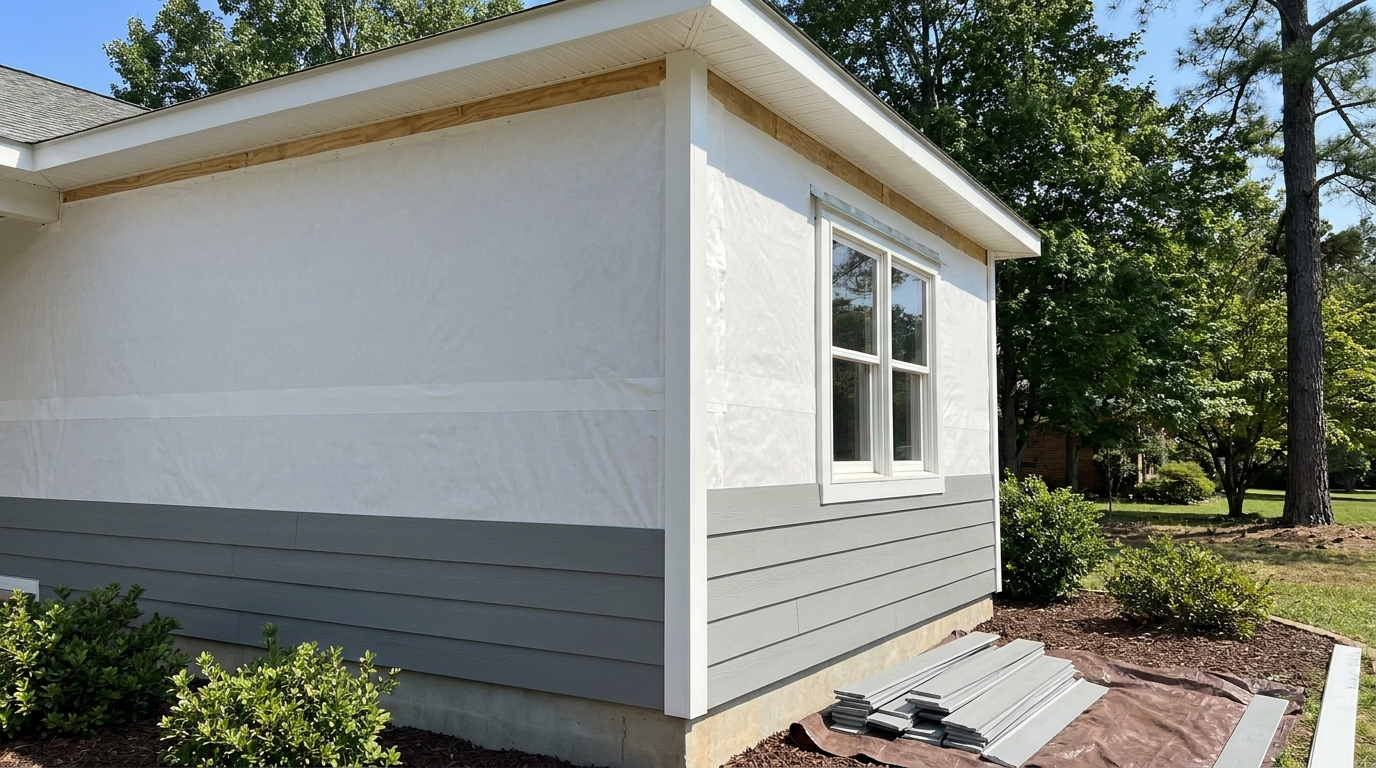
Two more lines protect you from surprises. One is the sheathing repair price, because the sheathing stays hidden until the old siding comes down. The other is the tear-off and haul-away of what comes down. If we find rotted sheathing or missing flashing once the old siding is off, we show you photos and handle it.
Does a Historic Overlay District Raise Fiber Cement Siding Costs for Raleigh Homeowners?
It can. In one of Raleigh’s General Historic Overlay Districts, or on a property the City has designated a Historic Landmark, replacing wood siding with fiber cement needs the City’s approval before the work starts. That approval takes paperwork, time and sometimes changes to the plan. Oakwood and Boylan Heights are two of the General districts.
If your house sits in a General district or is a Historic Landmark, new siding of a different material needs a Certificate of Appropriateness under Section 5.4.1 of Raleigh’s Unified Development Ordinance, whether or not the job needs a building permit, and the certificate has to come before any permit is issued. The exemption for ordinary maintenance and repair covers only work that involves no change in design, material or outer appearance, so it does not reach a switch from wood to fiber cement. Glenwood-Brooklyn is a Streetside Historic Overlay District, and in a Streetside district, Section 5.4.2 applies these rules only to listed areas of the lot and the house, among them the first 50 percent of the house’s depth from the facade adjacent to a public right-of-way, so ask the City which of your walls they reach.
The application comes from the owner, or from someone the owner authorizes who holds a lease on the property or an option or contract to buy it, and it carries drawings, photographs and specifications for the new work. Under the City’s certificate of appropriateness rules, staff can approve minor work, but exterior surfaces count as minor work only where they are not character-defining. Changes that, in staff’s judgment, are substantial, do not meet the design standards or would set a precedent go from staff to the Certificate of Appropriateness Committee, which decides them after a public hearing. There, the applicant carries the burden of producing the evidence, and the committee can approve, approve with conditions, defer or deny.
That process shapes the cost of the job in three ways. The work cannot start until the certificate is approved. A condition on the approval can change the material, the profile or the trim on the quote. And a denial leaves you planning around the wood that is there. City staff can also advise you and make recommendations on appropriateness under the adopted standards, which is worth doing before anything is ordered.
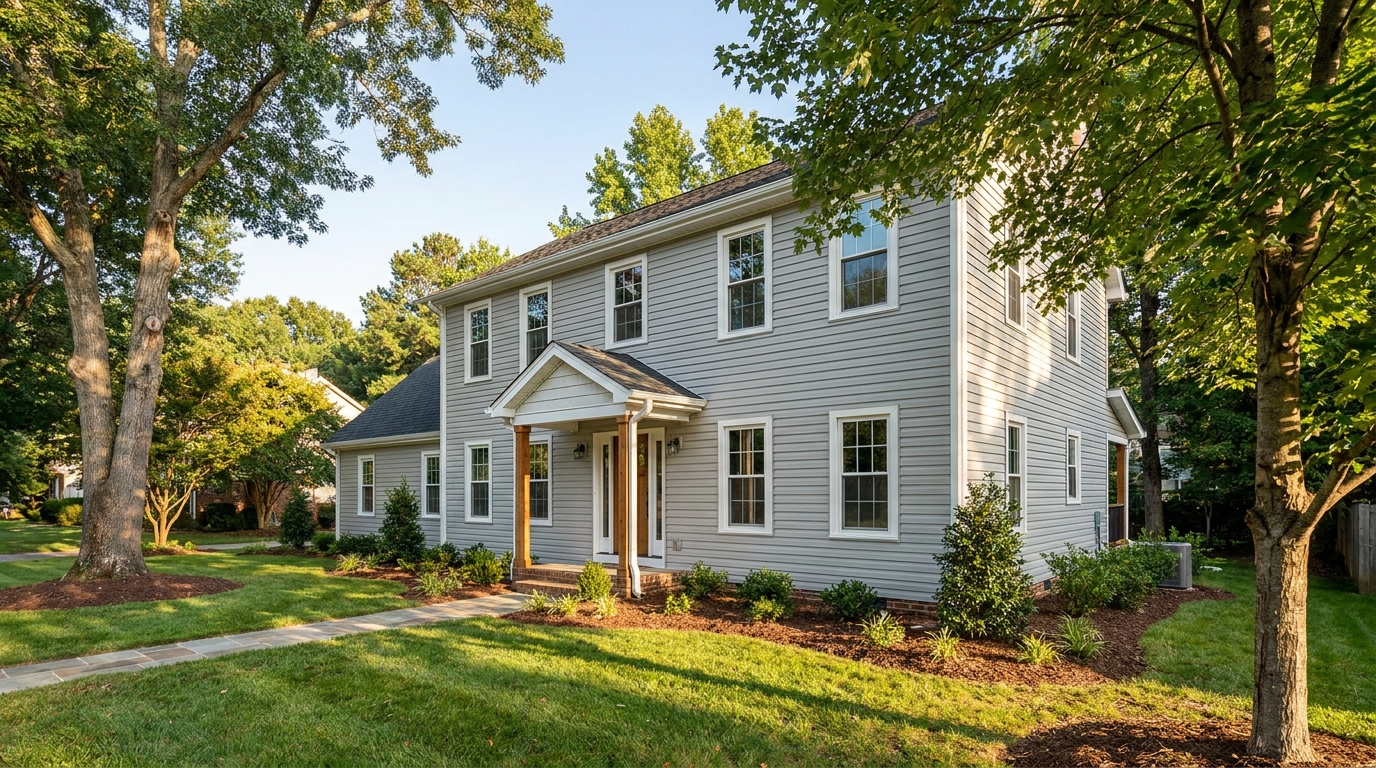
Our Raleigh crews work on the older homes common in Oakwood, Boylan Heights and Five Points, matching profile and color as closely as the product allows. Where the certificate is required, the order that protects your budget is the certificate first, then any permit, then the materials order.
What Fiber Cement Downsides Should Raleigh Homeowners Price In?
Three. The install takes skilled labor, as covered above. The upkeep is small but real: the caulk, and in time, the paint. And the warranty depends on how the siding was installed. None of these rules fiber cement out, but each belongs in the budget.
Our upkeep list for Hardie siding is short: caulk and an occasional wash. The caulk sealing around the edges of the house is worth checking and repairing wherever it fails. Small cracks, chips and dents in the boards can be filled with a cementitious patching compound.
Paint is the longer horizon. The finish warranty is shorter than the board warranty, so a future paint job belongs in a long-term budget, and fiber cement takes new paint when that day comes. Against that, James Hardie fiber cement resists rot and insects and is Class A fire rated. Whether that trade makes sense for your house is the question our post on whether James Hardie siding is worth it takes on.
The install is the part you can control. Because the warranty depends on installation to spec, the installer matters as much as the product. We back every job with a ten-year workmanship warranty, and with a free re-inspection if something goes wrong inside it.
In Summary
The price: the national per-square-foot range in our vinyl siding cost guide is industry data, not our pricing, and it is a frame rather than a price for your house. Siding is priced on wall area, which a listing’s floor area does not tell you.
The labor: fiber cement goes up one measured, cut and fastened board at a time, to the spec Hardie’s warranty depends on, and that crew time is what the labor side of a quote pays for.
The style: lap, shingle and panel change how many pieces, cuts and trim boards a wall takes, and board and batten usually costs more than lap, mostly in labor.
The finish: a factory finish is built into the board price. Compare finished boards installed against primed boards installed and painted.
The quote: it should name the house wrap, the flashing, the corner and window trim, the tear-off and disposal, and the price of sheathing repair.
The historic districts: in Oakwood, Boylan Heights and Raleigh’s other General Historic Overlay Districts, and on a designated Historic Landmark, a switch from wood to fiber cement needs a Certificate of Appropriateness before the work and before any permit. In Glenwood-Brooklyn, a Streetside district, those rules reach only listed areas of the lot and the house.
The downsides: the skilled labor the install takes, the caulk and in time the paint, and a warranty that depends on how the siding was installed.
When you want a number for your own walls, our Raleigh siding team starts with a free on-site inspection and puts the quote in writing, with options. Our fiber cement siding replacement page has the details.