What Is a Gutter Apron, and Does Your Asheville Home Need One?
GuttersBaker Home Exteriors
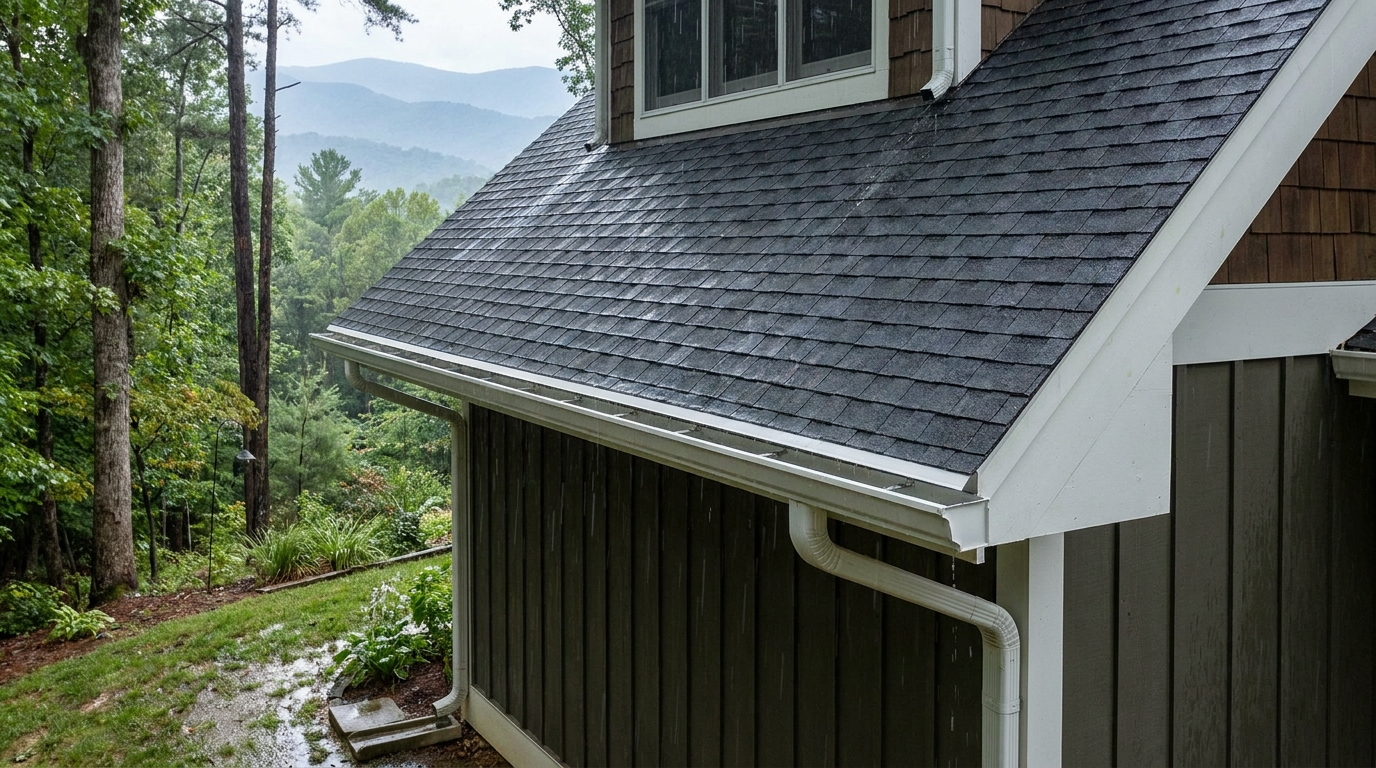
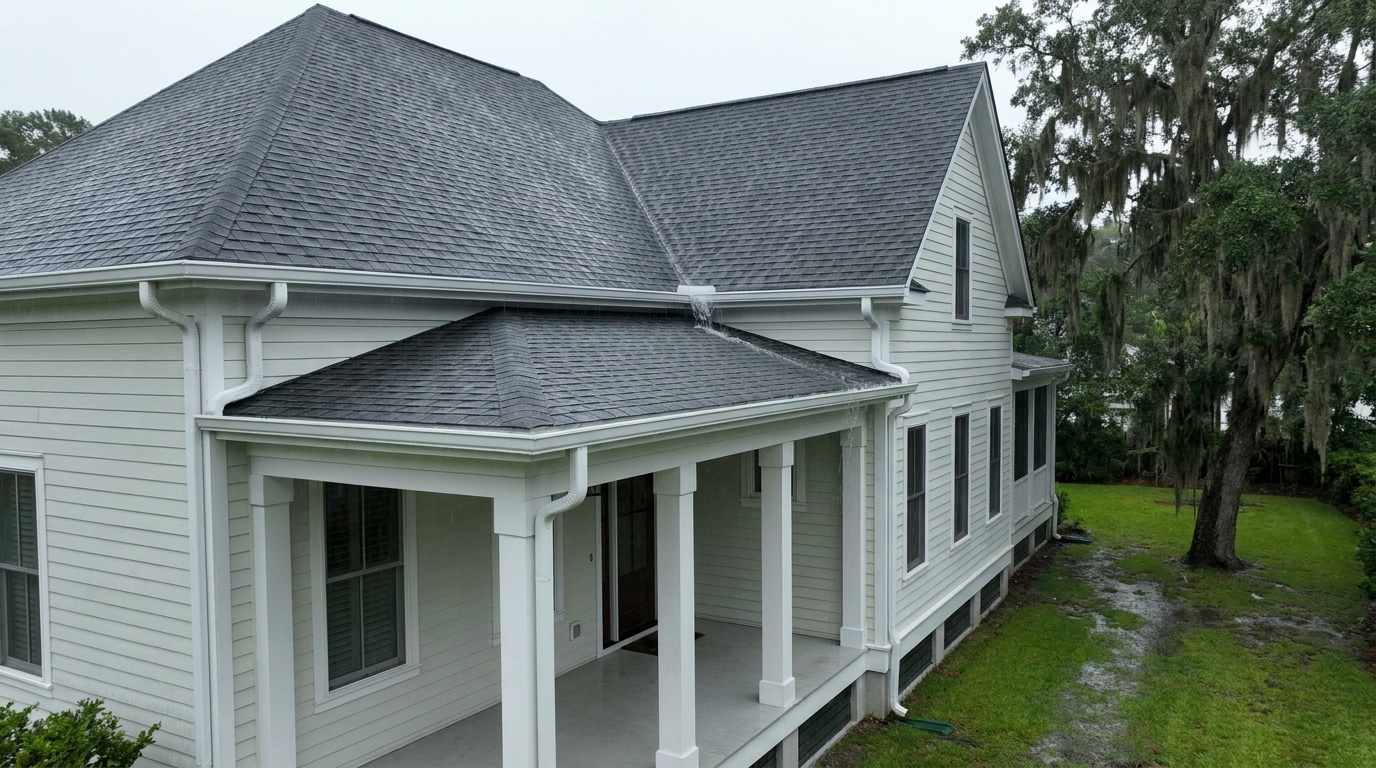
A gutter apron is easy to miss, and that's by design. It's a strip of bent metal that starts under the bottom course of shingles and angles down into the gutter, so rain leaving the roof lands in the trough instead of on the wood behind it. Whether your Asheville home needs one comes down to a single question: can water reach that wood today?
If the drip edge along your eaves already laps over the back of the gutter, it's doing the apron's job. If there's a gap between the roof edge and the gutter — because the gutter hangs low, the shingles stop short, or no edge metal went on at the eaves — an apron is the part that closes it. Left open, that gap keeps wetting the fascia board your gutters hang from, which is why we treat the apron as a gutter repair question as much as a roofing one.
How Does a Gutter Apron Stop Water at an Asheville Roof Edge?
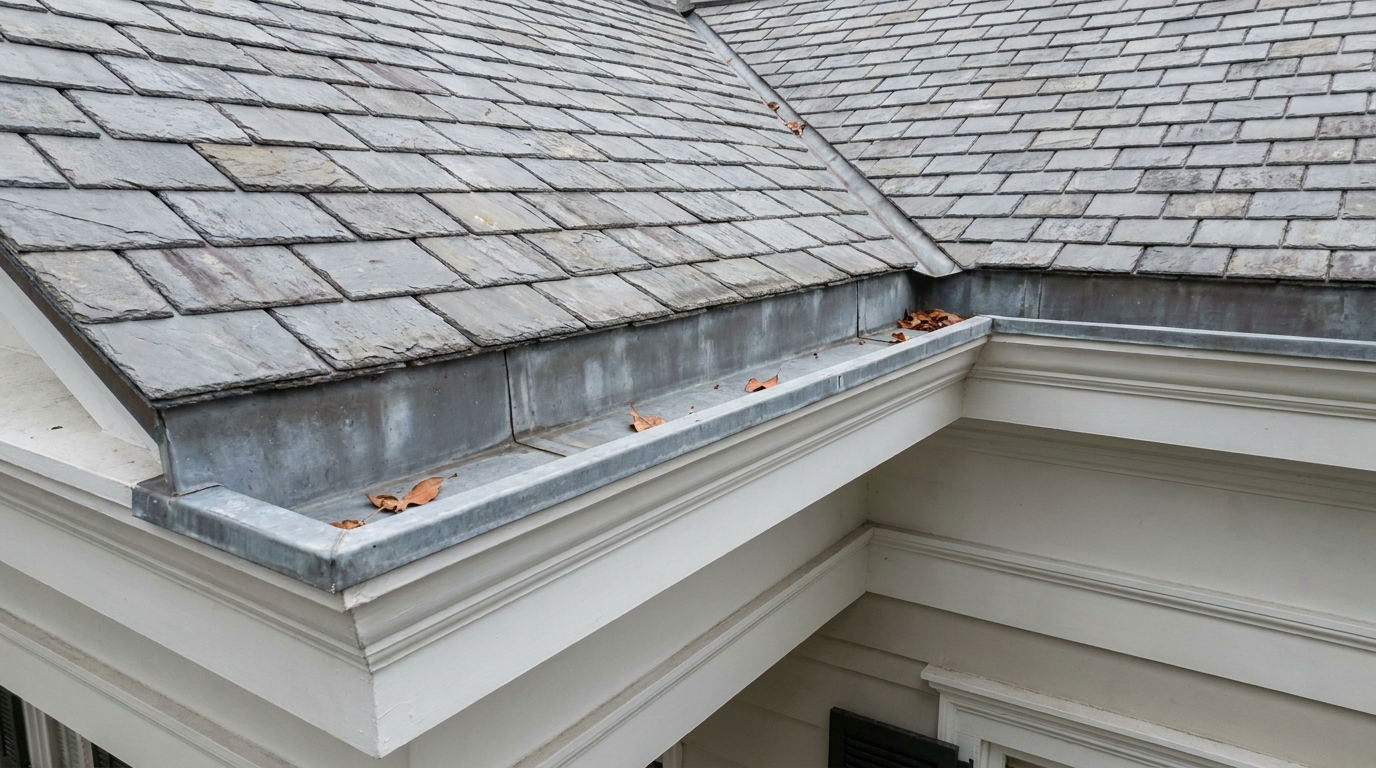
Fine Homebuilding's tech editor, who owned a seamless gutter company for years, describes a gutter apron as flashing tucked up under the shingles and over the back portion of the gutter. In practice it's a long, narrow strip bent along its length. One leg lies on the roof deck beneath the first course of shingles; the other angles down past the fascia and into the gutter. Rainwater running off the last shingle crosses the metal and drops into the trough.
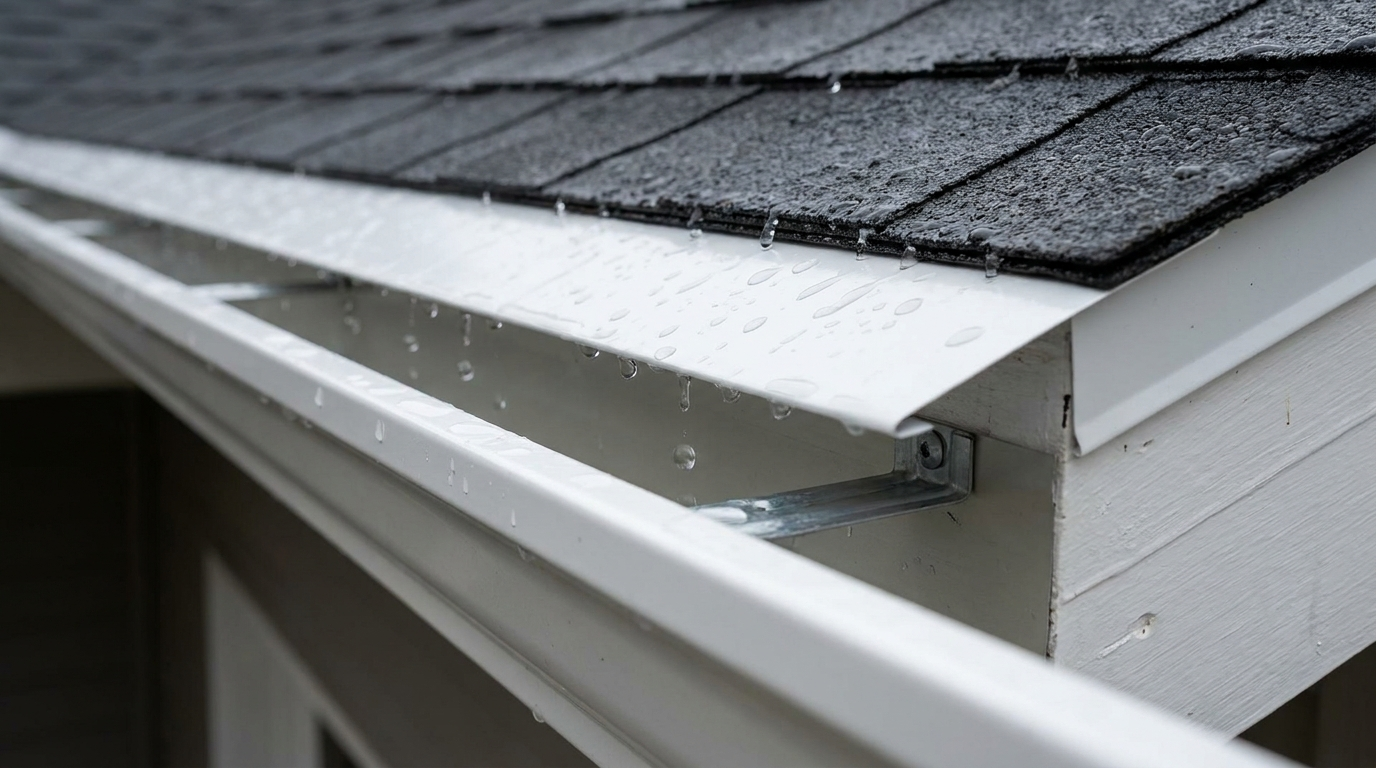
The gap it closes runs between the edge of the roof deck and the back wall of the gutter, right over the fascia board that holds the gutter up. The same answer, in the magazine's November 2023 issue, says that just like standard drip edge, it protects the fascia or subfascia and the roof decking from rot caused by repeated saturation. That protection matters especially on eaves with gutters, it adds, because a gutter is a trough: rain falling into it and pouring off the roof splashes back toward the house.
Two other pieces share the name or the job: the apron flashing where a roof meets a wall or chimney, and drip edge, a close cousin with a different profile. Our guide to roof flashing types covers both.
Why Does Water Run Behind Gutters on Asheville Homes, and How Do You Fix It?
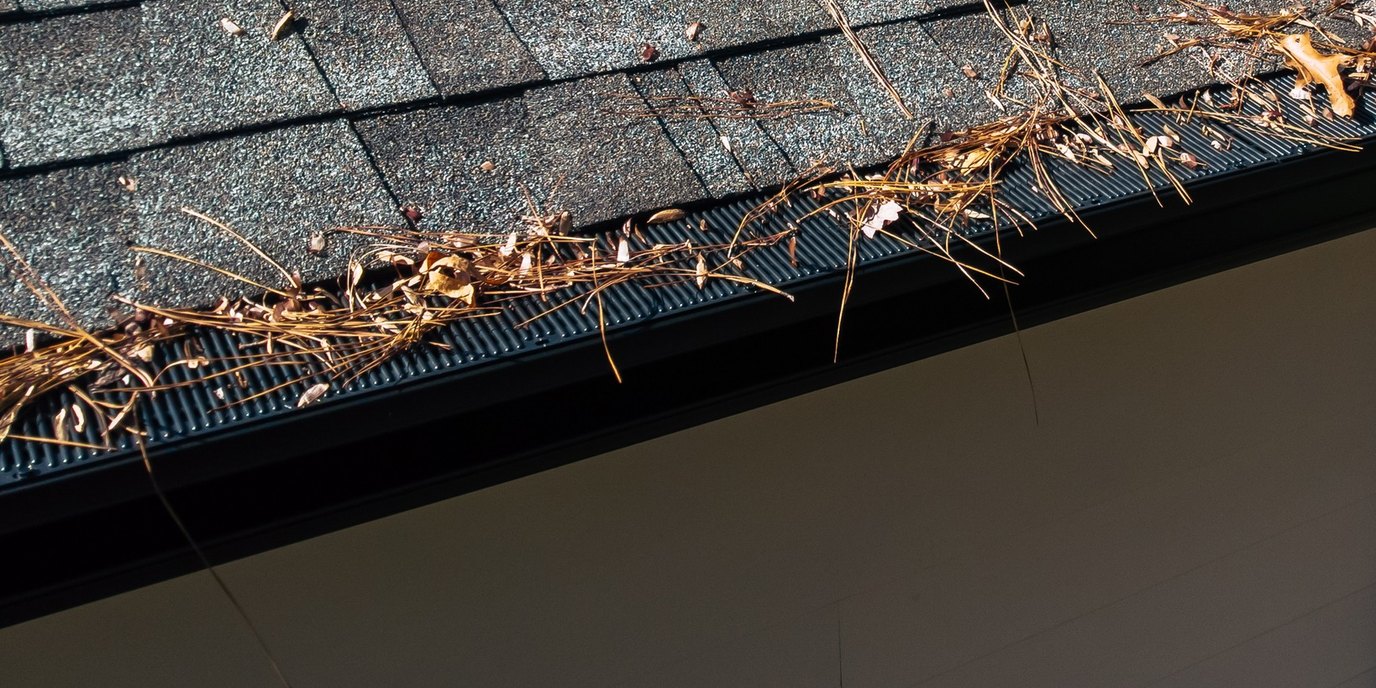
The short answer is the one on our repair page: usually bad pitch, a clog, or missing drip edge and flashing at the roof line. The first two are problems with the gutter itself, and that page covers them; on a lot under Asheville's hardwoods and pines, a clog is the first thing to rule out.
The third cause is the one a gutter apron addresses. Water gets behind a gutter at the roof line when nothing bridges the space between the roof edge and the gutter's back wall: no edge metal went on at the eaves, the gutter hangs below the edge metal and leaves a gap, or the shingles stop short of the gutter.
A crew fixing it properly works in order. The gutter has to drain first, or new metal just delivers water into a trough that overflows anyway. Then the gap gets closed, either by raising the gutter so its back sits up under existing drip edge or by sliding an apron under the first course of shingles and down into the gutter. Any fascia or deck edge that has already gone soft gets replaced before metal covers it; metal over rotted wood only hides the rot.
Can Drip Edge Alone Protect the Fascia, or Do You Also Need a Gutter Apron?
Whether a gutter apron is necessary gets opposite answers in writing. Fine Homebuilding's tech editor, answering a reader comparing two gutter bids, is blunt: "Yes, you do need a gutter apron." Ned Stevens, a gutter-cleaning company, says the reverse: it doesn't recommend installing aprons and says you don't need them when you invest in custom gutters.
Each is describing a different roof edge. The magazine's answer comes from gutter work where, as it notes, some roofers leave standard drip edge off eaves that will get gutters, expecting the gutter crew to install an apron; in those cases, it says, the apron is crucial because splashback lands on unprotected wood. Ned Stevens's "no" comes with its own requirement that the face of the drip edge overlap the gutter so water doesn't fall into the space between them: the apron's job, done by drip edge.
So the real test is whether metal reaches from under your shingles to inside your gutter. Where the back of the gutter sits up under existing drip edge, drip edge alone can protect the fascia; Fine Homebuilding describes using eave drip edge as the apron in exactly that situation. Where there's daylight between the two, or no drip edge at all, an apron is the piece designed to close the gap. A roof can carry both: the apron along the eaves where the gutters hang, and drip edge on the rakes, the sloped gable edges with no gutter.
An Asheville roof may not have drip edge at the eaves at all. In a February 2020 code interpretation, North Carolina's Office of the State Fire Marshal answered that drip edge isn't required on a home with asphalt shingles unless the shingle manufacturer's installation instructions call for it. The interpretation was written for the 2018 North Carolina Residential Code, the edition the Fire Marshal's office still lists as in effect. Drip edge is part of how we install a roof; on a roof someone else installed, it's worth checking rather than assuming.
Do Asheville Roofers Need to Pull the Gutters to Install a Gutter Apron?
Not if the gutters are sound and hung high enough for an apron to reach inside them. Because the apron slides under the first course and drops into the trough, it can go in with the gutter in place. Fine Homebuilding's tech editor describes that order from his gutter company's jobs: gutters hung in their permanent position with smaller screws first, then the apron, then the fascia hangers fastened through the apron into the subfascia.
Ideally, he writes, the apron goes under the self-adhering underlayment at the eave, but by the time gutters go on that underlayment is usually already down, so the apron's top flange sits on top of it. That makes a reroof the cleanest moment to add an apron: with the eave open, it can go in the preferred order.
Pulling the gutters makes sense when they're being replaced anyway, when they hang too low for an apron to bridge the gap, or when the fascia behind them has gone soft, because hangers need sound wood to hold.
The riskier sequence is gutters coming off after a new roof is on. Two homeowners in separate Reddit threads describe edge metal at the eaves mangled or torn up when the old gutters came off after a reroof, and both blame the gutter crew. If your roof and gutters are both due, settle who owns the roof edge, and in what order, before anyone starts. On a steep Asheville roofline or a two-story eave over a sloped yard, this is ladder and roof-edge work for a crew, not a weekend project.
Where Can You Spot Fascia Rot From a Missing Gutter Apron in Asheville?
The general warning signs of failing fascia are in our guide to replacing soffit and fascia after water damage. The narrower question is where the damage starts when the cause is a gap at the roof edge: behind the gutter, which is why it's easy to miss.
The top of the fascia and the edge of the deck. These sit directly under the gap and are hard to see until a board comes off. One North Carolina homeowner on Reddit found the edge of the roof deck wet and rotting when removing the fascia to replace it, following a recent reroof done with neither a gutter apron nor drip edge.
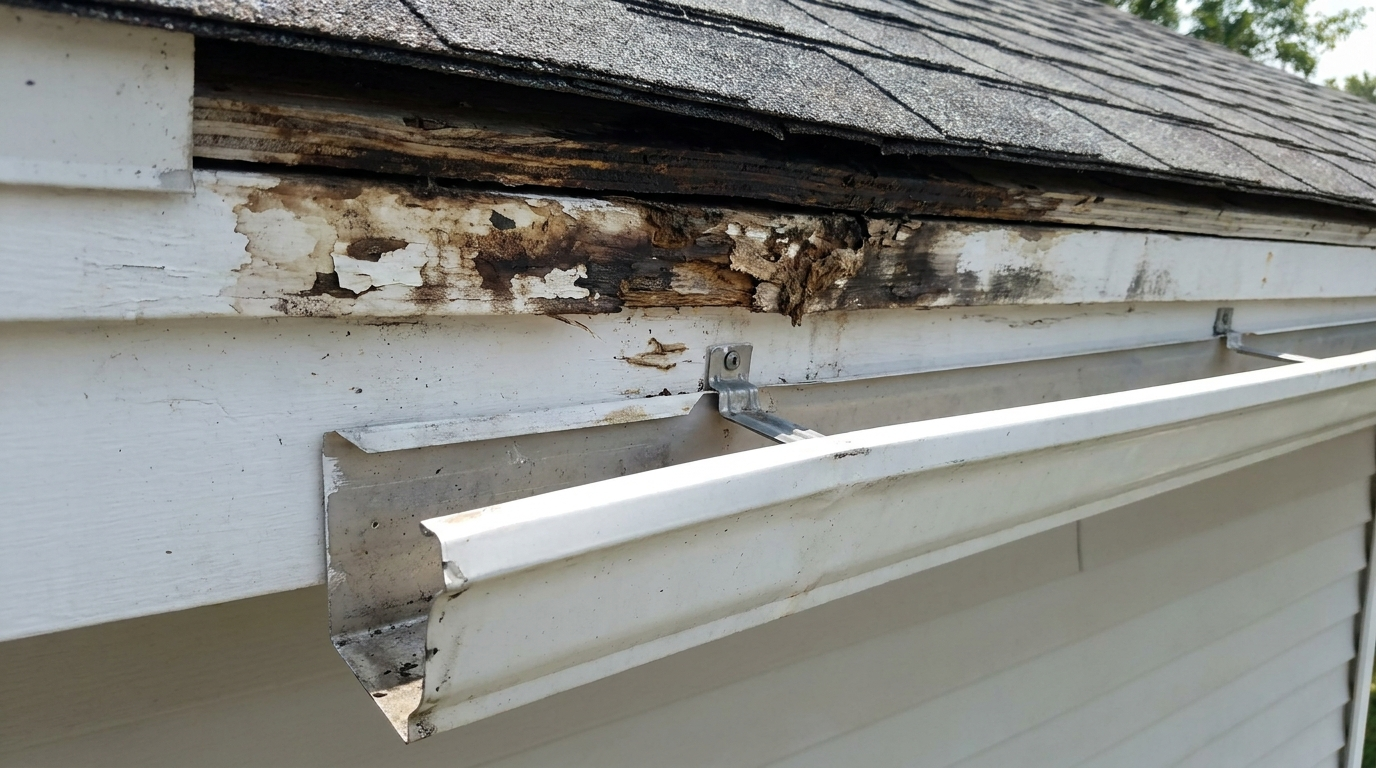
Between the gutter and the fascia, during rain. Ned Stevens's rain-day checklist includes water dripping from between the gutter and the fascia board, which it says can indicate there's no drip edge between the roof and the gutter. From the yard or a window in a steady rain, you can watch for it without a ladder.
On the ground behind the gutter line. Fine Homebuilding's answer also describes water clinging to the underside of the bottom row of shingles and falling behind the gutter. It calls this a less crucial role for the apron and the amount of water negligible, but says that if it happens long enough, the dripping, often from morning dew, can leave water lines in landscaping and stain or erode walks and driveways. A worn line in the mulch between the wall and the gutter is worth asking about.
If your house sits on a slope, the downhill eaves can sit much higher off the ground; binoculars from the yard are the safer way to look.
What Does It Cost to Install a Gutter Apron on an Asheville Home?
HomeGuide's drip edge cost guide, dated November 7, 2025, lists gutter apron installation at $2 to $5 per linear foot, or $200 to $1,000 on average for the 100 to 200 linear feet its averages assume. Those are HomeGuide's averages, not Asheville quotes and not our pricing, and they cover the apron alone.
Fine Homebuilding's tech editor explains why an apron adds cost: depending on the roofing materials, the pitch of the roof and how long the roofers let the shingles overhang, installing it can often take longer than installing the gutter itself. On an Asheville house, that can mean a steep pitch or shingles that have to be worked around along an existing roof edge.
The wildcard is what the missing apron has already cost: if water has been getting behind the gutter for years, some fascia or deck edge may need replacing first, priced as its own repair. The figure that counts is the one written for your eaves, and it starts where every job we take on starts: with a free inspection at the house. If a new roof or new gutters are coming anyway, pricing the apron with that work lets it go in while the edge is open.
Which Gutter Apron Metals Best Protect Asheville Homes From Mountain Storms?
Stock gutter apron comes in the common gutter metals; Gutter Supply, for one, lists it in 10-foot lengths of aluminum, galvanized steel and copper. How the apron metal pairs with the gutter matters for more than looks.
An apron sits upstream of the gutter, so whatever washes off it lands in the trough. The Copper Development Association's Copper in Architecture Design Handbook (2024) says that however copper and aluminum are separated, wash from copper surfaces should be kept from draining onto exposed aluminum, because traces of copper salts in the runoff may accelerate the aluminum's corrosion. A copper apron over aluminum gutters builds that arrangement into the roof edge; matching the apron metal to the gutter it drains into avoids it.
Copper aprons pair with copper gutters, and under an asphalt roof they need one more detail. The handbook warns that where roofing such as asphalt shingles drains onto copper and the shingles rest directly on the metal, moisture held along that edge by capillary action can cause what it calls line corrosion. Its remedies are a cant strip that raises the shingle edge or a replaceable strip between the shingles and the copper. If you're paying for copper, ask how that edge will be handled.
Wind is the other half of the storm question in Western NC. For areas where high winds occur, the handbook's general design notes say those winds can put extreme pressure on roof edges, including eaves, gutters and fascias, and stress that the edges of roofing and flashing be securely fastened. On an exposed ridge or a hillside lot open to the valley, that argues for an apron fastened under the shingles and pinned by the gutter hangers, as in the installation order above.
The Recap
- A gutter apron runs from under the first course of shingles into the gutter, closing the gap where water would reach the fascia and deck edge.
- Our repair page says water usually runs behind gutters because of bad pitch, a clog, or missing drip edge and flashing at the roof line; an apron addresses the last one.
- Drip edge alone can protect the fascia where the back of the gutter sits up under it; where there's a gap or no drip edge, an apron is the piece designed to close it.
- Per the Office of the State Fire Marshal's 2020 interpretation of the 2018 North Carolina Residential Code, drip edge isn't required on a home with asphalt shingles unless the shingle manufacturer's installation instructions call for it.
- Sound gutters hung high enough can stay up; pulling them makes sense when they're being replaced anyway, hang too low for an apron to bridge the gap, or are fastened to soft fascia.
- Rot from a missing apron starts behind the gutter; water dripping between the gutter and the fascia in the rain can indicate missing drip edge.
- HomeGuide's November 2025 averages: $2 to $5 per linear foot, or $200 to $1,000 for 100 to 200 linear feet. Not our pricing.
- Matching the apron metal to the gutter avoids a copper apron draining into aluminum gutters; the Copper Development Association's handbook says that however copper and aluminum are separated, wash from copper surfaces should be kept from draining onto exposed aluminum, because traces of copper salts in the runoff may accelerate the aluminum's corrosion.
If you'd rather not guess what's behind your gutters, our Asheville roofing team can take a look.