Box Gutter Costs on a Charleston, SC Home
GuttersBaker Home Exteriors
Get two quotes on the same Charleston box gutter and they can land thousands of dollars apart. One proposes cleaning out the trough and coating it. The other wants to open up the cornice first.
Neither is necessarily wrong. They are pricing different jobs, on a gutter most homeowners have never had explained to them.
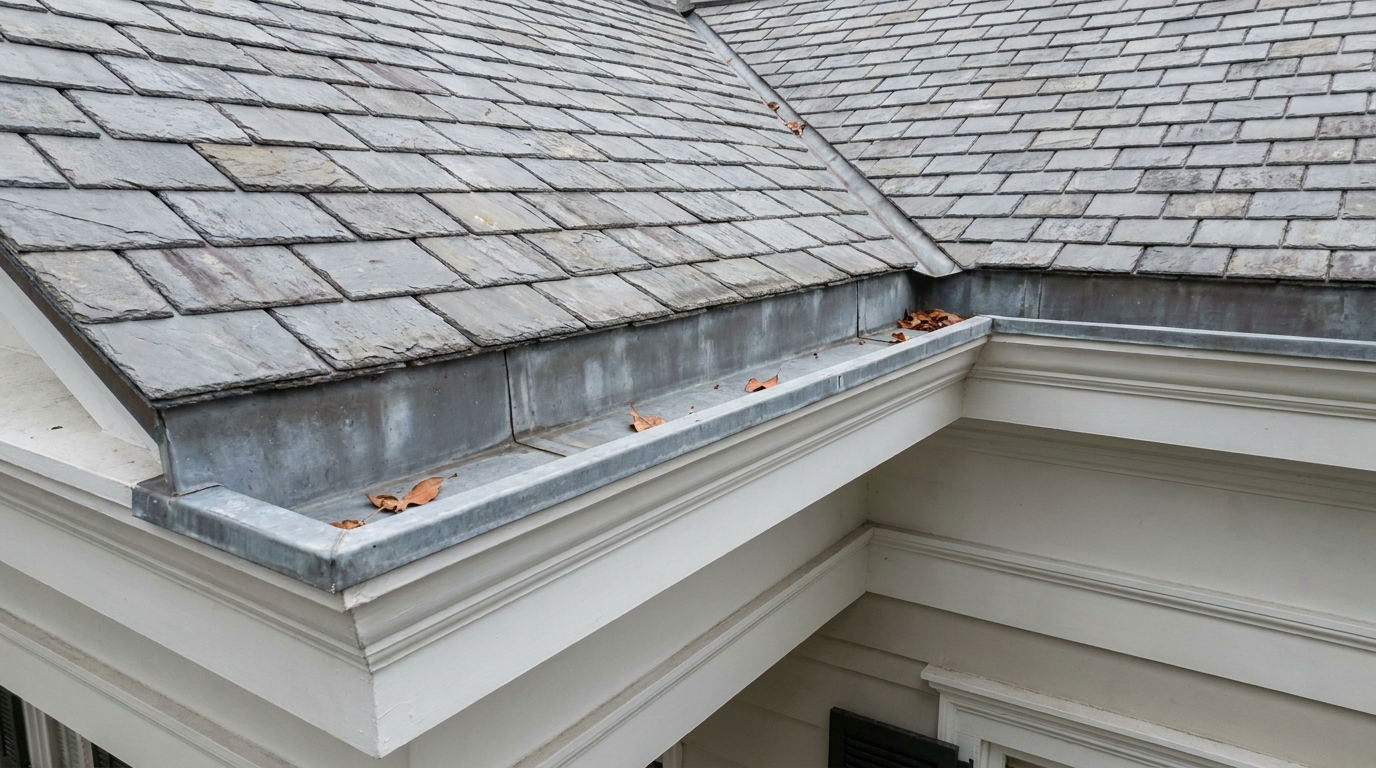
A box gutter is not hung on the house. It is built into it — a trough framed into the roof structure, lined with metal, hidden behind the cornice so the eave reads clean from the street. Charleston has thousands of them, because that is how roofs were built when these houses went up. And when one fails, the water does not run down the outside of your wall. It runs down the inside. That single fact is what separates a reline from a rebuild — two jobs an order of magnitude apart in price — and it is why what a box gutter replacement in Charleston actually involves is worth understanding before you sign anything.
A note on the numbers below: these are national figures from published cost data, not our prices. Box gutter work is priced off the specific house — length of run, condition of the wood underneath, how much of the cornice has to come apart. We quote it after we have been up there.
What Do Box Gutters Cost on a Charleston, SC Home?
Three different jobs hide under “box gutter work.” Industry cost data compiled by HomeGuide puts full replacement at $40 to $180 per linear foot — roughly $6,000 to $27,000 on a typical 150-foot run. Relining a trough that is still structurally sound costs a fraction of that.
| The job | What it means | Typical range (150 ft of gutter) |
|---|---|---|
| Reline with liquid rubber or epoxy | Clean out, patch, seal, recoat | $1,000 – $2,200 |
| Reline with metal | New soldered metal liner, damaged sections replaced | $2,000 – $8,000 |
| Full rebuild | Trough rebuilt, wood replaced, new liner | $6,000 – $27,000 |
| Convert to hung gutter | Box closed off, standard gutter hung | $12 – $25 per linear foot, plus carpentry |
Ranges from HomeGuide’s published cost data, on its own stated basis of up to 150 linear feet. The conversion row is HomeGuide’s per-foot rate for standard gutter replacement; closing up the old trough is carpentry on top of it, covered below.
The spread is wide because material is the smaller variable. This Old House notes that box gutters are “large, deep gutters designed to handle heavy rainfall,” and that “their size and installation complexity typically make them one of the more expensive gutter options.” Complexity is the word doing the work: a crew on scaffolding, soldering metal on site around a cornice that may be a hundred years old. Profile comparison is its own question, covered in how half-round and K-style gutters compare on cost and capacity.
What Does Repairing a Charleston Box Gutter Liner Cost?
Relining is the repair most Charleston homeowners are actually shopping for, and it splits by material. Per HomeGuide’s figures, liquid rubber and epoxy systems — clean out, patch, recoat with an elastomeric sealer — run $1,000 to $2,200 for up to 150 feet. A metal liner, soldered on site with damaged sections replaced, runs $2,000 to $8,000 over the same length. A lighter tier again — cleaning and resealing an existing liner with an EPDM membrane, with no patching or recoating — is quoted separately at $4 to $8 per linear foot.
Here is the part the cost pages leave out, and it decides whether you pay once or three times.
Don Kennedy of ProMaster Home Repair, filming over an open trough on a hundred-year-old house, put it this way: “it’s not just the material that’s used to reline a box gutter that determines its longevity, but more importantly, the way that material gets seamed. And it’s those seams that develop all the leaks.” The liner below him still had sound metal. What had failed was every attempt to “gum it up with tar, and other types of sealants.”
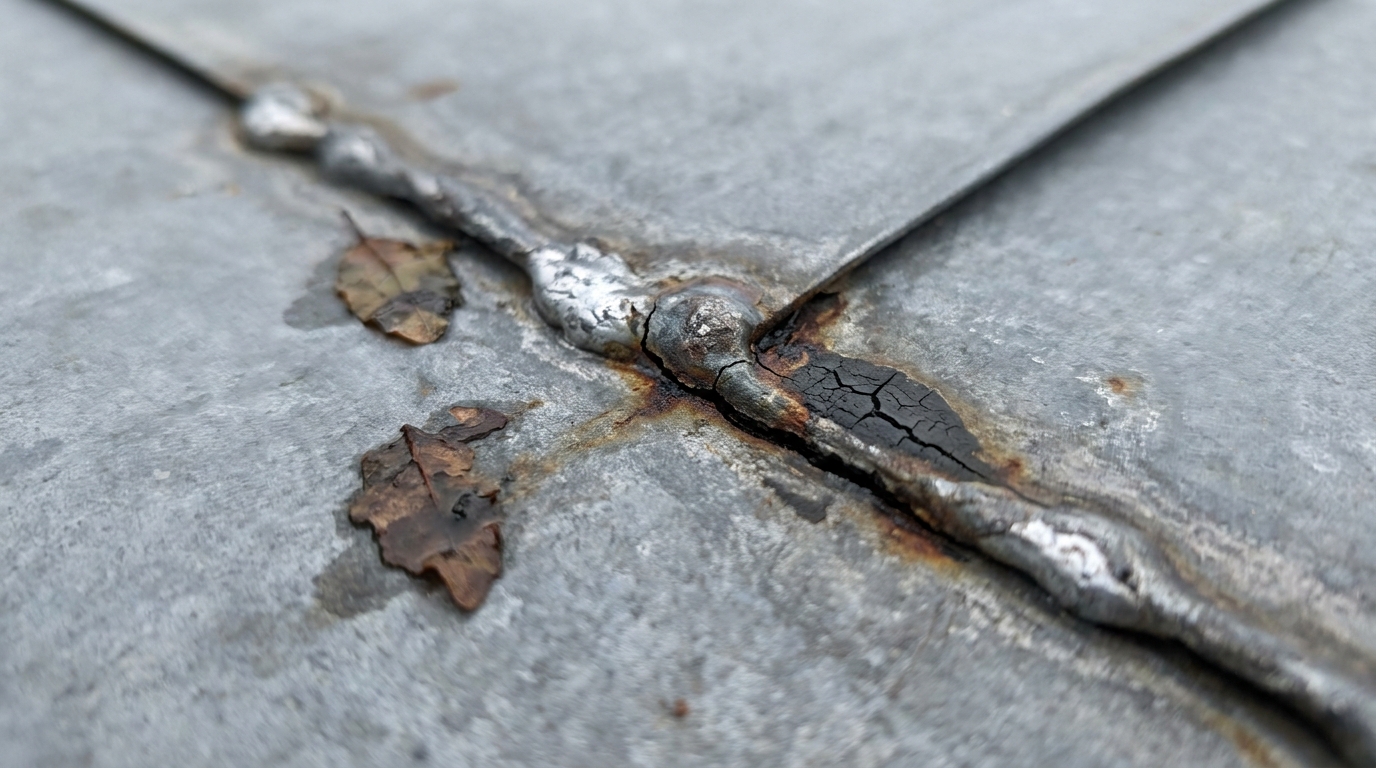
That is not one contractor’s opinion. The National Park Service reaches the same place from the preservation side, warning in its guidance on maintaining historic building exteriors to “avoid asphalt compounds since acidic material can cause further deterioration of metal gutters.” Its roofing brief shows the outcome: “Repeated repair with asphalt, which cracks as it hardens, has created a blistered surface on this sheet-metal roof and built-in gutter, which will retain water.”
A cheap coating over an unaddressed seam is a deferral, not a repair. When we look at a trough, the seams and the wood under them are what we read first.
Why Do Charleston Historic Homes Still Pay for Box Gutters?
Because the alternative changes how the house looks, and in Charleston that is not a small thing.
A box gutter is invisible. The cornice, the crown molding, the line of the eave all read as designed, with nothing bolted across the front. Hang a conventional gutter on that fascia and you have added a horizontal band the architect did not draw. On a single house on a peninsula street, that reads immediately.
There is also a durability argument that holds up better than the horror stories suggest. In a widely upvoted thread on buying older houses, one homeowner with a 1900 house put it flatly: “Box gutters have been on homes for over 100 years. They are fine if they are maintained.” Another, whose own had been refurbished two years earlier, allowed that a century house means “occasional repair work” but argued these assemblies “are built solidly in a way that no house has been since the ’50s.”
Both are homeowners rather than tradespeople, and both are describing maintained gutters. That is the whole condition. A box gutter that gets cleaned and inspected is a hundred-year assembly. One nobody has looked at since the eighties is a structural repair waiting to be found.
Material matters at the top end. This Old House notes that copper gutters “can last up to 100 years with proper maintenance,” which is why copper keeps appearing on Charleston restorations despite costing several times what aluminum does. For the wider material question, see which gutter materials hold up best.
What Does a Failing Box Gutter Cost a Charleston Home Inside the Walls?
This is the cost that never appears in a gutter quote, and it is usually the largest one.
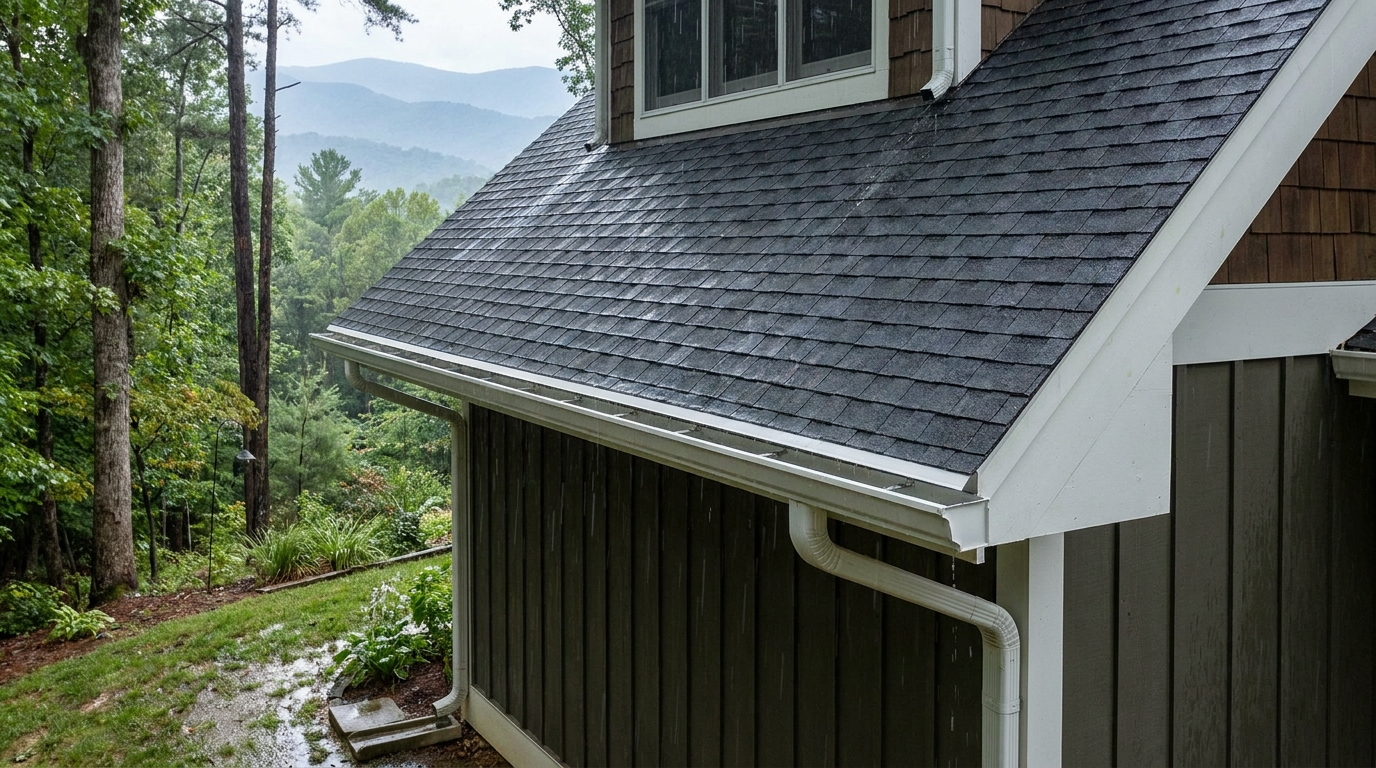
When a hung gutter fails, the water lands outside your house: a stained wall, a soggy bed, eventually a foundation conversation — and months of visible warning. When a built-in box gutter fails, the water goes into the structure. The National Park Service is specific about the mechanism in its roofing brief: built-in gutters are “set within the perimeter of the roof,” their downspouts “may run within the walls of the building,” and “conduits from the built-in gutter to the exterior downspout may also leak water into the surrounding roof structure or walls.”
Homeowners put it more bluntly. One, in a widely upvoted thread about buying older houses, wrote: “The problem with box gutters is that when they leak they dump water INSIDE your house. Since they collect runoff from the entire roof that can be a lot of water very quickly.”
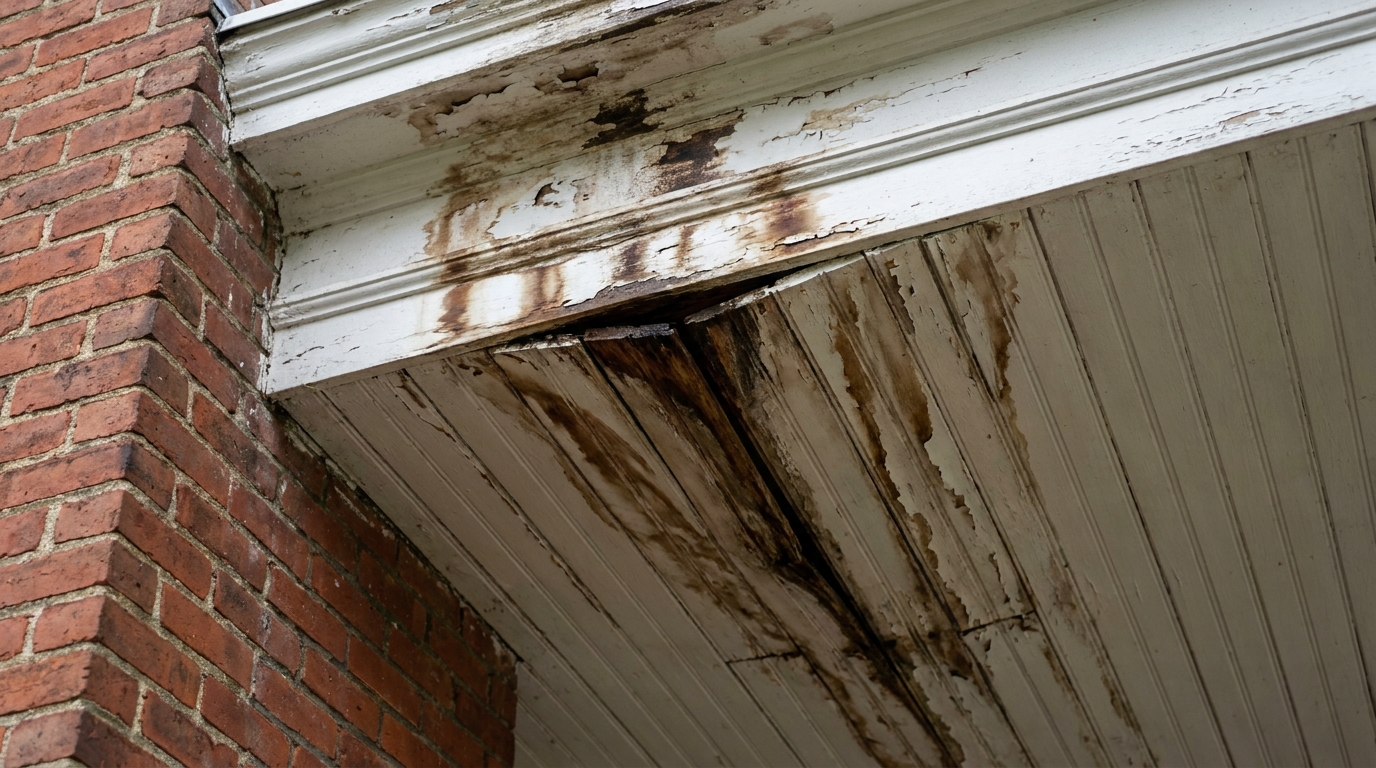
The damage runs in order, and Don Kennedy walked it on that Cincinnati porch: staining in the soffit first, then wood rot, then the structure below — “it begins to destroy the decking of the porch itself,” until the crew has to “shore up the underneath structure, repair all the wood rot, and put it all back together.” All of it, he said, “the result of a failed box gutter liner.”
Now price that. Fascia and soffit replacement alone runs $4 to $22 per linear foot each on HomeGuide’s numbers, before anyone touches framing, sheathing, plaster or the roof structure underneath. A $1,500 reline deferred five years does not stay a $1,500 problem. It becomes a carpentry job with a gutter attached — the same argument, at higher stakes, as what a working gutter system is protecting.
How Do Charleston Historic District Rules Change Gutter Costs?
They change the timeline more than the invoice, and the difference turns on whether your job is a repair or an alteration.
The City of Charleston’s Board of Architectural Review states that within the historic districts it “reviews all new construction, alterations and renovations visible from the public right-of-way.” It also says “most minor alterations, such as painting, sitework, signage, repairs, etc., are typically reviewed by Staff and do not require full Board review” — rot repair among them.
Read those against the three jobs above and the pattern is clear enough to plan around. Relining a trough in place changes nothing visible from the street. Converting to a hung gutter changes the eave line of a street-facing elevation, visibly and permanently.
We want to be careful here: the city’s guidance is written about alterations and repairs generally, it does not name gutters, and we are not the ones who classify your job. The city decides which category the work falls into, and that call is worth making before you schedule a crew. A rebuild that needs board review rather than staff review is not more expensive per foot — it is a job waiting on a meeting calendar while the trough keeps leaking. Ask a contractor early whether the work changes anything visible from the right-of-way, then take that answer to the city yourself.
What Does Converting a Charleston Box Gutter to a Hung Gutter Cost?
On paper it is the cheapest path, and for some houses it is right. It is also the only option here you cannot undo.
Standard gutter replacement runs $12 to $25 per linear foot on HomeGuide’s figures. Set that against $40 to $180 per linear foot to rebuild the box and the appeal is obvious.
That number is honest as far as it goes, and it is not the whole cost. The old trough still has to be framed over or removed, the roof edge re-detailed, the cornice closed up and made weathertight. That is carpentry, priced by condition, and it varies more between houses than anything else on this page. Disposal of the old gutters adds $150 to $300 on HomeGuide’s numbers, and if rot turns up once the trough is open — on a neglected box gutter it usually does — that is fascia and soffit work on top.
Plenty of owners do it anyway. One homeowner noted that most of the older houses near them had simply had the box gutters taken off, though the rooflines “look a bit weird” afterwards.
That is the trade. You buy out of a maintenance obligation and pay with the eave line — and, in a historic district, possibly with a review the reline would not have triggered. Cheaper today. A different house.
What Should Charleston Homeowners Ask Before Accepting a Box Gutter Quote?
Start with the fact that a lot of contractors will not do this work at all, and price your quotes accordingly.
It is the most consistent theme in what tradespeople and homeowners say about box gutters. One homeowner who went looking for help had “probably 20 people out and half of them said they wouldn’t even touch it.” One roofer, speaking for his company, said flatly: “We won’t touch them unless we’re framing over them or removing them.” A roofer who does specialize in the work sees the other side of the same market: “I get far too many calls to cut them off and hang aluminum. I pass them along.”
Scarcity is a cost driver. That specialist roofer put his own rate on the record at “$150 a ft for steel box gutters + 7.50 a LF for wood repair,” charging more again for soffit and cornice trim — a figure that lands squarely inside the $150 to $200 per linear foot that HomeGuide publishes specifically for rebuilding a Yankee-style built-in gutter — the top end of the wider $40 to $180 rebuild range quoted earlier, because this is the most labor-intensive version of the job. Two unrelated sources, the same number. A quote far under it is probably not pricing the same scope.
Four questions worth asking before you sign:
- How is the liner seamed? Not the material — how the joints are made, and whether they are soldered rather than sealed. That is where relines fail.
- Is the wood being repaired or covered? A liner over rotten framing is a schedule, not a fix.
- What if rot is found? Get the per-foot rate for wood repair in writing before the trough is opened, not after.
- Has this crew done built-in gutters before? Soldering a trough on a historic cornice is a specific skill, and the National Park Service’s own guidance concedes that past cleaning and minor repairs this work “will necessitate use of an outside contractor.”
If the answers are vague, that is information. We would rather send our gutter repair team to look at a trough and tell you it has ten years left than sell you a rebuild you did not need.
The Bottom Line on Box Gutters in Charleston
Three jobs, three price bands: reline for $1,000 to $8,000, rebuild for $6,000 to $27,000, convert for a few thousand plus carpentry — all national figures on a 150-foot run.
Which one you need is decided by the wood underneath the trough, not by the gutter, and you cannot see that from the ground. What a box gutter will not tolerate is being ignored: it fails inward, and by the time it reaches your ceiling you are pricing framing rather than metal.
We have been working on Carolina homes since 1915, we are employee-owned, and the crews we run across the Lowcountry back their workmanship for ten years. If there is a box gutter on your house and nobody has been up there in a while, a free inspection costs you nothing and tells you which of the three numbers above is actually yours.