Can You Replace an Asheville Roof in the Winter?
RoofingBaker Home Exteriors
Some roofs can't wait for spring. The old one is past repair, a sale is on the calendar, or a leak won't hold through another season of Western NC weather. For Asheville homeowners in that position, the real question is whether the work can happen in the cold months at all.
It can. Winter changes how a new roof goes on, not whether it can: asphalt shingles need warmth to seal, the deck has to stay dry while it's open, and the crew should be working on a roof surface that's clear of snow, ice and frost. Each of those can be planned for, and each is a fair question to put to any contractor before you sign. If you're weighing a roof replacement this winter, this is the ground we'd want to cover with you before a date goes on the calendar.
Can You Replace a Roof in Asheville When Temperatures Drop Below Freezing?
Yes. A below-freezing night doesn't rule out a reroof. What decides a winter job is the weather during the hours the crew is actually on the roof, and the condition of the roof surface when they start.
Asheville's winter pattern is why that distinction matters here. The National Weather Service's 1991–2020 normals for Asheville put the average January high at 48.9°F and the average low at 28.6°F. Those are averages, and individual days run above and below them, but the shape is clear: the average January day starts below freezing and warms well above it by afternoon.
Owens Corning's guide to winter roof work says a complete reroof is possible in winter if you're willing to wait for a stretch of good weather, and it warns that the project may take longer depending on how variable the weather is. That stretch doesn't need to be long. How long the install itself runs depends on the size and pitch of the roof and the weather, and the FAQ on our roof replacement service page answers how long most jobs take.
So the useful question isn't whether winter as a whole is workable. It's whether a short run of dry, frost-free days is coming, and whether the crew will use it the way the cold-weather instructions for your shingle require. That fits our guide to planning a roof replacement, which notes that spring and fall are popular for their moderate temperatures and that roof replacement can be done "year-round when planned properly." The rest of this post is what planned properly looks like in an Asheville winter.
How Cold Is Too Cold Before Shingle Seal Strips Fail on Asheville Roofs?
There's no single number for every roof, and the reason starts with how a shingle holds down in wind.
According to the Asphalt Roofing Manufacturers Association's cold-weather recommendations, most asphalt shingles carry a thermally activated sealant that bonds the shingles together after they're on the roof, and how long that takes varies with the roof's slope, its orientation and how much sun and heat the shingles receive. So cold weather slows the seal rather than setting one hard cutoff, and until the strip bonds, the shingle has less protection against wind than it will once it seals.
The rules for handling that wait depend on whose shingle it is. CertainTeed's installation guide for its Landmark Series says sealing may be delayed when shingles are applied in cool weather. ARMA's recommendations point back to each manufacturer's own instructions for the cold-weather installation temperature, and Owens Corning's installation instructions for its Duration Series are specific: below 40°F counts as cold-weather installation, with extra care in handling and the added steps covered in the next section.
Set Asheville's normals against Owens Corning's 40°F line and winter work here becomes a day-by-day call. The average January afternoon clears it. The average January night falls well below it.
Elevation widens the gap. The State Climate Office of North Carolina notes that the higher-elevation areas of the state's mountainous west tend to be its coldest spots, with below-freezing temperatures nearly every day during winter. A home on higher ground outside the city can see fewer workable hours than one near downtown, and a roof slope that faces away from the sun gets less of the heat its seal strips need to bond.
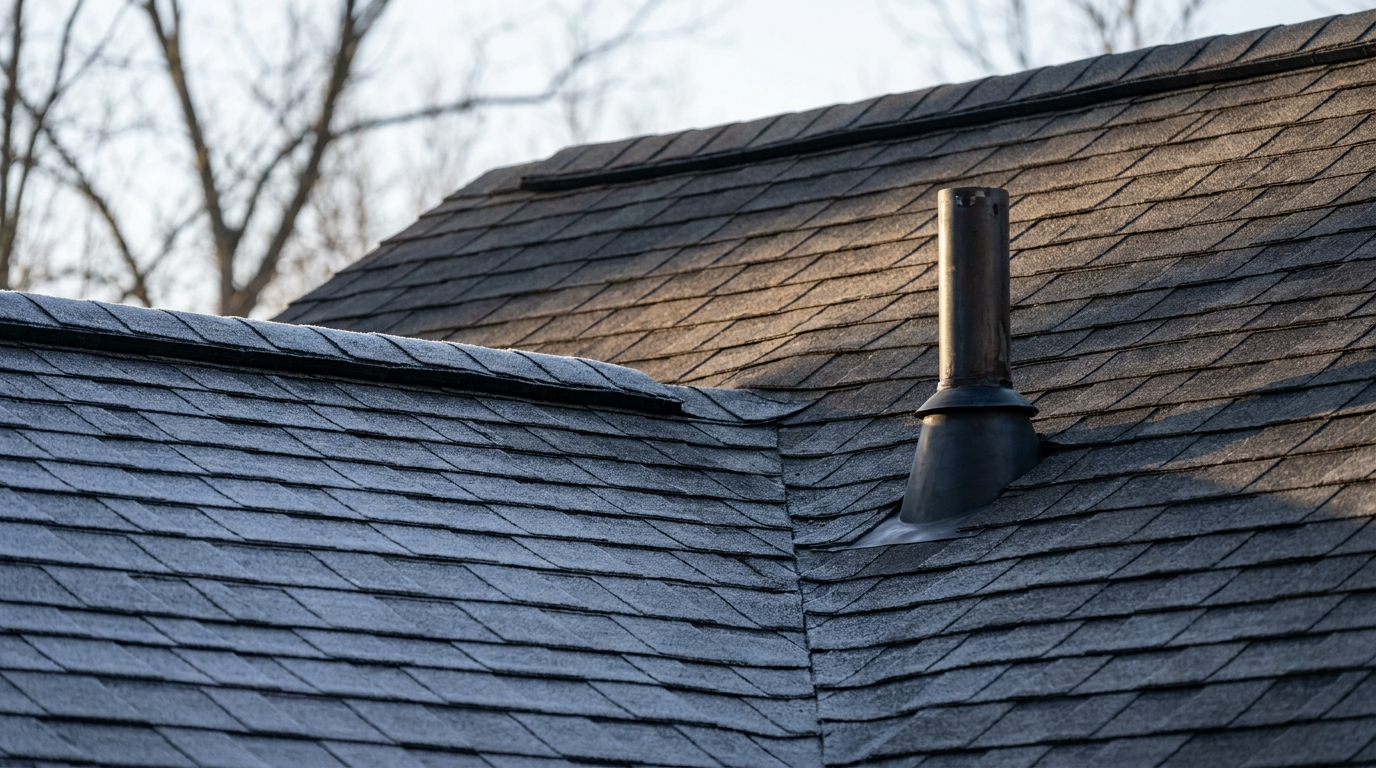
Why Do Roofers Hand-Seal Shingles When the Weather Turns Cold?
Hand-sealing gives a shingle the bond the cold is holding back. The crew sets dabs of asphalt roof cement under the shingle, so it isn't relying on the sun to activate the factory strip.
Owens Corning's Duration instructions spell out when that's required. Below 40°F, every shingle installed along the roof's perimeter must be hand-sealed, to protect against wind uplift that may occur when it's too cold for the adhesive strip to activate.
CertainTeed's Landmark instructions handle it differently: if any shingles haven't sealed after a reasonable time period, hand sealing may be necessary. One document builds perimeter hand-sealing into a cold-weather install; the other treats hand sealing as a follow-up when the strip hasn't done its job. They're different products with different instructions, which is exactly why the shingle named on your quote matters.
Hand-sealing sits alongside careful handling. ARMA's recommendations warn that asphalt shingles become less flexible as the temperature drops and may crack when handled cold, and for best results they advise storing shingles indoors to keep them warm before application, with extra care, including warming, wherever a shingle has to bend over hips and ridges or into valleys.
None of this is homeowner work, and all of it takes crew time. What it gives you is a question to ask: which shingle is going on, and what do that manufacturer's cold-weather instructions call for? A good answer names both.
What Damage Can a Winter Tear-Off Risk on an Asheville Home?
Every reroof has an exposed stretch: the time between tear-off, when the old roof comes off, and dry-in, when the deck is covered again. Winter doesn't create that stretch, but it can make it harder to close on schedule.
An open deck and the weather. Owens Corning's Duration instructions require the installer to prevent the wood deck from getting wet before, during and after installation. Rain, sleet or snowmelt landing on bare decking is the risk a winter tear-off has to plan around. We use synthetic underlayment and install ice and water shield, and those layers are what stand between the deck and the weather until the shingles are on.
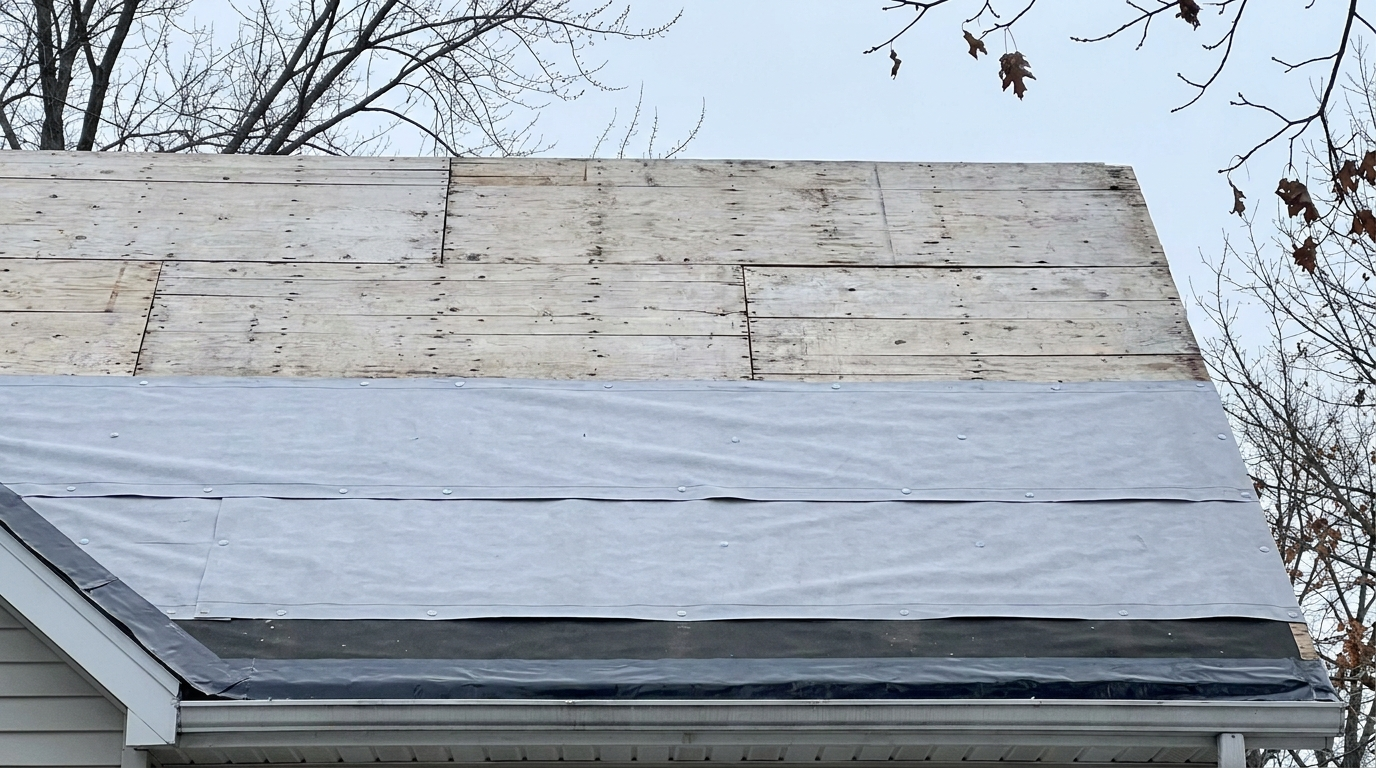
What the tear-off uncovers. Soft or rotted decking can hide under old shingles, and tear-off is when it shows. We use 3/4-inch decking, and we replace the decking when it needs replacing. In winter, that's one more reason to ask how much of the roof comes off at a time.
New shingles that go on too cold. The brittleness covered above is a damage risk in its own right, which is why the handling steps belong in the written plan.
The property below. A tear-off drops debris in any season. We tarp the shrubs and flowerbeds, lay plywood walk-pads, and run a magnetic nail sweep before we leave.
One winter problem belongs to a different part of the roof system. If your concern is ice building up along the eaves after the new roof is on, that's a gutter and attic-ventilation question, and we cover it in how gutters protect your roof, siding and foundation.
Do Asheville Homeowners Pay Less to Replace a Roof in Winter?
Sometimes. There's no guaranteed cheapest month, and when winter does cost less, the saving comes from the calendar, not from anything about the roof.
Owens Corning's winter guide points to flexible contractor schedules at this time of year. In January 2026, a Wisconsin homeowner put the pricing question to Reddit's r/homeowners forum, asking whether roof replacement is actually cheaper in winter. One homeowner who replied, waiting on a weather window for a fixer-upper with a tarp on its roof, thought roofers short on winter work may be willing to give a discount. Another reply came from someone who had once worked at a building-supply store, by their own account, and expected the extra labor to make winter cost more.
Both can be true on the same job. Winter can mean an easier calendar, but the cold-weather steps covered above take crew time, and a run of bad weather can push the schedule out. Meanwhile the size and pitch of the roof and the shingle system drive the typical price range on our service page, and none of those changes with the season. Neither does any decking that has to be replaced once the old roof is off.
Our advice is to compare winter and spring on the written quote, not on assumptions. If a winter price is lower, it should be lower with the cold-weather steps still in it. A discount that comes out of the hand-sealing or the dry-in plan isn't a saving.
How Long Can Snow and Ice Delay a Winter Reroof in Asheville?
No one can give you a reliable number of days in advance, because the delay is set by the weather that arrives, not by the calendar. A winter reroof waits until three conditions line up.
- A clear roof surface. ARMA warns that in winter there may be nearly invisible ice or frost on the roof or deck, which can make work extremely hazardous, and it advises waiting until the surface is free of ice and frost. Snow has to be gone first, too.
- A dry deck. The dry-deck requirement covered above applies here as well. A roof that has just shed its snow may still need time to dry.
- A long enough window. How long a job runs depends on the size and pitch of the roof and the weather, and with fewer daylight hours in winter, the forecast has to hold for the whole job once the old roof starts coming off.
That is the kind of delay behind the warning, noted above, that a winter project may take longer. In Asheville it can also vary by address, for the elevation reasons covered earlier.
One thing not to do while you wait is clear the roof yourself. Owens Corning's advice is to use a professional for any on-the-roof work, noting that improper snow removal can damage the shingles and can be dangerous to the workers doing it.
What Should Asheville Homeowners Look For Before a Winter Reroof?
A Reddit thread titled "Roofer wants to install roof in very cold weather?" shows the position to avoid. The roofer had explained that a roof must go on "at least somewhat above freezing," then scheduled the install for a much colder weekend, and the household that posted was left wondering whether the schedule served the roof or the final payment.
The way to stay out of that position is to settle the cold-weather plan before a date goes on the calendar, and to get it in writing. These are the questions we'd want any homeowner to ask, including of us:
- Which shingle, and whose cold-weather instructions? Ask to see the installation instructions for the exact shingle on your quote. It matters beyond workmanship: Owens Corning's Duration instructions state that Owens Corning will not be responsible for problems resulting from any deviation from its application instructions and the precautions listed with them, which include its cold-weather steps.
- Where and when will the shingles be hand-sealed? The answer should match those instructions, whether they call for perimeter hand-sealing during a cold install or hand sealing later for shingles that haven't sealed.
- Where will the bundles wait before they go up? Warm storage is part of cold-weather handling, so the plan for where the shingles are kept is a fair thing to ask about.
- How much roof comes off at a time, and how is it covered at the end of each day? That's the dry-in plan, and it's the answer that protects the deck if the weather turns.
- What weather calls off a work day, and who makes that call? Frost, ice, snow and rain in the forecast should each have a clear answer.
- What's in writing? The quote, the shingle, the cold-weather steps and the warranty should all be on paper before the tear-off starts.
On our side, every job starts with a free on-site inspection. Our project manager photographs what they find on the inspection, the quote comes back in writing with options, and every job carries our ten-year workmanship warranty.
Key Takeaways
- An Asheville roof can be replaced in winter. A below-freezing night doesn't rule it out; what matters is a roof surface free of ice and frost, a deck kept dry until it's covered, and a forecast window long enough for the job.
- Seal strips need sun and heat to bond, so sealing can be delayed in cold weather, and the cold-weather instructions for your specific shingle set when and where it gets hand-sealed.
- The average January day in Asheville starts below freezing and warms well above it by afternoon, and higher ground outside the city tends to run colder.
- Hand-sealing protects against wind uplift that may occur before the strip bonds.
- Winter can cost less through an easier calendar, but cold-weather steps take crew time. The fair comparison is between written quotes with those steps included.
- Snow and ice delays have no fixed length, and clearing the roof yourself isn't the way to shorten one.
If your roof can't wait for spring, or you'd like to know whether it can, our roofing team serving Asheville will start with a free on-site inspection and put the quote in writing, with options.