Does an HOA Cover Roof Replacement in Charleston, SC?
RoofingBaker Home Exteriors
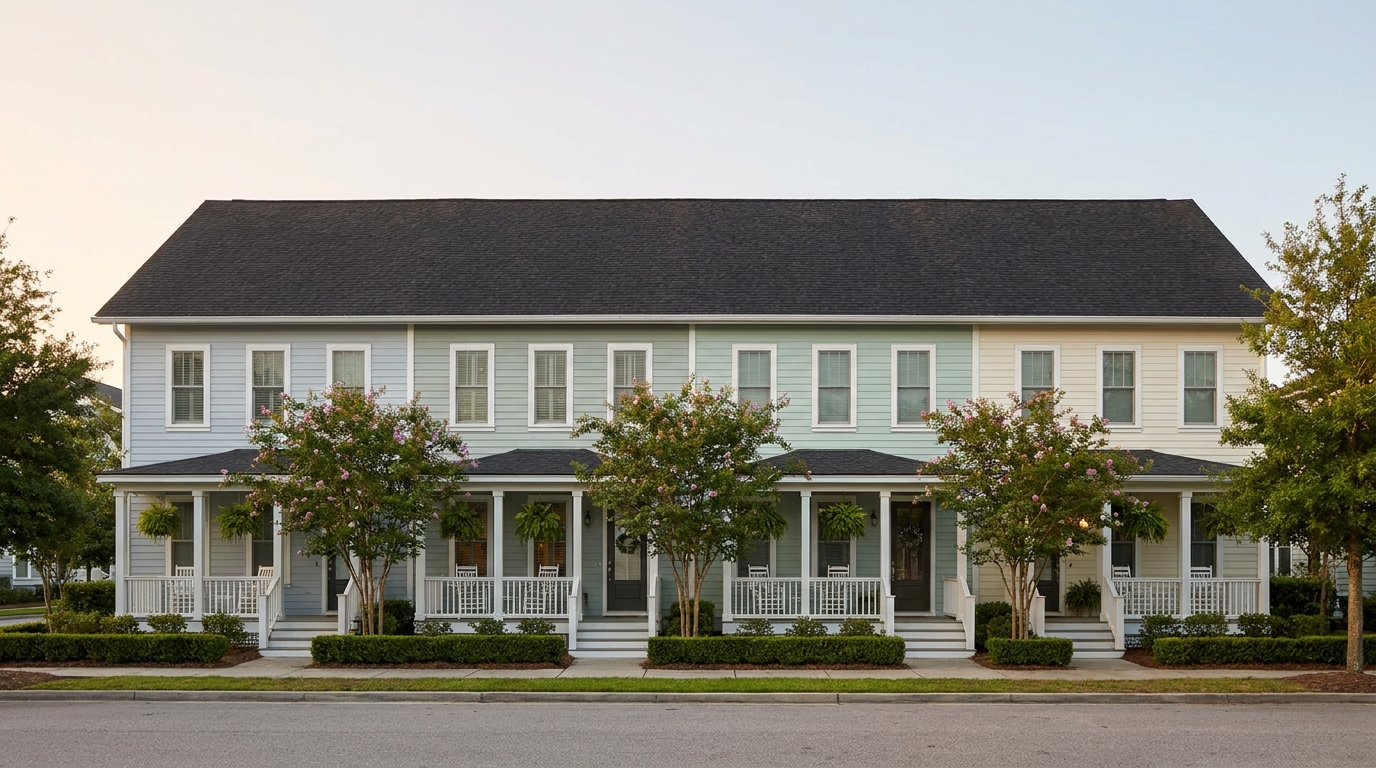
Ask two neighbors on the same Charleston street who pays for the roof and you can get two correct answers. One owns a condominium unit and will never see a roofing invoice. The other owns a townhome and is entirely on their own. Same block, same weather, completely different obligation.
The answer does not come from state law, or from anything a roofer tells you. It comes from a recorded document most owners have never opened. If you are working out whether a roof replacement in Charleston is your bill or the association’s, that document is where the question is settled.
Every figure here comes from national industry data and published research, not from Baker pricing.
Does a Charleston HOA Pay for Roof Replacement, or Does the Owner?
It depends on how your community is legally structured, and the two common structures point in opposite directions.
If you own a condominium, the roof is almost always the association’s responsibility. South Carolina’s Horizontal Property Act — the statute governing condominium ownership here — defines the common elements to include “the foundations, main walls, roofs, halls, lobbies, stairways” and the other shared structural parts of the building. The roof is named in the statute itself: in a condominium regime you do not own the roof over your unit, you own an interest in it alongside every other owner.
If you own a townhome, the picture is far less predictable. Many townhome communities are planned developments rather than condominium regimes, and in those the roof above your unit is frequently yours to maintain, insure and replace. Some townhome associations take the roof on; plenty do not. “Townhome” describes a building shape, not an ownership structure, and that distinction is where most of the confusion lives.
What matters is not the label on the listing, but what the recorded documents say.
What Do Charleston HOA Documents Say About Who Pays for the Roof?
Your governing documents are the authority, and in South Carolina they are public record rather than something a board can keep to itself.
For a condominium, the controlling document is the master deed, which the Horizontal Property Act requires “shall be recorded with the register of mesne conveyance or clerk of court of the county where such property is located” — for most Charleston-area communities, that office is the Charleston County Register of Deeds. For a planned community, the South Carolina Homeowners Association Act requires governing documents to be recorded in the same office to remain enforceable. An association cannot enforce covenants it never recorded.
So the answer exists on paper, in a public office, and you are entitled to read it. Look for four things:
- The maintenance, repair and replacement clause, which assigns each building component to either the association or the owner. Find the line naming the roof.
- Common element versus limited common element. A common element is shared by everyone; a limited common element serves one unit but remains shared property. Balconies and patios often sit here, and occasionally roof sections do too.
- Who carries the deductible, which documents frequently assign back to owners.
- Reserve and assessment provisions, which set out how large projects get funded.
We think in lifetimes, not jobs, and this is where that framing earns its keep. An owner who reads these clauses before anything fails is never the owner blindsided five years later.
How Does a Charleston Condo Roof Differ From a Townhome Roof in Cost?
The difference is not the roof. It is how the cost reaches you.
In a condominium, one roof covers many units and the cost divides among all of them. The Horizontal Property Act sets the mechanism plainly: co-owners “are bound to contribute pro rata in the percentages computed according to SECTION 27-31-60 toward the expenses of administration and of maintenance and repair of the general common elements.” Your share is fixed by your recorded ownership percentage, not by which unit sits under the worst leak. A condo owner rarely sees a whole-roof number — they see a fraction of one, arriving through dues or an assessment.
In a townhome where the roof is individually owned, the whole number lands on one household — a materially different financial event, even when the roof is smaller.
A third case is common in Lowcountry housing stock: attached townhomes under one continuous roof plane, with covenants splitting responsibility by unit. The roof is physically shared and legally divided, which makes partial replacement a poor idea — where a roof crosses a party wall, both sides age together.
Insurance follows the same fork. The National Association of Insurance Commissioners notes in its consumer guide to home insurance that if you own a townhouse, “you may insure it through either an individual homeowners policy or an association master policy.”
Which Roof Costs Fall to the Charleston Owner, Not the Association?
Even when the association clearly owns the roof, several costs routinely land on the individual owner.
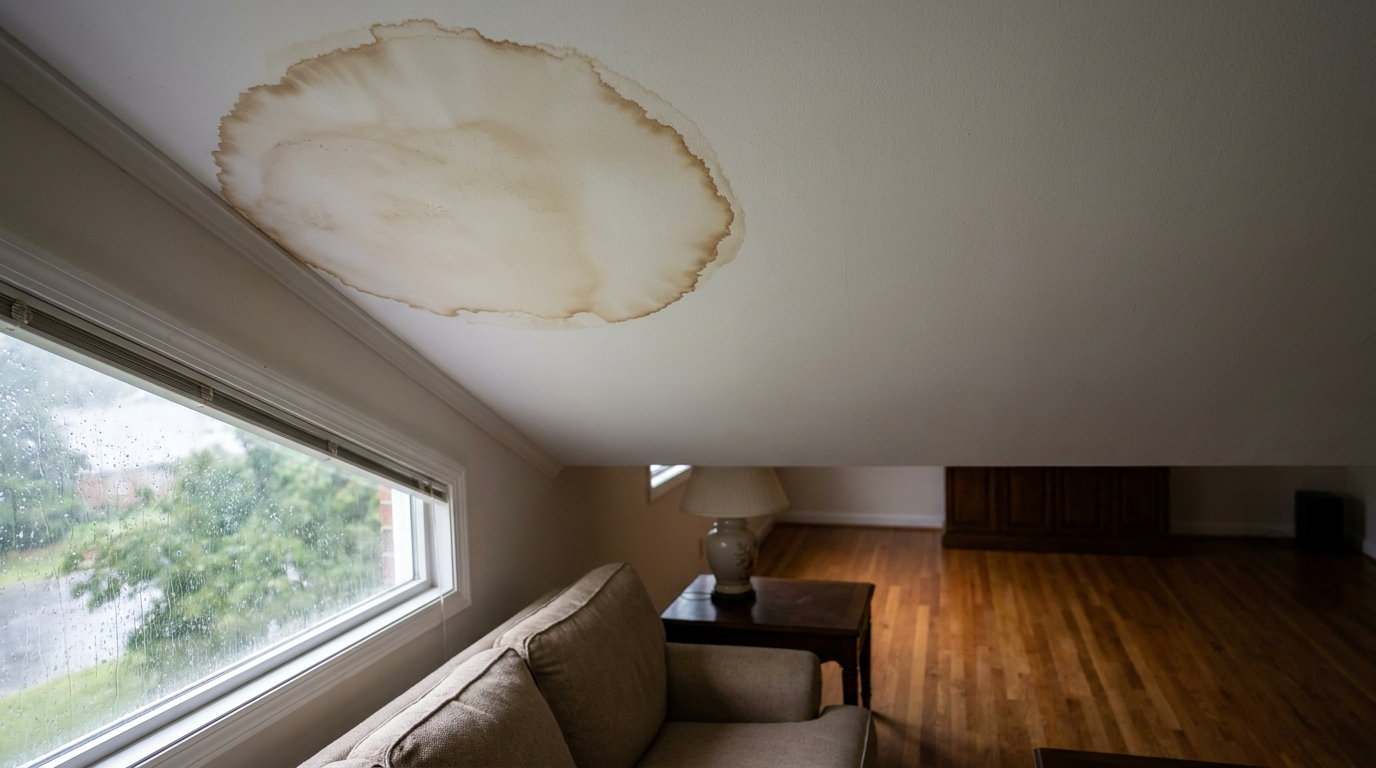
Interior damage. An association’s obligation usually stops at the structure. Water coming through a failing roof that ruins ceilings, flooring or belongings inside your unit is generally your claim. The NAIC guide describes the condominium unit owners form — the HO-6 policy — as insuring “your personal property and your walls, floors and ceiling.” That policy runs inward from the walls. It does not reach the roof, and the master policy above it may not reach your drywall.
Limited common elements. If your documents classify a roof section over a private balcony, sunroom or attached garage as a limited common element, its cost may be assigned to the unit it serves.
Anything you added. Skylights, solar attachments, satellite mounts and upgraded vents are typically the owner’s to maintain and reinstall during a replacement. Likewise, where the membership approves an upgrade beyond what the reserve funds, the difference is usually assessed.
The deductible. Many associations pass their insurance deductible through to owners. On a coastal wind claim this can be the largest single number an owner sees.
None of these depend on the roof failing dramatically. They depend on the wording of a document.
What Special Assessment Costs Do Charleston HOA Owners Face?
A special assessment is a one-off charge levied when a project costs more than the association has on hand. For roofs, it is the most common way the bill arrives.
In most communities the amount is not split evenly by unit — it follows the same recorded ownership percentages that govern everything else. One Chicago condo owner, describing their own experience on r/legaladvice, put it directly: “A special assessment was passed based on our percentage of ownership of the building and I was assessed about $44,000.” That is a single owner’s account in another state, not a Charleston benchmark, but it shows the mechanism and how large one owner’s share of a single building’s roof can be.
Scale varies enormously with building size, unit count and how much the association has saved — and the difference between a manageable assessment and a punishing one is almost entirely reserve funding rather than roofing.
South Carolina does give owners procedural footing: the Homeowners Association Act requires notice “at least forty-eight hours in advance of the meeting” before an association increases its annual budget. That is not long, which is a good argument for reading the reserve study before a notice arrives.
Multi-family properties and professionally managed portfolios run this calculation on a different footing; we cover that work in our guide to roofing programs for multi-family properties.
Does the Charleston HOA Master Policy Pay for Storm Roof Damage?
Sometimes — and on the coast, the exclusions matter as much as the coverage.
A master policy generally insures the building structure, including the roof. A unit owner’s HO-6 policy covers the interior and personal property. Between the two there is often a gap, and storm claims are where owners find it.
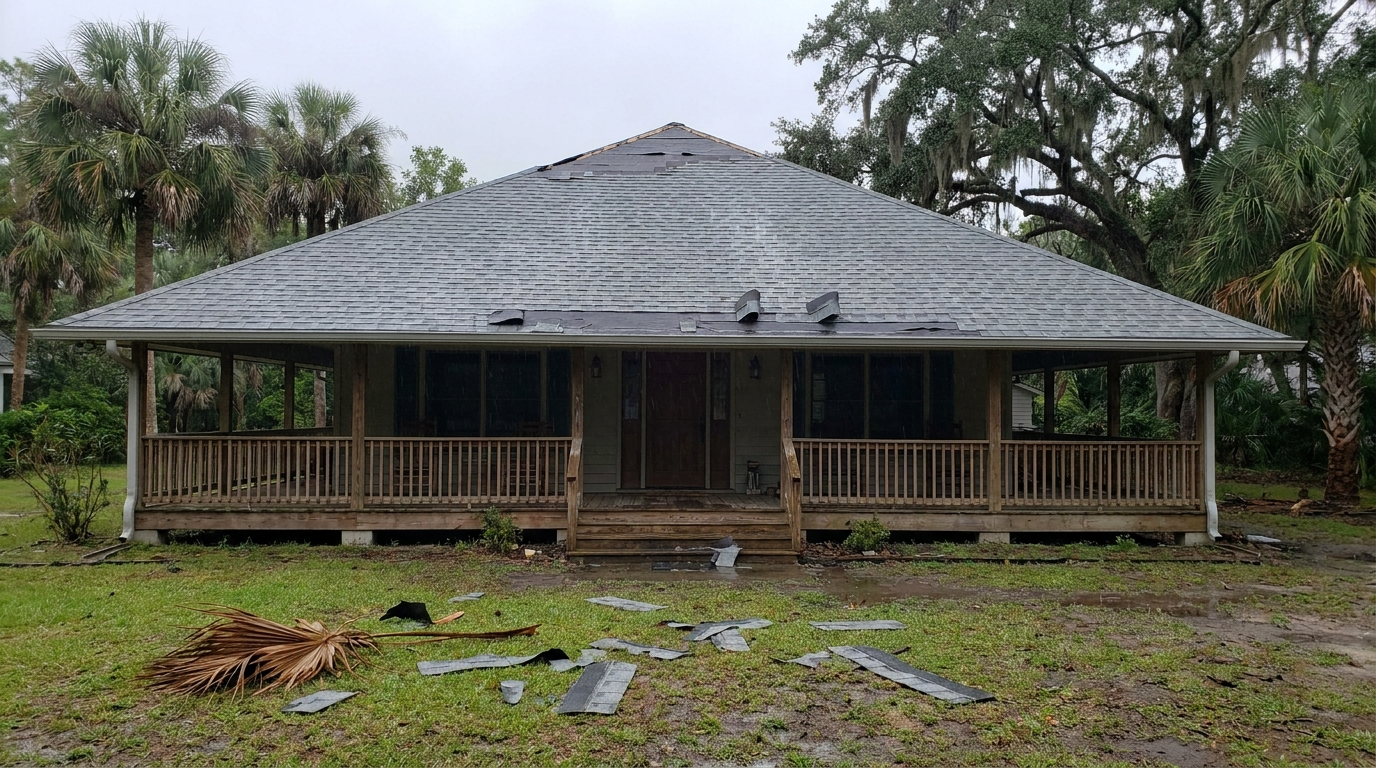
The coastal wrinkle is worth knowing before hurricane season rather than during it. The NAIC guide is explicit that while homeowners policies in most states cover windstorm and hail damage, “policies in coastal areas often exclude this coverage, in which case you would need to buy a separate policy to protect from this risk.” A Charleston association may therefore carry separate windstorm coverage with its own deductible — frequently a percentage of insured value rather than a flat sum, which on a multi-unit building is a large number before any coverage applies.
To be clear about where the decision sits: whether a claim is covered is determined by the policy language and the carrier, not by the board and certainly not by us. What we can do is document a roof’s condition properly so whoever makes that decision works from accurate information. For the general homeowner’s view of how roof claims work, see our article on what insurance does and does not cover on a roof. One practical step in the meantime: ask the board for the master policy’s declarations page and its wind deductible.
Why Do Charleston HOA Reserve Funds Fall Short of Roof Costs?
This is the question almost nobody answers, and it explains why a roof that is unambiguously “covered” still turns up as a five-figure bill.
Associations are meant to save for large replacements through a reserve fund, guided by a reserve study projecting when each shared component needs replacing and what it will cost. The standard measure of health is Percent Funded — cash actually in reserves against the amount the study says should be there.
Association Reserves, a firm that has completed more than 100,000 reserve studies across all 50 states, groups results into three bands in its April 2026 industry report. Its figures come from its own client base — associations that already hire a reserve-study provider — and the report is careful to call them “directional benchmarks rather than a statistically representative sample of all U.S. community associations.” Below 30% funded is “Weak,” carrying a “high likelihood of special assessments” with deferred maintenance common. Between 30% and 70% is “Fair,” or moderate risk. At 70% and above, associations face a “low risk of special assessments.”
The distribution is the uncomfortable part. In that dataset 25.7% of associations sit at or above 70%, 40.3% fall in the “Fair” band, and 34% are in the 0–30% “Weak” range — roughly one in three, in the group where the report says assessments are highly likely.
It is worth being precise, because this statistic is widely misquoted. You will often see a claim that about 74% of associations are underfunded, which is simply everyone below the “Strong” line. The report itself also notes that “the majority of associations (66%) fall in the ‘Fair’ or ‘Strong’ categories.” The number that should concern an owner is the 34%.
Why it happens is less about negligence than timing. As the report puts it, reserve planning “is driven by the physical reality of aging infrastructure, not by governing documents or state law.” Roofs age on a schedule regardless of what an association budgeted, and boards under pressure to keep dues attractive are the ones most likely to underfund the component with the largest replacement cost.
The consequence is measurable. The report models a $250,000 roof project three ways: funded through budgeted reserves it costs $231,823; paid by special assessment, the full $250,000; financed through a bank loan, $320,071 — $88,248 more than saving for it. Deferring is not free, and the owners who pay for it are, in the report’s words, “whoever happens to own a unit when the roof finally fails.”

How Should a Charleston Owner Budget if the HOA Will Not Cover the Roof?
Whether the roof is entirely yours or you hold a share of it, the same moves put you ahead of the problem.
Read the reserve study, not just the balance. Ask for the most recent study and find two numbers: percent funded, and the remaining useful life it assigns the roof. A roof with three years left in an association funded at 20% is a bill with a date on it.
Find out how your share is calculated. Your recorded ownership percentage sets your slice of any assessment, which turns a frightening building-wide number into a figure you can plan against.
Save on a schedule rather than on notice. We would suggest treating a future assessment the way you would treat a roof on your own house: set aside a fixed amount monthly, in a separate account, so a levy can be paid outright rather than borrowed against. Assessments are predictable in kind even when they are not predictable in date.
Get an independent read on the roof’s condition. A reserve study estimates remaining life from tables and age; it is not a roof inspection. If a major assessment is being discussed, an assessment of the roof’s current condition tells owners whether the timeline is real, and sometimes whether targeted repairs to specific problem areas can responsibly buy time. It is also worth asking what a quoted replacement actually includes — underlayment, flashing, ventilation and decking often explain more of the gap between two quotes than the shingle does.
The Bottom Line on HOA Roof Replacement in Charleston
Whether your association covers your roof comes down to how your community is structured and what its recorded documents say. Condominium owners in South Carolina can generally expect the roof to be a common element, with costs shared pro rata. Townhome owners frequently find it is theirs alone. Neither outcome is settled by the building’s appearance — both are settled on paper at the Charleston County Register of Deeds.
The harder truth is that “covered” and “paid for” are not the same thing. With around a third of associations in the weakest reserve band, a roof the association is obliged to replace can still reach you as a substantial assessment. Reading the reserve study and your maintenance clause early is the difference between planning for that and being surprised by it.
We have worked on Carolina homes since 1915, we are employee-owned, and every replacement we install carries a ten-year workmanship warranty. If you are an owner or board member trying to establish what condition a roof is genuinely in before a vote or an assessment, our Charleston roofing team will put it in writing. The inspection is free, and the report is yours to take to your board either way.