Cedar Shingles: Everything You Need to Know About Cost, Lifespan, and Maintenance
RoofingThomas Noel
Quick Answer
Homeowners who choose cedar shingles get a clean, natural look that ages into a silver-gray patina, but the material demands consistent upkeep.
Expect a 30-40 year lifespan, installed costs of $6.53 to $9.90 per square foot, and a maintenance schedule that matters more in humid Carolina climates than anywhere else. Learn more about Baker’s cedar roofing services here.
Related Guides
- Cedar Roofing Guide
- Wood vs. Metal Roofing
- Cedar Shakes vs. Shingles
- Cedar Shakes Guide
Cedar shingles are one of the most recognizable roofing materials, known for their natural appearance and ability to complement a wide range of home styles. But while they’re often grouped together with cedar shakes, cedar shingles are a distinct product with their own unique characteristics.
If you’re considering cedar roofing and have already decided shingles are the direction you want to go, this guide is for you. It covers what cedar shingles are, how they perform in the Carolinas specifically, what they cost, how long they last, and what to realistically expect over time.
What Are Cedar Shingles?
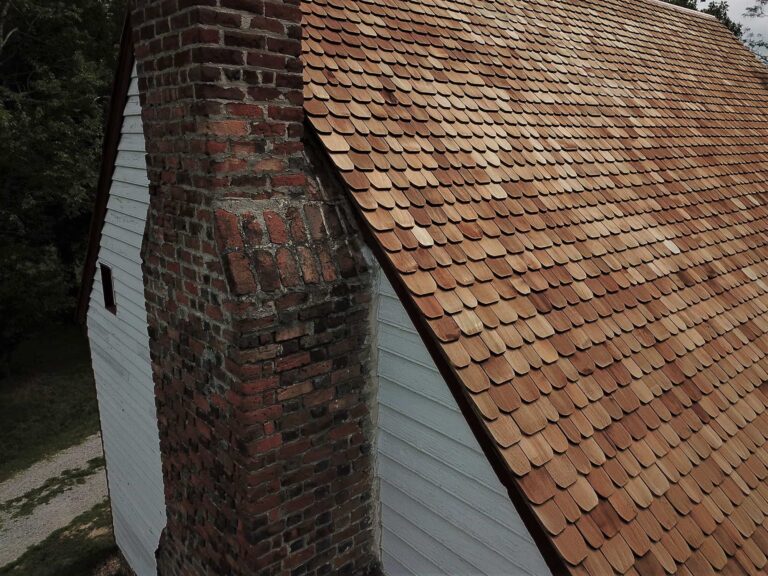
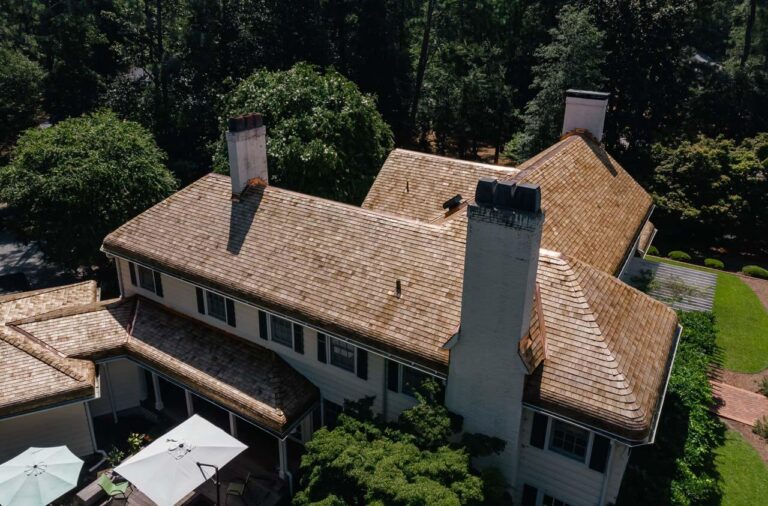
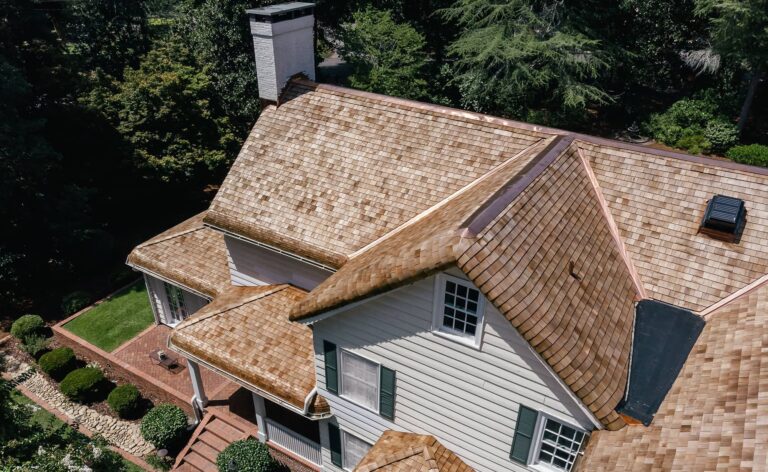
Cedar shingles are thin, machine-cut pieces of wood, typically Western Red Cedar, installed in overlapping rows to create a layered, water-shedding roof system. Unlike cedar shakes, which are thicker and split by hand for a rougher look, cedar shingles are cut on both sides for a smooth, uniform appearance. That consistency makes them a popular choice for homeowners who want the warmth of natural wood with a cleaner, more refined finish.
From a performance standpoint, cedar shingles rely on proper layering, spacing, and ventilation to shed water and allow the material to dry between rain. Because wood naturally absorbs and releases moisture, that drying process is critical to how well the roof holds up over time.
This is one of the key differences between cedar and materials like asphalt or metal. Cedar isn’t just a surface layer. It’s a material that actively responds to its environment, and understanding that is what sets up a cedar shingle roof for long-term success.
For a full side-by-side breakdown of how shingles compare to shakes on appearance, cost, and durability, see our cedar shakes vs. shingles guide.
How Long Do Cedar Shingles Last?
Cedar shingles typically last 30 to 40 years when properly maintained. That lifespan depends on outside conditions more than most other roofing materials. How well the roof was installed, how consistently it’s maintained, and the environment all play a bigger role with cedar than they do with asphalt or metal.
Because shingles are thinner than shakes, they’re more sensitive to moisture absorption, UV exposure, and temperature swings. In the Carolinas, those factors matter a lot. High humidity means the wood stays damp longer after it rains, which slows the drying cycle that keeps cedar healthy. Shaded roof areas are especially vulnerable since they don’t get the sun exposure that helps dry things out between storms.
None of that makes cedar shingles a poor choice for the region. It just means proper maintenance is key to extending their lifespan. Homeowners who stay on top of it can get the full lifespan out of their cedar shingles. Those who don’t often see problems develop well ahead of schedule.
What Do Cedar Shingles Cost?
Cedar shingles are a premium material, and the price reflects both the material itself and the more precise installation they require. According to This Old House, cedar shingles and shakes typically run $6.53 to $9.90 per square foot installed for standard projects, with total installed costs for cedar shake roofing ranging from $5.50 to $13.50 per square foot depending on material grade and project complexity.
Actual costs in the Carolinas can run higher depending on your roof’s pitch, how many valleys and dormers it has, and current local labor rates. A simple roofline on a single-story home will come in at a different number than a steeply pitched roof with multiple penetrations. Tear-off of an existing roof, new underlayment, and flashing are additional costs to factor in before you have a true project total.
The Real Advantages of Cedar Shingles
Cedar shingles offer a few genuine advantages over other roofing materials that keep them in the conversation despite the higher cost and maintenance requirements.
The appearance is the most obvious one. Cedar shingles have a clean, traditional look that works well across a wide range of architectural styles, from historic homes to coastal properties. As they age, they develop a silver-gray patina that many homeowners find more appealing than when it was new. That kind of character is difficult to get from synthetic materials.
Natural insulation is another real benefit. Wood is a poor conductor of heat, which means cedar shingles help insulate attic temperatures in both summer and winter. That can make a modest difference in energy costs over time, though it’s not the primary reason most homeowners choose cedar.
Cedar shingles are also relatively lightweight compared to slate or tile, so they typically don’t require any structural reinforcement. And when problems do come up, individual shingles can often be replaced without touching the rest of the roof, which helps manage repair costs when issues are caught early.
Tradeoffs You Should Know About
The tradeoffs with cedar shingles are worth being honest about before you commit.
Maintenance is the biggest one. Cedar shingles need regular cleaning to prevent moss, algae, and debris buildup. They need periodic treatments to protect against mold, mildew, and insects. They also need inspection after storms and prompt attention when small issues show up, because small problems on a cedar roof don’t stay small if they’re left alone. This isn’t a material you can install and forget about.
Moisture buildup is the main reason cedar roofs need regular maintenance. Because cedar absorbs water, it can break down faster in environments where it stays damp for extended periods. In humid or heavily shaded spots, this is a real consideration. The Carolinas don’t make cedar impossible, but they do make the maintenance more important than it would be in a drier climate.
Cedar shingles are also thinner than shakes, which means a shorter lifespan under the same conditions. And compared to metal, slate, or tile, cedar simply doesn’t offer the same long-term durability. If getting the most years out of a roof with the least amount of upkeep is the priority, cedar probably isn’t the right fit.
Common Problems With Cedar Shingles
Cedar shingles age differently than most roofing materials, and the issues they develop tend to follow predictable patterns. Knowing what to look for is half the battle.
Moss and Algae
Moss and algae growth is the most visible warning sign, especially on shaded or north-facing sections. These organisms hold moisture against the surface of the shingles, which speeds up the breakdown. A roof that looks green from the ground is telling you it’s time for maintenance.
Splitting and Cracking
Splitting and cracking happen as the wood dries out and becomes more brittle over time, particularly after years of sun and weather exposure. Small cracks open up and let water in, which accelerates deterioration in those spots.
Curling and Warping
Curling and warping come from the repeated cycle of moisture absorption and drying that cedar goes through over its lifespan. When shingles lose their flat profile, they become less effective at shedding water the way they’re designed to.
Rot and Soft Spots
Rot and soft spots tend to show up near roof edges, in valleys, and anywhere debris collects and keeps the wood from drying out. By the time rot is visible on the surface, it’s usually already spread further than it looks.
The good news is that most of these problems start small and visible. Twice-a-year inspections, plus a check after any significant storm, give you the chance to catch issues while they’re still easy to fix.
What Maintenance Actually Looks Like
Owning a cedar shingle roof means staying engaged with it over time. That’s not a negative, it’s just the reality of the material.
On a regular basis, that means clearing leaves and debris that collect on the roof and in the gutters, since anything that holds moisture against the wood works against you. It means cleaning moss and algae before they get established, treating the shingles periodically to protect against mold, mildew, and insects, and doing a close inspection after major storms to catch any cracked or displaced shingles before water gets underneath.
In the Carolinas, this maintenance schedule matters more than it would in a drier climate. Humidity slows the drying cycle, and the trees that shade so many Carolina homes means some sections of the roof stay damp longer than others. Staying on top of those areas is what keeps a cedar shingle roof performing the way it should through its full lifespan.
Why Installation Quality Matters
Cedar shingles require expert installation and mistakes tend to show up sooner and have a bigger impact on performance than with asphalt shingles.
Spacing is one of the most important parts of installation. Shingles installed too tightly trap moisture and limit airflow, which accelerates deterioration. Proper spacing gives the wood room to expand and contract and allows it to dry out after it rains.
Fastening matters too. Incorrect nail placement can cause splitting or make individual shingles unstable over time. And ventilation underneath the roof is critical in how well moisture is managed across the whole system.
Getting these details right at installation is what determines whether a cedar shingle roof reaches its potential or falls short of it. Working with experienced experts like Baker Home Exteriors helps you get the most out of your investment.
Frequently Asked Questions (FAQs) About Cedar Shingles How long do cedar shingles last?
With proper installation and consistent maintenance, cedar shingles typically last 30 to 40 years. In the Carolinas, staying on top of cleaning and inspections matters more than it does in drier climates because of the humidity and moisture exposure the roof deals with year-round.
- What do cedar shingles cost?***
According to This Old House, cedar shingles and shakes typically run $6.53 to $9.90 per square foot installed for standard projects, with total installed costs ranging from $5.50 to $13.50 per square foot depending on material grade and complexity. Your actual cost will depend on your roof’s size, pitch, and local labor rates.
- Do cedar shingles require a lot of maintenance?***
Yes, cedar shingles require more maintenance than asphalt or metal. Regular cleaning, periodic treatments, and twice-a-year inspections are part of owning a cedar roof. The good news is that catching small issues early keeps maintenance costs manageable. It’s when problems get ignored that things get expensive.
- Are cedar shingles better than asphalt?***
Cedar shingles offer a different set of advantages than asphalt, mainly a natural appearance and natural insulation, but they cost more and require more upkeep. Whether that tradeoff makes sense depends on how much the aesthetics matter to you and how realistic you are about the maintenance commitment.
- Do cedar shingles hold up in humid climates like the Carolinas?***
They can, but humidity makes the maintenance more important than it would be in a drier climate. Shaded areas and spots where debris collects are worth paying extra attention to, since those are the places where moisture sits longest.
- Can damaged cedar shingles be repaired without replacing the whole roof?***
Yes, and this is one of cedar’s real practical advantages. Individual shingles can usually be replaced when damage is caught early, without touching the sections around them. Working with an experienced cedar installer makes sure those repairs are done right to match the existing roof and don’t create new problems in the process.
Cedar Shingles Are Worth It, With the Right Expectations
Cedar shingles offer something that synthetic materials struggle to replicate: a natural look that gets better with age, fits a wide range of home styles, and gives a house a kind of character that asphalt just doesn’t deliver.
The tradeoff is real. Cedar shingles ask more of their owners than most roofing materials. They need regular attention, they’re more sensitive to moisture than synthetic options, and they work best when they’re installed by someone who knows the material well. Homeowners who go in with clear expectations tend to be happy with them for decades.
Baker Home Exteriors has been helping homeowners across the Carolinas choose and install cedar roofing for more than 110 years. If you’re leaning toward cedar shingles and want an honest read on whether they’re the right fit for your home, request a free inspection and we’ll walk you through what to expect based on your specific roof.
Cedar Roof Guide: How to Pick the Right Shakes or Shingles and Avoid Common Issues
Cedar Shakes: Everything You Need to Know
The Best Type of Roof: Wood or Metal Roofing?
Read More

Written by Thomas Noel Based in Charlotte, North Carolina, Thomas Noel is a writer with more than 10 years of experience writing and editing content that helps homeowners make smart, confident decisions. He previously managed a home design site and has written about everything from eco-friendly home upgrades and smart-home products to heating and cooling solutions like HVAC systems and furnaces. He brings a practical eye and hands-on knowledge to every home improvement story he tells.