Is a Fiberglass or Steel Front Door Better?
DoorsBaker Home Exteriors
In Raleigh’s hot, humid climate, fiberglass is usually the better material for an entry door replacement. It resists dents, it does not rust, it needs little upkeep, and its molded grain can be stained to look like wood. Steel is the smarter buy on a tight budget, when a deep porch roof shelters the door and its paint stays unbroken.
How Do Fiberglass and Steel Front Doors Compare Side by Side?
Inside, the two doors are built much the same way. Each has a skin over an insulating foam core, on an inner frame of stiles and rails that is often wood. Both generally insulate better than a wood door. The skin is where they part ways.
| Feature | Fiberglass | Steel |
|---|---|---|
| Skin | Molded fiberglass composite | Sheet steel |
| Look | Molded wood grain that takes stain or paint | Smooth or embossed grain, usually painted |
| Feel to the touch | Holds a steadier temperature | Can feel hot or cold |
| Up-front price | Higher | Lower |
Neither is real wood, but fiberglass comes closer than steel. On a wood-grain fiberglass door, check that the grain runs across the rails and up the stiles, as it would in real wood. On steel, premium doors can carry a vinyl coating for better weather resistance, and some take a stainable wood-fiber coating.
Both come in a wide range of styles, with or without glass. Fiberglass has the edge on period looks that rely on wood grain, such as Craftsman doors with recessed panels and Colonial doors with raised panels.
On energy use, a tight seal counts as much as the insulation inside the door. Heat is more often lost through air leaks around a door than through the door itself. Glass in either door can also lower its insulation. Good steel and fiberglass doors both include a thermal break, often a vinyl strip, that separates the inside skin from the outside one. It keeps heat and cold from passing straight through. We cover cores, weatherstripping, glass and thresholds in our guide to what makes a door energy efficient.
Glass and hardware cost about the same in either material, so the skin is a smaller share of the price on an elaborate door. For prices by material, and the extras that raise them, see our guide to front door replacement cost in Raleigh.
How Do Fiberglass and Steel Front Doors Handle Dents, Rust and Humid Weather?
Fiberglass handles all three better, though it is not damage-proof.
Steel dents under a hard knock, and a dent is difficult to repair well. It can be pulled and filled with an auto-body repair kit, then primed and painted. Steel does not rot, but it can rust where its coating is broken and the bare metal is left untreated.
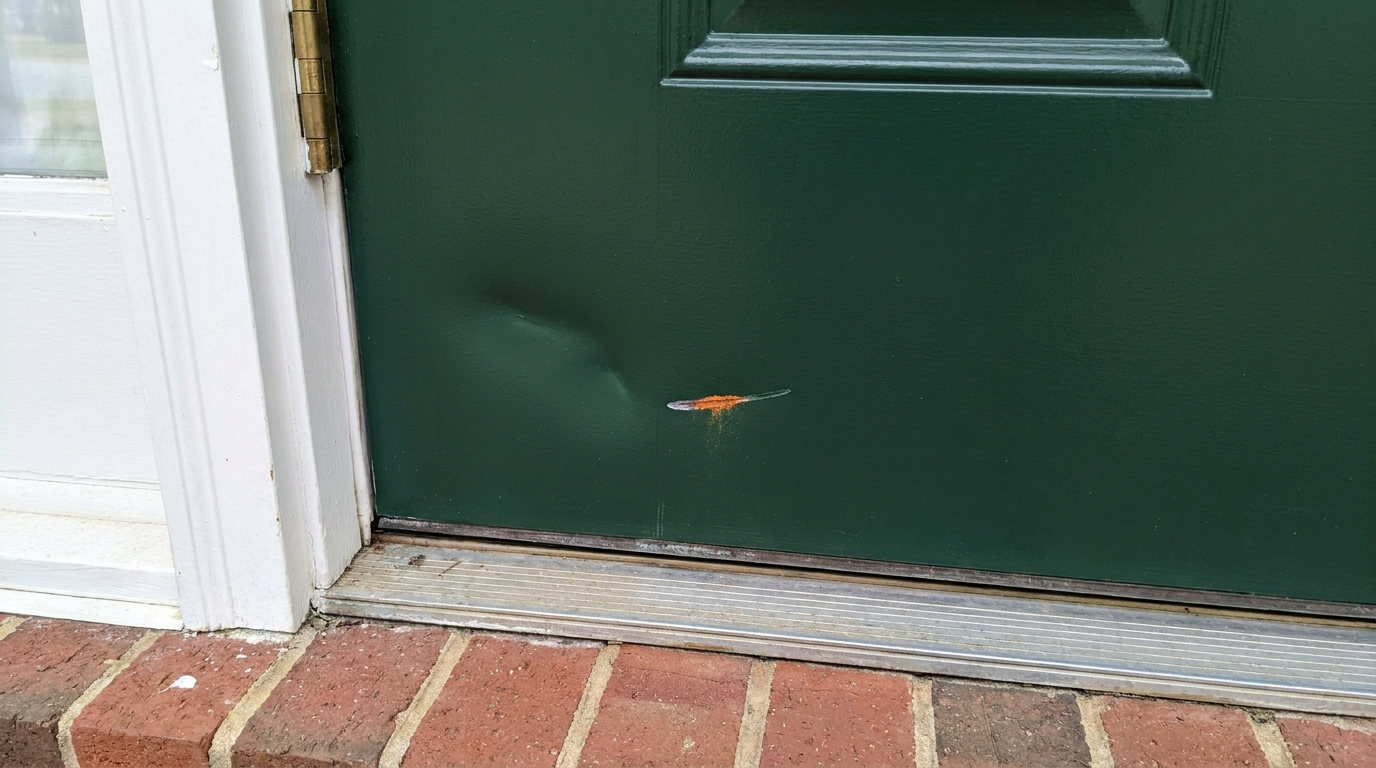
Fiberglass is generally dent-resistant. A hard hit, such as a stray golf ball, can crack the skin, especially in extreme cold. Cracks are relatively rare, though, and they can often be filled and the door refinished. Build quality matters here: a well-made fiberglass door is more durable, while a cheap one can crack and may need replacing.
Raleigh gives a front door plenty of heat and rain. At Raleigh-Durham International Airport, the normal July high sits near 90°F, in the National Weather Service’s 1981 to 2010 daily normals. The airport also averages 46.07 inches of precipitation a year, per the North Carolina State Climate Office’s 1991 to 2020 normals.
Fiberglass holds its shape through that heat and damp, without warping, swelling or rusting. Under heavy wear or extreme weather, steel generally weathers less well than fiberglass and may need regular touch-ups.
If you are replacing a wood door that swells and sticks in humid weather, either material fixes the slab side of that problem. Solid wood stiles and rails inside either door can sometimes warp or bow when the air is humid. For a fiberglass door in a humid, rainy place like Raleigh, choose composite stiles and rails. They do not soak up water and rot, and they make the skin less likely to pull away from the frame. If the doorway faces direct sun, ask for a UV-resistant finish as well.
Both weather well enough that a storm door is less necessary than it once was. It remains a popular add-on for light and ventilation.
Is a Steel Front Door More Secure Than a Fiberglass One?
Steel has the tougher skin, but in a kick-in, the weak point is the frame beside the lock, whichever material hangs in it. Burglars often force a door by kicking it in. In battering-ram tests reported in Consumer Reports’ entry door buying guide, all three door materials failed the same way. The jamb split near the lock’s strike plate in fiberglass, steel and wood alike.
That makes the lock side of the frame the place to spend on security. The Raleigh Police Department’s home safety tips call for a deadbolt with a one-inch throw and a reinforced strike plate held by three-inch screws. The throw is how far the bolt extends into the frame. Three-inch screws in the hinges help as well, since they reach deep into the wall framing behind the jamb. Ask your installer how the strike plate and hinges will be fastened.
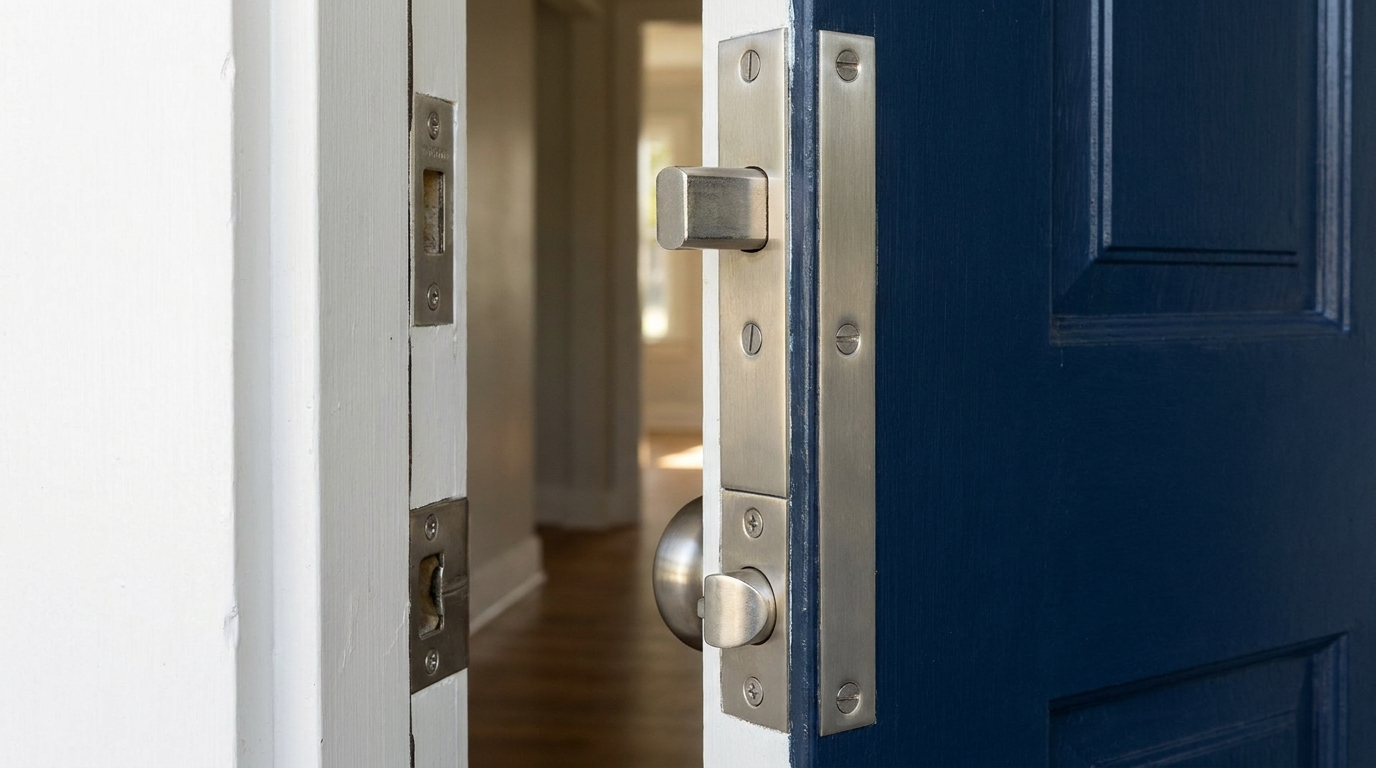
If you choose steel for its strength, two details add to it. One is a heavier skin, which means a lower gauge number. The other is a steel inner frame in place of wood.
Glass is the other weak spot. A pane near the handle, in the door or a sidelight, can be broken so someone can reach in and turn the lock. If you want light there, ask about laminated glass or glass made to resist break-ins.
Which Front Door Lasts Longer With Less Upkeep, Fiberglass or Steel?
Fiberglass, in most cases. It resists wear and weather better than steel, and its routine care is lighter. How long a door lasts depends on how it was installed and how it is kept.
ProVia, which makes both kinds, backs its fiberglass entry doors and its Legacy steel doors with a limited warranty. It runs as long as the original buyer owns the home, then transfers once to the next owner. Most new doors come prehung, hung on hinges in their own frame with weatherstripping. On fiberglass, long warranties usually come only with a complete entry system, frame included, so a slab bought alone may not carry one. Some makers may also require professional installation to keep the warranty in force.
A maker’s warranty covers the door itself. The installation is ours to stand behind: every job carries a ten-year workmanship warranty.
Fiberglass does not expand and contract with temperature, so its molded panels and window grilles won’t need recaulking. For a fiberglass door, the routine is short:
- Wipe it down with a damp cloth.
- Check for cracks, or for the skin lifting from the frame, and deal with either right away.
- Touch up chips in a painted finish promptly, to keep moisture from getting in.
- On a stained wood-grain finish, add a clear UV-protective coat every few years to keep it from fading. A finish that has already faded can be refreshed with paint or a clear marine varnish.
A steel door is generally low maintenance too, with two extra jobs:
- Prime and paint any scratch that reaches bare metal, before rust can start.
- Plan to repaint from time to time. Most steel doors leave the factory with a baked-on polyester finish that needs periodic repainting. On some older steel doors, the surface can peel.
On either door, check the weatherstripping for wear and lubricate the hinges and lock annually. An adjustable threshold helps too, because it keeps the bottom of the door weather-tight as the house settles. Without one, a new door sweep will likely be needed to keep out drafts and moisture.
How Do You Choose Between a Fiberglass and Steel Front Door?
Start at the doorway. Note how much direct sun and rain reach the door, then weigh your budget and the look you want.
Say your door faces the afternoon sun from an open stoop with no roof over it. Fiberglass is the pick there, and its higher price buys what that doorway needs: lighter upkeep and better weathering. Under a deep porch that keeps the door dry and shaded, those advantages count for less. Steel does the job there for less money, as long as you touch up scratches as they appear.
- Check the opening. A standard single door is 36 inches wide and 80 inches tall. Unlike wood, steel doors can’t be planed or cut, and not every fiberglass door can be trimmed. Check the maker’s guidelines if the frame has settled out of square. A fiberglass door for a nonstandard opening can also be hard to find, so measure before you settle on a style.
- Plan any size change. A same-size swap is the simpler job. A larger door or new sidelights usually means reframing the opening, which is structural work for a contractor.
- Check your HOA. Homeowners association rules may regulate the type of front door you can install.
- See both in person if you can. A door’s finish and solidity are easier to judge with your hands than on a screen.
Color is a separate decision, and our guide to front door colors and their meanings covers it.
Every job starts with a free on-site inspection. The project manager photographs what he finds on the inspection, and the quote comes back written, with options.
The Bottom Line on Fiberglass vs Steel Front Doors
Neither material is a poor choice when it suits its doorway. Pick the skin for the weather that doorway sees, and treat the frame, the lock and the seal as part of the same decision.
We install doors out of Raleigh, and our door services page is the place to start.