How to Clean Gutter Guards Without Damaging Them
GuttersThomas Noel
One of the biggest misconceptions about gutter guards is that once they’re installed, you never have to think about your gutters again.
In reality, gutter guards significantly reduce maintenance, but they don’t eliminate it entirely.
In the Carolinas, where pine needles, pollen, hardwood leaves, and heavy seasonal rain are common, debris can still accumulate on top of gutter guards over time. When that happens, it can slow water flow or cause overflow during intense storms. The good news is that cleaning gutter guards is typically much easier than cleaning open gutters. The key is knowing how to do it safely and without damaging the system in the process.
Quick Answer
Gutter guards still need occasional cleaning, but much less often than traditional gutters. Most Carolina homes only need a light surface cleaning once or twice per year to remove debris like pine needles, pollen, or leaves that collect on top of the guard.
To clean them safely, gently sweep debris off with gloved hands or a soft brush, then rinse with a garden hose on moderate pressure. Avoid pressure washers, sharp tools, or stepping on the guards, since these can damage the system.
Need Help with Your Gutter Guards?
You shouldn’t have to fret about your home’s exterior. If you live in the Carolinas, we likely serve your area.
Fast and free estimates.
Related Guides
- Why Gutter Guards Matter
- Why Should I Install Gutter Guards?
- 5 Benefits of Gutter Guards
- How to Install Gutter Guards
Do Gutter Guards Actually Need to Be Cleaned?
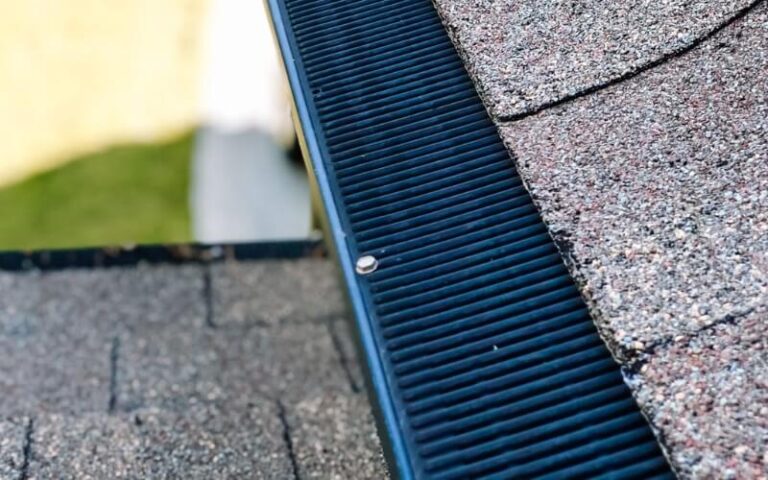
Yes, but typically less often than traditional open gutters. Gutter guard systems are designed to keep debris out of the gutter channel while letting water flow through freely.
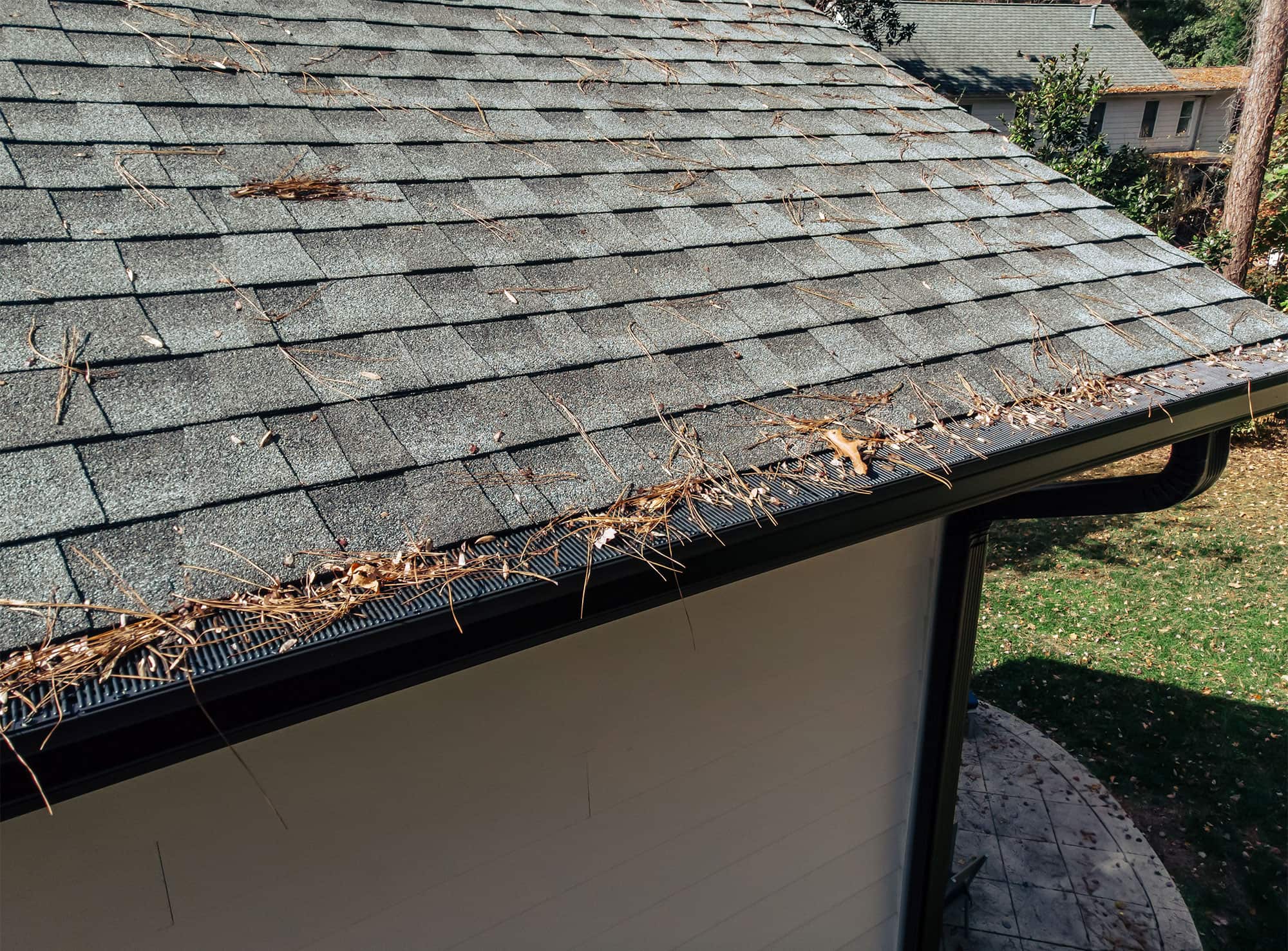
Instead of packing into the gutter interior, debris tends to collect on top of the guard surface. On steeper rooflines, wind and rain will often carry lighter material away on their own. But in areas with heavy tree cover, pine needles, spring pollen, or frequent storms, debris can build up into a layer that slows drainage or causes water to run over the edge instead of through the system.
For most Carolina homes, a visual check once or twice a year is enough to stay ahead of it. Late spring and late fall, after the leaves are down, are the two most useful times. The goal isn’t deep cleaning. It’s light, preventive maintenance to make sure water can still flow through your gutter system the way it is supposed to.
Know Your System Before You Start
Before you get on a ladder, it’s worth taking a minute to understand what type of guard you have. Different systems are secured differently, and some are fastened under the first row of shingles in a way that makes them easy to damage if you pull on them without knowing what you’re doing. If you’re not sure how your guards are attached or whether they’re designed to be removed for cleaning, check with your installer before you start.
How to Clean Gutter Guards Without Causing Damage
Cleaning gutter guards is mostly a surface-level task. You’re not digging into the channel. You’re clearing what’s sitting on top of the guard so water can move through it properly.
Start with a visual inspection from the ground if you can. Look for visible debris buildup along the roofline, any sections that appear to be pulling away from the gutter, or signs of overflow staining on the fascia. If something looks structurally off, stop and call a professional rather than trying to fix it yourself.
If everything looks intact, set up your ladder safely on level ground and use gloved hands or a soft-bristle brush to gently sweep debris off the surface of the guard. The goal is to lift material off, not force it through the openings or scrape aggressively. If there’s a compacted layer of pine needles or wet leaves, loosen it gradually rather than prying.
Once the loose debris is cleared, rinse the surface with a garden hose on a moderate setting. Do not use a pressure washer. High-pressure water can bend the guard, loosen fasteners, or push debris down into the gutter channel, which is exactly what you’re trying to prevent. As you rinse, watch whether water flows smoothly through the guard and drains out through the downspouts. If it pools or runs over the edge, that’s a signal something needs a closer look.
And don’t skip your downspouts. Even with guards installed, downspouts can still clog over time. If water is draining slowly after you’ve cleaned the guards, flush the downspouts from the top with a hose to clear any buildup inside.
What to Avoid
A few things can damage your guard system or make the problem worse, and they’re worth knowing before you get started.
Pressure washers are the most common mistake. They can bend mesh guards, knock fasteners loose, or push debris past the guard and into the channel. A regular garden hose with moderate pressure does the job without the risk. Sharp tools like metal scrapers or screwdrivers can tear or puncture the guard surface, so stick to soft brushes and your hands. And don’t step on the guards. They’re not built to support weight and walking on them can bend or separate them from the roofline.
If you notice guards that have pulled away from the gutter lip or screws that are backing out, don’t try to force them back in place. That kind of issue usually points to something in the original installation that needs professional attention.
How Often Should You Clean Gutter Guards in the Carolinas?
It depends mostly on your surroundings. Homes with heavy tree cover, especially pine trees, will need inspection and light cleaning a couple of times a year. Homes on more open lots with less debris can often get by with a single annual check. After major storms, it’s worth doing a quick visual inspection of the roofline to see if anything significant has come down.
This is still less maintenance than with traditional gutters. Instead of scooping out inches of packed debris from inside the gutter channel multiple times a year, you’re typically doing a quick surface sweep and rinse twice a year. That’s a significant reduction in time, effort, and the number of trips up the ladder.
When to Call a Professional
Surface cleaning is something most homeowners can handle on a single-story home with a manageable roofline. But there are situations where professional service is the smarter call.
If you’re dealing with a two-story home, steep roof slopes, or you’re just not comfortable on a ladder, it’s not worth the risk. If water is still overflowing after you’ve cleaned the surface and checked the downspouts, that’s a sign the issue may be with gutter pitch, guard alignment, or drainage capacity rather than debris, and those are things a professional needs to assess. Sagging gutters, guards pulling away from the roofline, or visible fascia rot are also signs to call rather than climb.
Frequently Asked Questions (FAQs) About Cleaning Gutter Guards Do gutter guards eliminate cleaning completely?
They eliminate most of it, but not all. What they do is change the job from digging packed debris out of a gutter channel to a much lighter surface sweep a couple of times a year. For most homeowners that’s a big improvement, especially in tree-heavy Carolina neighborhoods.
- Can I use a pressure washer on my gutter guards?***
No. High-pressure water can bend the guard, loosen fasteners, and push debris into the gutter. A regular garden hose on a moderate setting is all you need.
- Why is water still overflowing if I have guards installed?***
A few things can cause this. Surface debris buildup is the most common, but overflow can also point to improper gutter pitch, undersized gutters, or a downspout clog. If cleaning the surface doesn’t solve it, it’s worth having the system inspected.
- How long do gutter guards last?***
High-quality systems installed correctly can last for decades. RainDrop guards, which Baker installs, come with a 20-year warranty. Regular light maintenance helps the system reach that lifespan.
- Can I remove and reinstall my gutter guards myself?***
It depends on the system. Some are designed to be lifted off for cleaning. Others are secured under shingles and shouldn’t be removed without professional guidance, since doing it wrong can disturb the roofing system or affect warranties. When in doubt, ask your installer.
Less Maintenance, Not No Maintenance
Gutter guards are one of the best ways to reduce the time and effort your gutters require. In the Carolinas, where heavy rain and tree debris are just part of life, a well-installed guard system keeps drainage working the way it should without constant attention.
But they do still need an occasional check and a light cleaning to stay at their best. Knowing how to do that safely, and when to leave it to a professional, is what keeps the system working season after season.
Baker Home Exteriors has helped Carolina homeowners maintain and protect their exterior systems for more than 110 years. If you’d rather leave the ladder in the garage, our team can inspect and service your gutter guards and make sure everything is draining the way it should. Request a free gutter inspection and we can help make sure your gutter guards are ready to protect your home.

Why Gutter Guards Matter More Than Most Homeowners Realize
Why Gutter Guards Are One of Your Home’s Best Investments
Read More
Why Should I Install RainDrop Gutter Guards?
Read More

Written by Thomas Noel Based in Charlotte, North Carolina, Thomas Noel is a writer with more than 10 years of experience writing and editing content that helps homeowners make smart, confident decisions. He previously managed a home design site and has written about everything from eco-friendly home upgrades and smart-home products to heating and cooling solutions like HVAC systems and furnaces. He brings a practical eye and hands-on knowledge to every home improvement story he tells.