Cost for Roof Replacement in the Carolinas: How to Budget and Plan Your Project
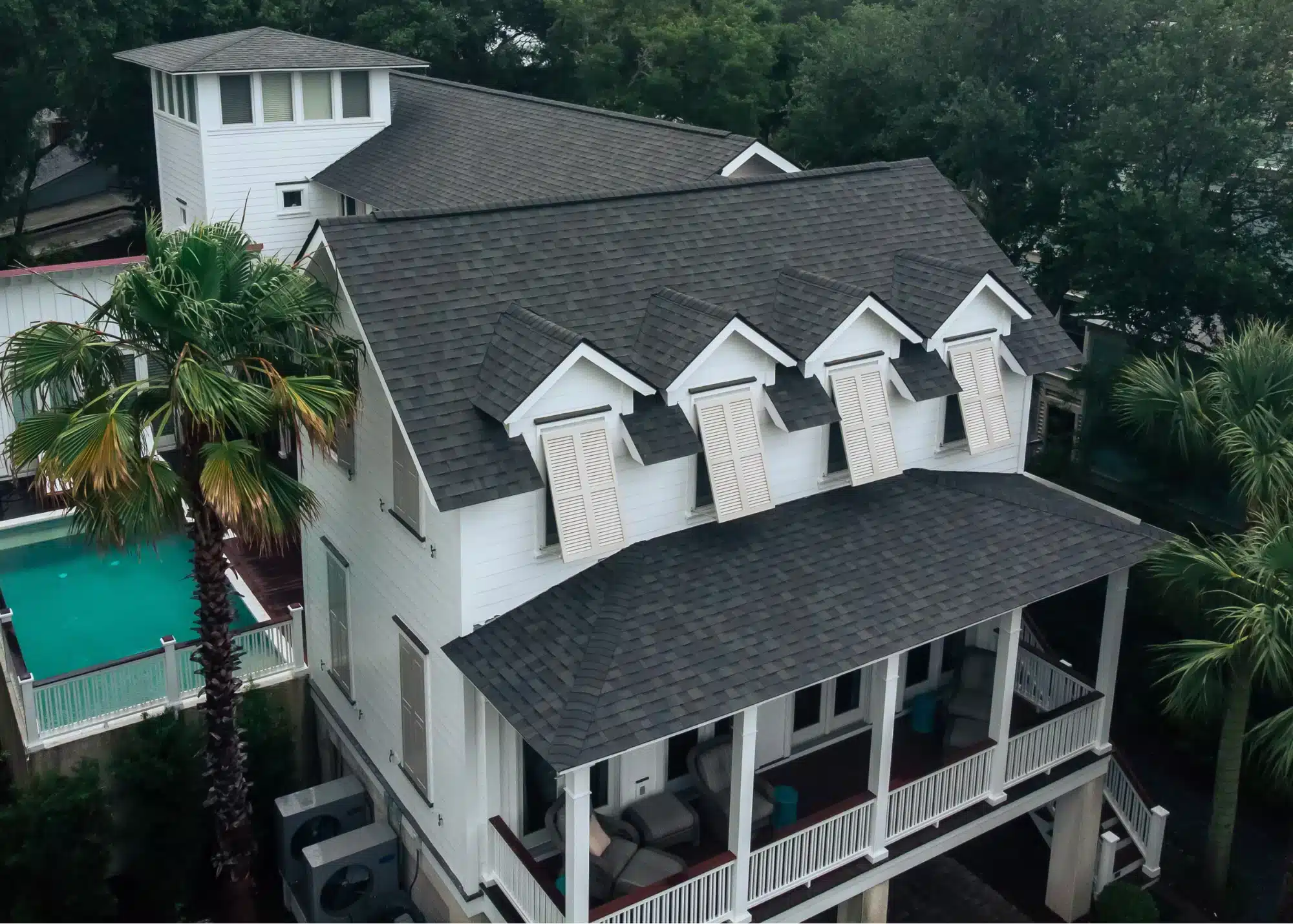
Replacing a roof is one of the most expensive maintenance projects most homeowners will face. And if you’ve started researching costs, you’ve probably seen a lot of different price ranges.
That uncertainty can make planning difficult. Homeowners need to know what a roof replacement really costs, what affects the price, and how to budget without unpleasant surprises halfway through the project. This guide breaks down the cost for roof replacement in the Carolinas, explains why prices can vary so widely, and walks through how to budget realistically. Whether you’re replacing an aging roof, planning ahead, or recovering from storm damage, understanding the costs will help you make a confident decision for your home. You can also use our Roof Calculator to calculate a budget estimate for your home.
Quick Answer
Roof replacement costs typically range from $31,000 to $52,000 for most Carolina homes, depending on material, roof size, complexity, and required repairs. Asphalt shingles fall on the lower end, while metal roofs cost more upfront but last longer.
A professional inspection and detailed estimate identify decking repairs, ventilation upgrades, and permit costs so you can budget accurately and avoid surprises.
Explore Baker’s Roofing Options for Your Carolina Home
If you live in North or South Carolina, we likely serve your area. Let’s get in touch.
Fast and free estimates.
Related Guides
What Is the Average Cost for Roof Replacement in the Carolinas?
There’s no single price that applies to every home, but most full roof replacements in North Carolina and South Carolina fall within a broad range depending on materials, roof size, and complexity.
According to the Journal of Light Construction’s 2025 Cost vs. Value Report, the average cost for an asphalt shingle roof replacement in the South Atlantic region (which includes the Carolinas) ranges from $31,000 to $33,000 for a typical residential project. Homeowners can expect to recoup approximately 68-70% of that cost in home value.
Metal roof replacements typically costs more upfront. In the South Atlantic region, this cost ranges from $50,000 to $52,000 for similar-sized projects, with homeowners recouping up to 56% of the cost in home value.
These numbers reflect full replacement projects that include tear-off of existing materials, underlayment, flashing, ventilation, permits, and proper installation. Smaller homes or simpler roof designs may fall below these ranges, while large or complex roofs with multiple levels, steep slopes, or specialty materials can exceed them.
You can use these average cost numbers as reference points, not predictions. Your actual roof replacement cost will depend on several project-specific factors.
What Factors Affect Roof Replacement Costs?
Roof replacement pricing is driven by much more than just shingles. Understanding these factors helps explain why estimates differ and why comparing quotes line-by-line matters.
Roof Size and Complexity
Larger roofs require more materials and labor. Steeper slopes, multiple levels, dormers, and valleys increase installation time and safety requirements, which raises costs.
Tear-Off vs. Overlay
Most professional roof replacements involve removing the existing roof to inspect the deck underneath. Tear-off adds labor and disposal costs but is critical for long-term performance and warranty protection.
Roof Deck Condition
If rot, water damage, or structural issues are found after tear-off, repairs are required before the new roof can be installed. Deck repairs are one of the most common reasons final costs increase.
Material Selection
Different roofing materials come with different price points, lifespans, and installation requirements. Upgrading from basic shingles to architectural or impact-resistant products increases cost but often improves durability. For detailed comparisons of shingle types and performance, see our guide: Asphalt Roof Shingles Explained: Materials, Maintenance, Costs, and Benefits.
Ventilation and Code Upgrades
Older homes may need ventilation improvements or flashing updates to meet current building codes. These upgrades protect the roof long-term but add to the overall project cost.
Labor, Permits, and Disposal
Local labor rates, permitting fees, and disposal costs vary by region and municipality throughout the Carolinas.
Roofing Material Costs Compared
Material choice plays a major role in overall roof replacement cost. Here’s a high-level comparison to help you understand your options.
| Material | Typical Lifespan | Relative Cost | Best For |
| 3-tab asphalt shingles | 15–20 years | $ | Budget-focused projects |
| Architectural shingles | 25–30 years | $$ | Most Carolina homes |
| Impact-resistant shingles | 25–30+ years | $$$ | Storm- or hail-prone areas |
| Standing seam metal | 40–70 years | $$$$ | Long-term ownership |
| Metal shingles | 40–60 years | $$$ | Traditional look with metal benefits |
Asphalt shingles remain the most common option due to affordability and familiarity. Metal roofing costs more upfront but often makes sense for homeowners planning to stay in their homes long-term.
Hidden or Overlooked Costs Homeowners Often Miss
Many homeowners only budget for shingles and labor, then get surprised by additional costs that are necessary for a proper installation. Here are some of the additional costs to be aware of.
Roof Deck Repairs
One of the most common surprise costs. You won’t know if your roof deck has water damage, rot, or structural issues until the old roofing is removed. Deck repairs can add $500–$5,000+ depending on the extent of damage. Homes with long-term leaks or poor ventilation are most at risk.
Ice and Water Shield
This waterproof membrane goes under shingles in valleys, around chimneys, and along eaves to prevent ice dam damage and leak penetration. It’s required by code in most areas and costs $200–$800 depending on the roof size.
Flashing Replacement
Flashing around chimneys, vents, skylights, and roof valleys should be replaced during roof replacement, not reused. New flashing prevents future leaks and costs between $300–$1,500 depending on the number of penetrations.
Ventilation Upgrades
Proper attic ventilation extends shingle life and maintains warranty coverage. If your current ventilation doesn’t meet code or manufacturer requirements, upgrades can add $300–$2,000 to your project cost. This includes ridge vents, soffit vents, or gable vents.
Permit Fees and Inspections
Building permits for roof replacement typically cost $150–$800 depending on your municipality and project scope. Some areas also require final inspections before the project is complete.
Disposal and Dumpster Rental
Hauling away old roofing materials isn’t free. Disposal costs range from $300–$1,000 depending on roof size and local dump fees. Some contractors include this in estimates; others list it separately.
Gutter Coordination
If your gutters are damaged, undersized, or nearing the end of their lifespan, replacing them during the roof project saves money on labor since scaffolding and access are already in place. Learn more about how gutters protect your roof, siding, and foundation.
Typical Roof Replacement Cost Breakdown
Understanding where your money goes helps you evaluate estimates and spot missing items.
| Cost Component | Percentage of Total | What It Includes |
| Materials | 40-50% | Shingles/panels, underlayment, flashing, fasteners |
| Labor | 30-40% | Installation, safety equipment, crew time |
| Tear-Off & Disposal | 10-15% | Removing old roof, hauling debris, disposal fees |
| Permits & Inspections | 2-5% | Building permits, final inspections |
| Deck Repairs | Variable | Only if rot or damage discovered (not always needed) |
| Ventilation Upgrades | Variable | Ridge vents, soffit vents (if needed for code) |
Note: Percentages based on typical asphalt shingle replacement. Metal roofing shifts material costs higher.
Repair vs. Replacement: Cost Perspective
Sometimes a roof can be repaired rather than replaced. From a cost standpoint, the key question is whether repairs meaningfully extend the roof’s life or just delay the inevitable.
If your roof is past 60–70% of its expected lifespan (about 12–15 years for an asphalt shingle roof) and the repairs are more than 20–25% (between $6,500–$8,250 for an asphalt shingle roof) of the replacement cost, replacement usually makes more financial sense.
For a detailed breakdown of when to repair versus replace, see our guide Roof Repair vs. Replacement: How to Decide Which Is Best.
Budgeting for Roof Replacement the Smart Way
A realistic budget looks beyond the lowest estimate and plans for the full project scope.
Build a 10–15% Contingency Buffer
Even with a thorough inspection, hidden issues like deck rot may only be discovered after tear-off. For a $20,000 project, you should have a $2,000-$3,000 buffer for unexpected repairs.
Get 3–5 Written Estimates
Multiple estimates help you understand market rates and compare scope. If one estimate is significantly lower, find out what’s missing—not every low bid is a good deal.
Compare Line-by-Line, Not Just Totals
Two $22,000 estimates may include very different scopes. One might include ventilation upgrades and premium underlayment; the other might use minimum code requirements. Ask contractors to break down costs so you know you are comparing apples to apples.
Consider Long-Term Value, Not Just Upfront Cost
A $15,000 asphalt shingle roof that lasts 20 years costs $750/year. A $35,000 metal roof that lasts 50 years costs $700/year. The cheaper option upfront isn’t always the better long-term value.
Time Your Project Strategically
If replacement isn’t urgent, scheduling during slower seasons (late fall, winter, early spring) may result in better contractor availability and potentially lower prices due to reduced demand.
Account for Permit Timelines and Weather
Building in 1–2 weeks of buffer for permit approval and potential weather delays prevents scheduling stress. Rushed projects often cost more.
Don’t Forget Related Work
If your gutters, fascia, or siding need attention, coordinating that work with roof replacement saves on labor costs since scaffolding and access are already in place.
Calculate Your Roof Replacement Cost
Get a personalized estimate for your roof replacement project based on your home’s size, materials, and location with our Roof Cost Calculator.
Keep in mind that this calculator provides estimates based on typical projects. Your actual cost may vary based on roof complexity, deck condition, code requirements, and contractor pricing. A professional inspection provides the most accurate pricing.
How to Use Cost Estimates Effectively
Whether you’re using our calculator, online estimates, or contractor quotes, understanding how to interpret the numbers helps you plan better.
What Estimates Can Tell You
- Whether your budget is realistic for your goals
- How different materials affect total cost
- What scope of work is typical for your roof size
- Relative costs between repair and replacement
What Estimates Can’t Tell You
- Exact deck condition until tear-off
- Hidden structural issues
- Code upgrade requirements specific to your home
- Final permitting costs until permits are pulled
Moving from Estimate to Accurate Quote
Online calculators and rough estimates help with early planning, but a professional inspection is always required for accurate pricing. During an inspection, contractors measure your roof precisely, assess deck condition from the attic, identify ventilation needs, and document any special requirements.
This inspection-based quote should include detailed line items, material specifications, warranty information, payment schedules, and estimated timeline.
Financing and Payment Options for Roof Replacement
Not every homeowner has $20,000–$40,000 in cash available for roof replacement. Understanding payment options helps make the project more manageable.
Cash Payment
Paying in full upfront or upon completion often gives you the most negotiating leverage and may qualify for contractor discounts. However, never pay the full amount before the work is completed. Standard practice usually requires a deposit (10–20%) with final payment upon completion of the project.
Home Equity Line of Credit (HELOC)
HELOCs allow homeowners to borrow against their home’s equity at relatively low interest rates. They can work well for planned replacements where you can shop rates and terms.
Personal Loans
Unsecured personal loans don’t require home equity but typically carry higher interest rates than HELOCs. They can be approved quickly, which helps for emergency replacements.
Contractor Financing
Some roofing companies offer financing through third-party lenders. This can be convenient but compare rates carefully—promotional periods with deferred interest can be costly if not paid off in time.
Baker Home Exteriors offers financing options with no interest if paid within 24 months.
Insurance Claims
If your roof replacement is covered by insurance due to storm damage, your insurer pays the replacement cost (minus your deductible) after inspections and approval. Never sign over your insurance check to a contractor before work is complete.
What to Avoid
- Financing offers that seem too good to be true often have hidden fees or balloon payments
- Contractors requiring full payment upfront (major red flag)
- Making financial decisions under pressure after storms
Insurance and Roof Replacement Costs
Insurance may help cover roof replacement when damage results from a covered event such as wind, hail, falling trees, or fire. Understanding how insurance works with roof replacement can help you navigate the claims process.
What’s Typically Covered
- Storm damage (wind, hail, hurricanes)
- Falling objects (trees, branches, debris)
- Fire damage
- Sudden, accidental damage
What’s Typically NOT Covered
- Normal wear and aging
- Lack of maintenance
- Pre-existing damage
- Cosmetic damage that doesn’t affect function
How Coverage Works
Most homeowners policies use “Replacement Cost Value” (RCV) or “Actual Cash Value” (ACV) to calculate payouts.
Replacement Cost Value (RCV)
Pays the full cost to replace your roof with similar materials, minus your deductible. This is the better option but may have higher premiums.
Actual Cash Value (ACV)
Pays replacement cost minus depreciation based on your roof’s age. A 15-year-old roof with a 25-year lifespan has depreciated 60%, so you’d only receive 40% of replacement cost.
Key Points Homeowners Should Know
Deductibles Apply
Your out-of-pocket cost before insurance pays. Common deductibles range from $500 to $2,500, though wind/hail deductibles in coastal areas may be 1-5% of your home’s insured value.
Coverage Depends on Roof Age
Some policies won’t provide full replacement coverage for roofs over 15-20 years old, switching to ACV instead.
Documentation Matters
Take photos of damage immediately, document dates and weather events, get professional inspections, and keep all communication with your insurer in writing.
Don’t Make Permanent Repairs Before Inspection
Emergency tarping is fine, but permanent repairs before your insurance adjuster inspects may affect your claim.
You Choose the Contractor
Insurance companies may recommend contractors, but you’re not required to use them. Choose a contractor you trust.
For more details on insurance coverage, read our guide: Does Home Insurance Cover Roof Damage? What You Need to Know.
Frequently Asked Questions (FAQs) About Roof Replacement Cost
Every roof is different. A 1,500 sq ft ranch with a simple gable roof costs far less than a 3,000 sq ft two-story with multiple dormers, valleys, and steep slopes. Material choice, deck condition, ventilation needs, local labor rates, and code requirements all affect final price. That’s why online estimates give ranges and why in-person inspections are necessary for accurate quotes.
How accurate are online roof cost estimates?
Online calculators provide useful ballpark figures for budgeting but can’t account for your specific roof’s complexity, deck condition, or local factors. They’re a starting point for planning, not a replacement for professional estimates. Expect actual quotes to vary 15–25% from calculator estimates depending on your home’s unique factors.
Is metal roofing worth the higher cost?
For long-term homeowners, metal roofing often delivers strong value. While it costs 2–3x more upfront than asphalt shingles, it can last 40–70 years (versus 20–30 years for asphalt), requires minimal maintenance, performs exceptionally well in storms, and can lower cooling costs. If you plan to stay in your home 15+ years, you might consider metal. See our full breakdown: Metal Roofing Guide: Types, Costs, and Lifespan for Carolina Homes.
Do permits increase roof replacement cost?
Yes, permits typically add $150–$800 to your project cost depending on your municipality. However, permits ensure work meets safety and building standards, protect your home’s value, and are required for insurance claims and future home sales. Skipping permits to save money creates bigger problems down the road.
Should I choose the lowest estimate?
Not without comparing scope carefully. The lowest bid often excludes items other contractors include—like premium underlayment, adequate ventilation, or warranty coverage. Low bids may also signal inexperienced contractors, inadequate insurance, or plans to cut corners. Get 3–5 estimates and compare what’s included line-by-line, not just the bottom line.
How much should I expect to pay per square foot?
Asphalt shingle roofs typically cost $5–$12 per square foot installed, depending on shingle quality. Metal roofs can cost between $10–$20+ per square foot. However, “per square foot” pricing can be misleading because it doesn’t account for tear-off, flashing, ventilation, or deck repairs. Total project cost is a better comparison metric.
Can I negotiate roof replacement prices?
Sometimes. You may have room to negotiate on timing (contractors may offer discounts for off-season scheduling), scope (choosing mid-grade instead of premium materials), or bundling (combining roof and gutter work). However, don’t negotiate on critical items like proper underlayment or ventilation—these protect your investment.
What payment schedule is normal for roof replacement?
Standard practice includes a deposit of 10–20% when signing the contract, with the balance due upon completion and your approval of the work. Never pay 100% upfront. If a contractor demands full payment before starting, that’s a major red flag.
Does a new roof increase home value?
According to the Cost vs. Value Report, homeowners typically recoup 60–70% of roof replacement costs in increased home value. A new roof also makes homes easier to sell, passes inspections, and can lower insurance premiums. While you won’t get dollar-for-dollar return, it’s one of the better home improvement investments for resale.
Budget Your Roof Replacement with Confidence
Roof replacement is expensive, but understanding where costs come from and how to plan realistically can make this process smoother. When you know what factors drive pricing, how to spot hidden costs, and what questions to ask contractors, you can budget confidently and avoid unpleasant surprises.
The key is treating roof replacement as an investment in your home’s protection, not just an expense. Quality materials, proper installation, and realistic budgeting pay dividends through decades of reliable performance and fewer repair headaches.
Whether you’re planning ahead for an aging roof, responding to storm damage, or simply want to understand your options, having clear cost information helps you make decisions that protect both your home and your budget.
Baker Home Exteriors provides transparent, detailed estimates for every roof replacement project. Our experienced teams help Carolina homeowners understand costs, explore material options, and plan projects that fit their budget and goals. Request a free roofing estimate today to get accurate pricing for your specific home and roof.
Roof Replacement for Carolina Homes: How to Plan Your Project the Right Way
Read More
Roof Repair vs. Replacement: How to Decide Which is Best?
Read More
How to Tell if You Need a New Roof
Read More
Written by Thomas Noel
Based in Charlotte, North Carolina, Thomas Noel is a writer with more than 10 years of experience writing and editing content that helps homeowners make smart, confident decisions. He previously managed a home design site and has written about everything from eco-friendly home upgrades and smart-home products to heating and cooling solutions like HVAC systems and furnaces. He brings a practical eye and hands-on knowledge to every home improvement story he tells.