How Long Does Copper Take to Patina? Timeline + Photos
Home ExteriorsAbram Gregory
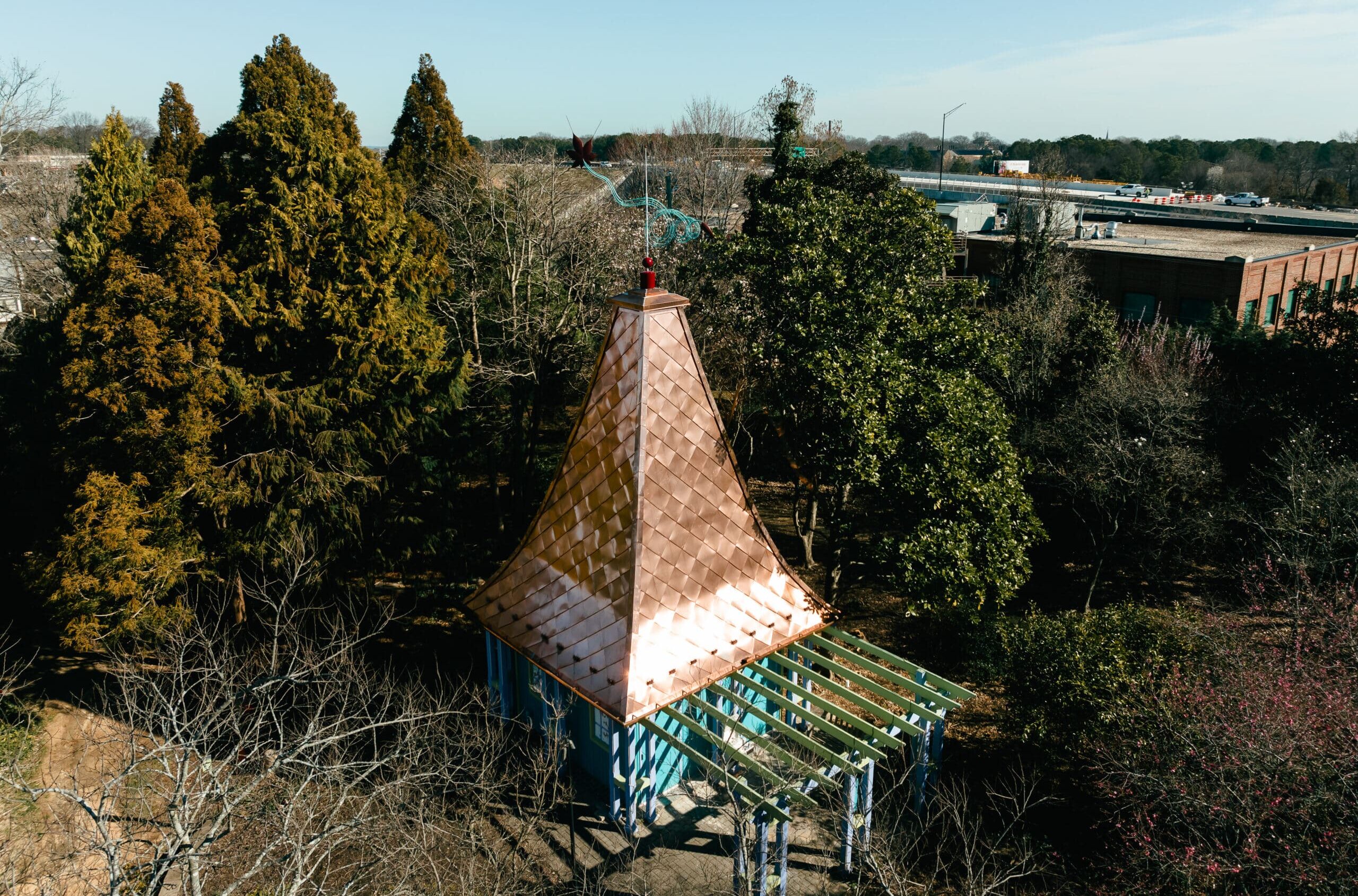
Few roofing materials tell a story quite like copper. Both strong and sustainable, this metal roof has the unique distinction of not just lasting, but evolving over time. If you’ve ever noticed a copper roof’s color shifting from bright pink to deep green, you’ve witnessed one of architecture’s most captivating transformations: the formation of a copper roof patina.
A patina is the protective chemical layer that develops over copper over the years as it’s exposed to the elements. In this article, we cover the science behind the patina process, its benefits, and why it matters for you. Here’s what you need to know.
Quick Answer
Copper develops its signature green patina as it reacts with oxygen and moisture over time. This reaction creates a thin, protective film that prevents further corrosion and helps copper roofing last up to 100 years or more. That longevity, combined with copper’s recyclability, also makes the material remarkably sustainable. Depending on climate and moisture levels, the color change from pink to green can take anywhere from 5 to 30 years to fully form.
What Is a Copper Roof Patina?
When copper is exposed to the elements, it reacts with oxygen and moisture in the air. Over time, this reaction forms a thin, protective layer called a patina. Far from being simple oxidation, a patina acts as a natural shield, slowing further corrosion and helping copper withstand the test of time.
That’s part of what makes a patina copper roof such a smart long-term investment. With proper installation and minimal maintenance, copper roofing and accents can last up to 100 years or more. Plus, even when it’s removed, roughly 90% of copper can be recycled for new use. Put simply, it’s sustainability at its finest.
How Copper Changes Color Over Time
In its earliest stages, newly installed copper shines with a salmon-pink hue. As it interacts with air and moisture, that surface begins to darken and shift through a spectrum of colors like browns, reds, greens, and even blues before finally developing its signature green patina.
The development of a full copper roof patina can take anywhere between 5 and 30 years. To learn more about how this process plays out over the years, check out the table below.
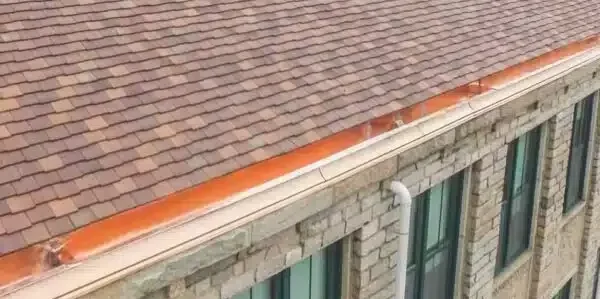
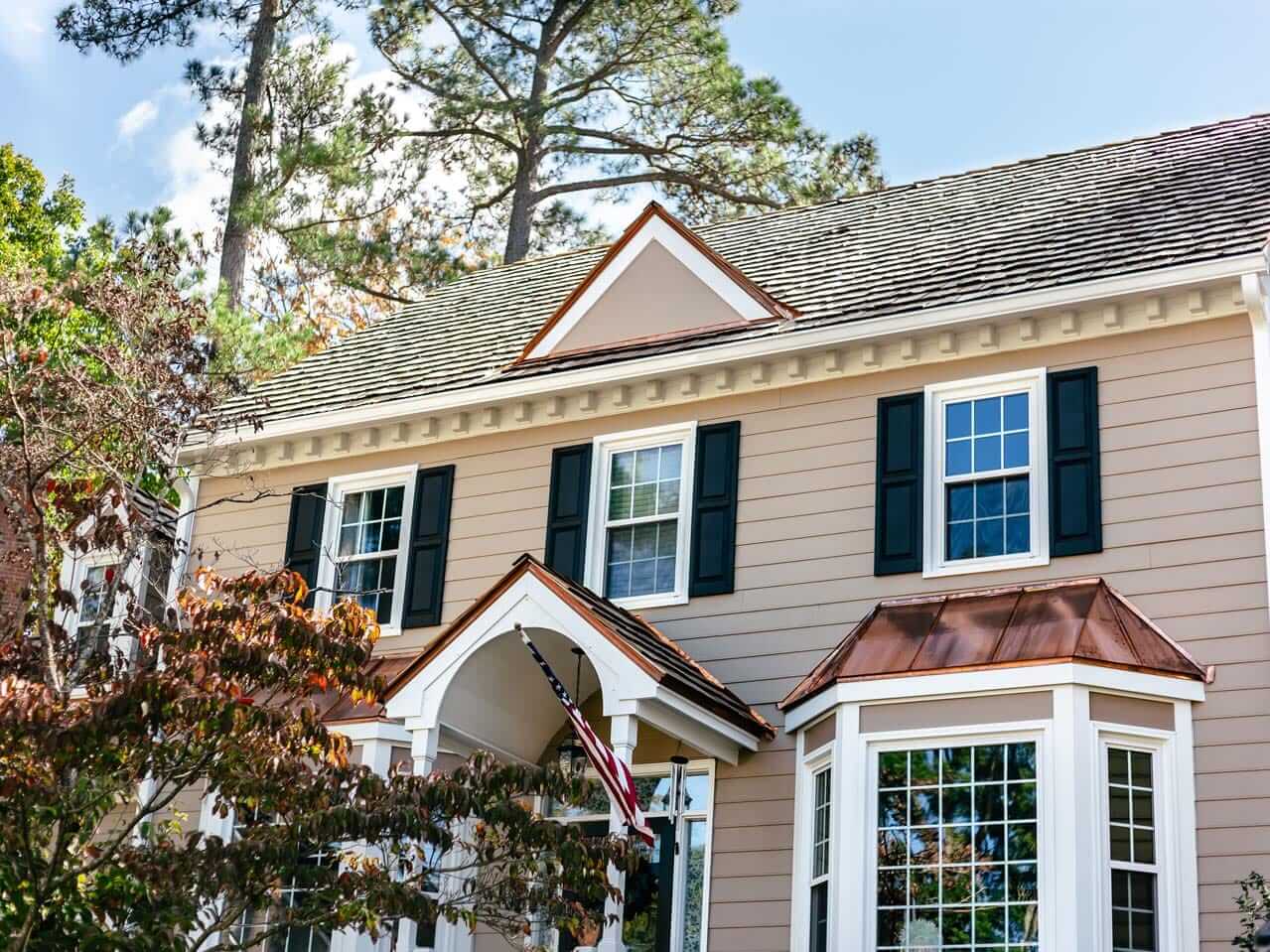
The flashing on this roof showcases the salmon-pink color of newly installed copper.
Table 1: How Long Does It Take a Copper Roof Patina to Form?
| Age | Typical Color | Description |
|---|---|---|
| Unexposed | Salmon pink | Natural finish |
| 4 months | Brown | Early oxidation |
| 8 months | Rosette brown | Warm, uniform tone |
| 1 year | Deep rosette brown | Richened surface color |
| 2 years | Chocolate brown | Deepening patina layer |
| 3 years | Dark chocolate brown | Increased protection |
| 4 years | Rusty brown | Matte, aged appearance |
| 5 years | Green-brown | Early patina visible |
| 7 years | Dark green | Patina forming fully |
| 10 years | Leaf green | Mature surface |
| 15 years | Blue-green | Distinct coastal tone |
| 25 to 30 years | Bright green | Fully developed patina |
Each stage in this process adds both character and durability, a visible record of the time and environment a patina copper roof has weathered.
What Affects the Copper Roof Patina Process?
The pace of copper’s transformation depends largely on climate:
- Coastal or industrial areas: Patinas form faster (about 5 to 7 years).
- Rural or low-pollution areas: The process takes longer (10 to 14 years).
- Dry climates: With minimal humidity, a patina may never fully develop.
The surface angle also makes a difference. Horizontal copper surfaces develop patinas faster than sloped or vertical ones, because moisture and air pollutants settle longer on flat surfaces.
The Science Behind the Surface
As a copper roof patina develops, three progressive films can form:
- Oxide film: The first to form, this film doesn’t resist corrosion effectively.
- Sulfide film: Forming after oxide, this film offers limited protection.
- Sulfate film: The last to form, this film provides excellent long-term corrosion resistance.
Among these, the sulfate layer is the true star. Once fully developed, it acts as a durable barrier against atmospheric corrosion, dramatically extending the lifespan of copper roofs and architectural accents.
Patina Copper Roofing and Sustainability
Unlike many other roofing materials, copper is both sustainable and beautiful. Its patina-induced longevity reduces waste, and nearly all of it can be recycled without loss of quality. So, whether you’re designing a modern home or restoring a historic one, a copper roof patina delivers a combination of strength, style, and sustainability that few materials can match.
Frequently Asked Questions
How long does it take for copper to turn green?
In most environments, copper develops a light brown tone (as opposed to its natural salmon) within the first year and begins turning green between 5 and 15 years. In coastal or industrial areas, the full patina may appear in as little as 5 to 7 years, while dry climates can delay the process to 20 to 30 years or more.
What causes copper to change color?
Copper reacts naturally with oxygen, moisture, and some sulfur compounds in the air. These reactions form a thin protective film known as a patina, which gradually shifts the metal’s color from pink and brown to the familiar green seen on aged copper roofs and domes.
Does the patina protect the copper?
Yes. Once fully developed, the patina serves as a natural barrier against corrosion. It seals the underlying copper from direct contact with air and moisture, which significantly extends its lifespan.
Can I speed up or slow down the patina process?
Yes, to an extent. Homeowners can accelerate patina formation by applying mild ammonium chloride or copper sulfate treatments or allowing more consistent exposure to moisture. However, these methods should be handled by professionals to avoid uneven coloration or long-term damage. To slow the process, you can apply protective coatings to preserve the original copper color longer.
Is copper roofing worth the cost?
For many homeowners, yes. While copper roofing has a higher upfront cost than asphalt or steel, it offers exceptional longevity and minimal maintenance, all without sacrificing curb appeal. Its lifespan stands anywhere between 70 and 100 years or more, making it an impressive long-term investment for your home.
Final Thoughts
Copper’s transformation is a visual story written by time and weather, with each hue reflecting the life of the material and the environment surrounding it. That’s why roofing obsessives like us tend to value copper so much. No other material has the ability to characterize the home it sits upon like copper does.
As you plan your home’s exterior, remember that copper grows more distinctive year after year. That graceful aging process is part of what makes it one of the most admired materials in architecture. A patina copper roof doesn’t just endure over time. It improves.
If you’re considering copper roofing, copper gutters, flashing, or accents, our expert craftsmen at Baker Home Exteriors can bring your vision to life. With 111 years of experience and locations throughout North and South Carolina, we’ll help you create an exterior that only improves with age.