What Raleigh’s Growth Boom Means for Housing Quality (and Your Home’s Exterior Needs)
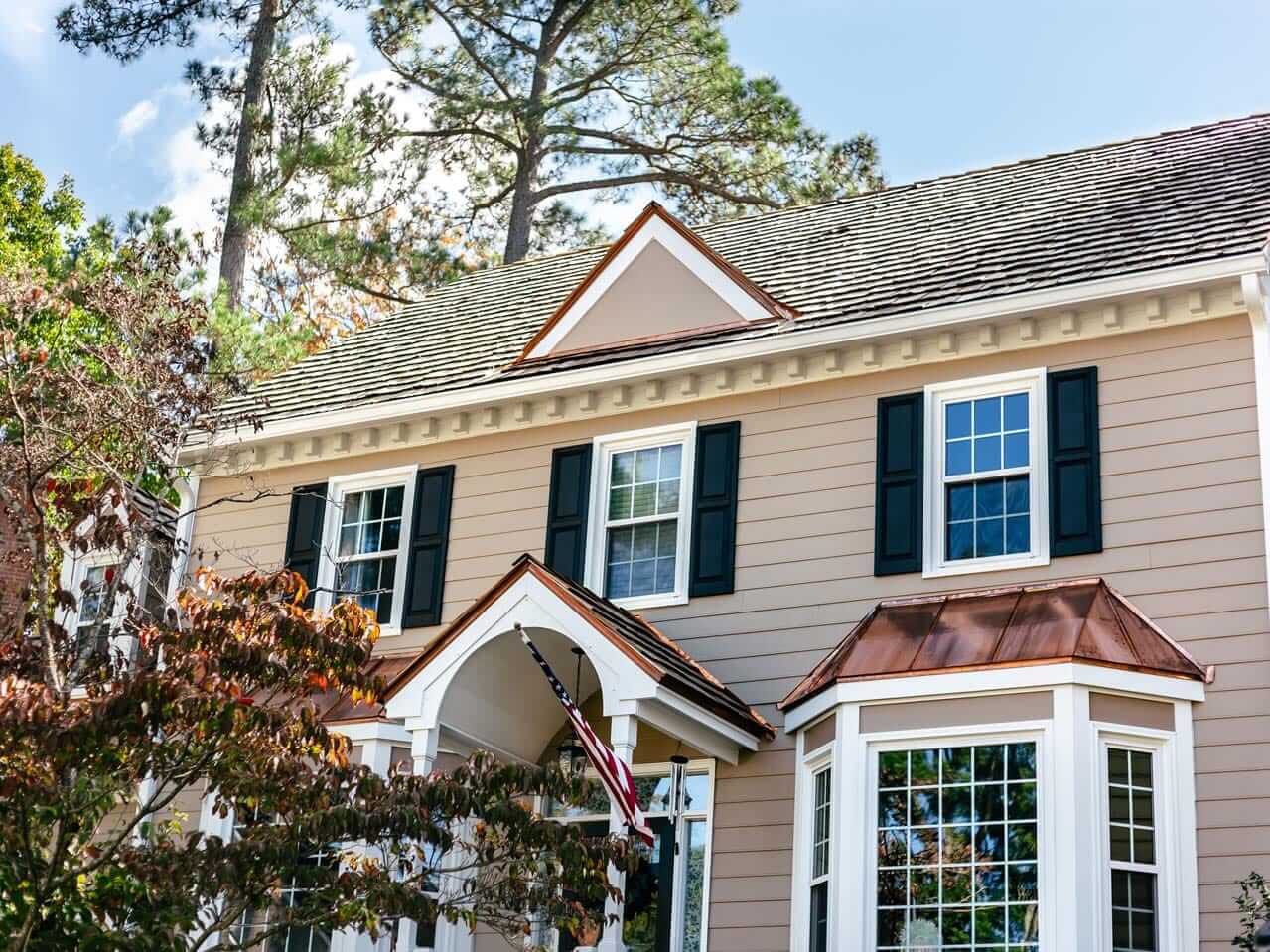
Drive through almost any part of Raleigh today and the growth is hard to miss. There are new subdivisions being built and new builds are replacing older homes in established neighborhoods. Renovated properties are hitting the market faster than ever. Over the past decade, the Triangle has become one of the fastest-growing metro areas in the country, and that growth has reshaped what Raleigh’s housing stock actually looks like.
For homeowners, that’s mostly good news. Strong property values. Vibrant communities. New infrastructure. But it also introduces more types of homes and different levels of build quality.
Raleigh’s housing market today spans century-old bungalows in Five Points and Oakwood, mid-2000s developments in Cary and Morrisville, and brand-new production builds completed in a matter of months. That range means exterior systems like roofing, siding, gutters, and ventilation can vary widely. In a market growing this fast, you can’t assume your home’s exterior was built or upgraded with long-term performance in mind. Understanding what that variability looks like can help you make the best decisions for your home.
Quick Answer
Raleigh’s rapid population growth has created a housing market with unpredictable construction quality. New homes are often built to code minimums on fast production schedules, while older homes may have aging exterior systems hidden behind cosmetic updates.
Regular inspections and proactive maintenance help ensure your home’s exterior performs well in Raleigh’s heat, humidity, and heavy rainfall.
Baker’s Exterior Services for Raleigh Homes
Baker Home Exteriors provides roofing, siding, and gutter services across the Raleigh area. Get a free estimate from our local team.
Fast and free estimates.
Related Guides
How Rapid Growth Affects Construction Quality
Rapid development doesn’t automatically mean poor construction. Many new homes in Raleigh are built well and meet modern code standards. But when growth accelerates, consistency becomes harder to maintain.
Production builders working on compressed schedules often rotate multiple subcontractor crews through job sites quickly. Materials are sourced at scale. Decisions about roofing, ventilation, and siding are made with cost efficiency in mind. None of that is inherently wrong, but it does mean that durability upgrades are not always included. Homes are typically built to meet code minimums, not to exceed them.
Raleigh’s older, established areas are seeing heavy renovation and resale activity. Some of those homes are carefully restored. Others get cosmetic updates while aging exterior systems stay in place. A fresh coat of paint and new landscaping can make a 25-year-old roof look invisible on a listing.
The result is a housing market where two homes on the same street can look nearly identical and perform very differently. That’s the variability that matters for homeowners.
Roofing in a High-Growth Market
Roofing is one of the areas where that difference in quality and materials shows up most clearly.
Builder-Grade Shingles and What They Actually Mean
Architectural shingles are standard in most newer Raleigh subdivisions, but not all architectural shingles are equal. Production builders typically use mid-tier product lines that meet warranty minimums at lower cost. That doesn’t mean the roof is defective; it means the expected lifespan may run toward the lower end of the range. Impact-resistant shingles, premium underlayment, and enhanced flashing details are often upgrades, not standard inclusions.
Ventilation and Code Minimums
Modern building codes require attic ventilation, but meeting code and achieving optimal airflow aren’t the same thing. In Raleigh’s humid climate, balanced ventilation plays a major role in extending shingle life and preventing moisture buildup in the attic. Homes built quickly may include ridge vents and soffit vents that technically satisfy requirements without providing the airflow balance that actually protects the roof deck.
Even a five-year-old roof can benefit from a ventilation inspection. If airflow was minimally designed at the time of construction, shingles and decking may be aging faster than the calendar suggests.
Flashing and Roof Edge Details
Flashing around chimneys, valleys, skylights, and roof penetrations is what keeps water out at the most vulnerable points. In fast-paced builds, flashing may be installed to code without the precision you’d see in custom construction. Improperly seated drip edge or valley flashing may not cause an immediate leak, but small gaps allow moisture to work in gradually, and the damage often doesn’t become visible until years later when it’s already a bigger problem.
Siding in Older and Newer Raleigh Homes
Older Homes: Aging Materials and Deferred Maintenance
Homes built before the 2000s often have wood siding and wood trim. These materials can last a long time when properly maintained, but Raleigh’s humidity makes consistent upkeep essential. When paint or sealant starts to fail, moisture works into joints and edges. Rot spreads beneath the surface in ways that aren’t visible from outside until it’s already significant. Many older homes have had cosmetic updates without fully addressing the moisture management underneath, which means the exterior can look fine while quietly deteriorating.
Newer Homes: Installation and Material Choices
New construction in Raleigh commonly uses vinyl siding or fiber cement siding. Both perform well when installed correctly. Vinyl needs room to expand and contract during Raleigh’s hot summers. Panels installed too tightly can buckle over time. Fiber cement requires proper flashing and regular painting cycles to maintain its durability. When installation crews are rotating between multiple job sites in a single day, those details don’t always get the attention they deserve.
This doesn’t mean new homes are flawed or that older homes are better. It’s that each has specific vulnerabilities worth knowing about.
Gutters and Water Management
Gutter systems don’t get much attention during construction, but they’re one of the most important components for protecting a home’s exterior. In many newer Raleigh neighborhoods, standard aluminum gutters are installed with minimal slope and standard downspout sizing. For a smaller home on an open lot, that’s often fine. For a larger roof plane, a home surrounded by mature trees, or a lot with drainage challenges, it may not be enough.
When gutters are undersized or downspouts are poorly positioned, overflowing water saturates fascia boards and can push water toward the foundation. Over time that leads to fascia rot, sagging gutters, soil erosion, and moisture intrusion in crawl spaces. These problems develop slowly and rarely announce themselves until the damage is already done.
In older Raleigh neighborhoods, aging gutter systems may have loosened or shifted over time. Sagging sections are often a sign that the fascia board underneath has softened from years of moisture exposure.
With Raleigh averaging close to 50 inches of rainfall a year, drainage design matters more than it might seem. Upgrading gutter capacity or adding quality gutter guards can significantly reduce long-term moisture risk, especially in tree-heavy neighborhoods. Baker installs RainDrop® gutter guards specifically for high water flow and debris management. This can be a practical upgrade for any Raleigh home with significant tree cover.
Signs Your Home’s Exterior May Need Attention
Regardless of age, certain warning signs are worth taking seriously. On the roof, early shingle curling, granule loss collecting in gutters, or deterioration along the ridge cap are signals that the system is under stress. Inside the attic, excessive heat buildup or signs of condensation on the decking may point to a ventilation problem.
On siding and trim, watch for blistering or peeling paint, separating caulk around windows, soft wood near the eaves, or mold growth on shaded elevations. These are signs that moisture is getting in somewhere it shouldn’t.
In the gutter system, overflow during rainstorms, standing water near the foundation, sagging sections, or downspouts discharging too close to the house are all worth addressing before they create bigger problems.
Catching these exterior issues early is almost always cheaper than waiting.
Frequently Asked Questions (FAQs) About Raleigh Housing
Most new homes meet modern code requirements and perform well. But materials and installation quality vary depending on the builder, the subcontractors, and whether any upgrades were made beyond standard inclusions. A professional inspection within the first five to ten years gives you a clear picture of what you actually have.
Should I have a five-year-old roof inspected?
Yes, especially if you don’t know much about how it was installed. Ventilation balance, flashing quality, and any storm-related wear are worth verifying early. Issues caught at five years are almost always easier and cheaper to address than the same issues caught at fifteen.
What’s the difference between builder-grade and premium materials?
Builder-grade products meet code and warranty minimums, which is a reasonable baseline. Premium options like impact-resistant shingles, enhanced underlayment, thicker siding products offer better long-term durability and often perform better under Raleigh’s heat and storm conditions. The gap shows up most clearly over the second half of a roof or siding system’s lifespan.
Does Raleigh’s growth affect construction quality?
It increases variability. Strong builders do excellent work even on tight schedules. Others cut corners that aren’t visible at first. Working with a dependable local contractor who knows what to look for makes a real difference when evaluating or maintaining a home.
Protecting Your Home in a Growing Market
Raleigh’s growth has created a strong, dynamic housing market. It also created a wide range in terms of exterior quality, from beautifully maintained historic homes to brand-new builds where the details are still unknown.
Whether your home is fifty years old or five, its exterior systems are what stand between your investment and Raleigh’s heat, humidity, and storms. Knowing the type and condition of your home’s exterior systems, and working with professionals who understand how it was built, can help make sure it holds up for years.
Baker Home Exteriors has served North Carolina homeowners for more than 110 years. We have experience across multiple housing cycles, from Raleigh’s historic neighborhoods to the subdivisions going up today. Our Raleigh team knows what to look for in both old and new construction, and how to make sure your home’s exterior is built for the long haul, whatever that looks like for your specific home. Request a free inspection and we’ll give you a clear, honest picture of where things stand.

110 Years Strong: Baker Home Exteriors’ Legacy in Raleigh
Read More
Best Siding Options for Raleigh Homes
Read More
Is James Hardie Siding Worth It? A Complete Transformation in Apex, NC
Read More
Written by Thomas Noel
Based in Charlotte, North Carolina, Thomas Noel is a writer with more than 10 years of experience writing and editing content that helps homeowners make smart, confident decisions. He previously managed a home design site and has written about everything from eco-friendly home upgrades and smart-home products to heating and cooling solutions like HVAC systems and furnaces. He brings a practical eye and hands-on knowledge to every home improvement story he tells.